Museo Andes 1972: What To Know Before You Go
On 13 October 1972 a chartered Uruguayan Air Force plane carrying a Montevideo rugby team came down in the Andes. Sixteen of the forty-five people aboard walked out alive seventy-two days later. A small private museum on Rincón street in Ciudad Vieja is where that story is kept.
What Is Museo Andes 1972 And Why Do People Come?
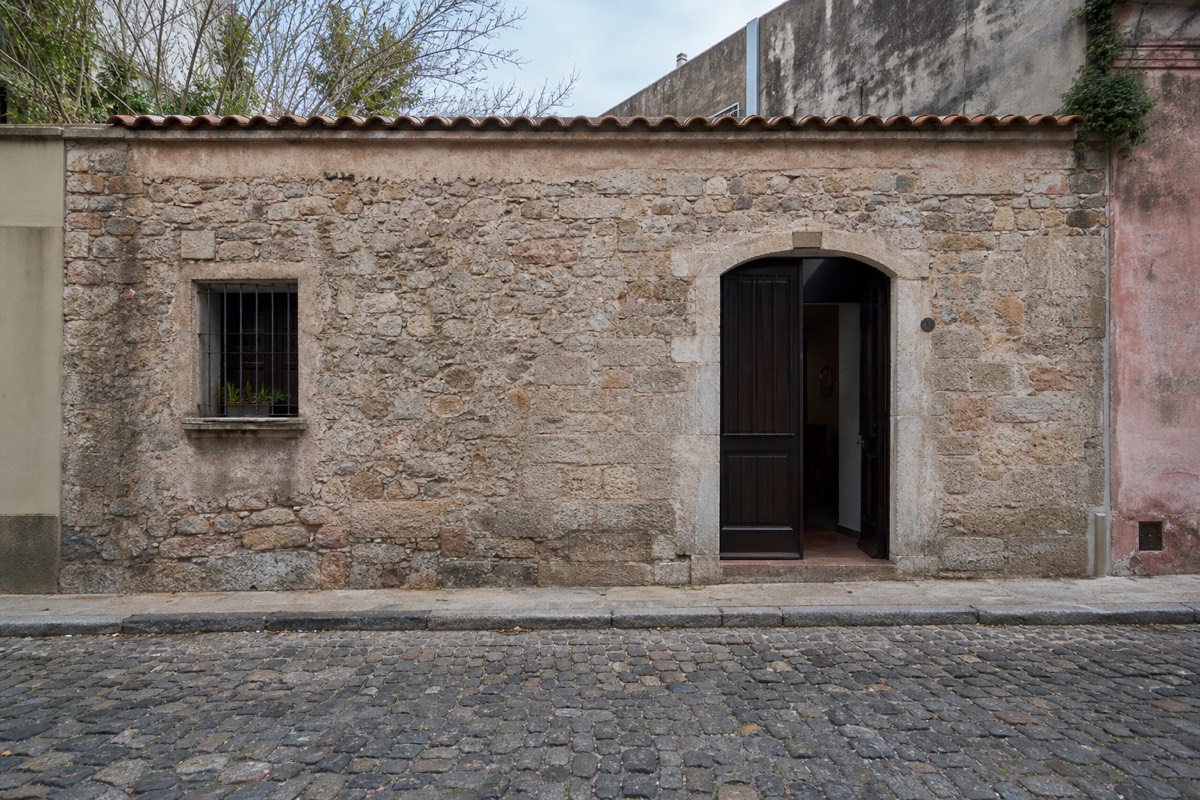
Museo Andes 1972 is a small private museum in Montevideo's Ciudad Vieja, at Rincón 619, dedicated to the crash of Uruguayan Air Force Flight 571 in the Andes and the survival of sixteen of its passengers. It exists to honour the victims and survivors and to hold the story in the city it came from.
The museum is a memorial as well as a visitor attraction. Allow time for the original objects and bilingual accounts, and judge the subject matter for your family.
Booking Shortlist: Museo Andes 1972 Admission. Follow the 1972 story through original objects, documents and a day-by-day timeline in Ciudad Vieja.
Most visitors arrive knowing some version of the events already, usually from a film or a book. What the museum offers is the Uruguayan version, told in the place where the passengers grew up, went to school and were mourned. That changes the register. Abroad the story tends to be told as an adventure or a moral puzzle. In Montevideo it is a local tragedy that touched a small number of families in a small country, and it is still within living memory.
The museum is thematic and privately run rather than a national institution, which means it is modest in scale and personal in tone. It gathers objects, photographs, documents and testimony connected to the flight, the sixteen who came home and the twenty-nine who did not, and it frames the whole thing around solidarity and endurance rather than around spectacle.
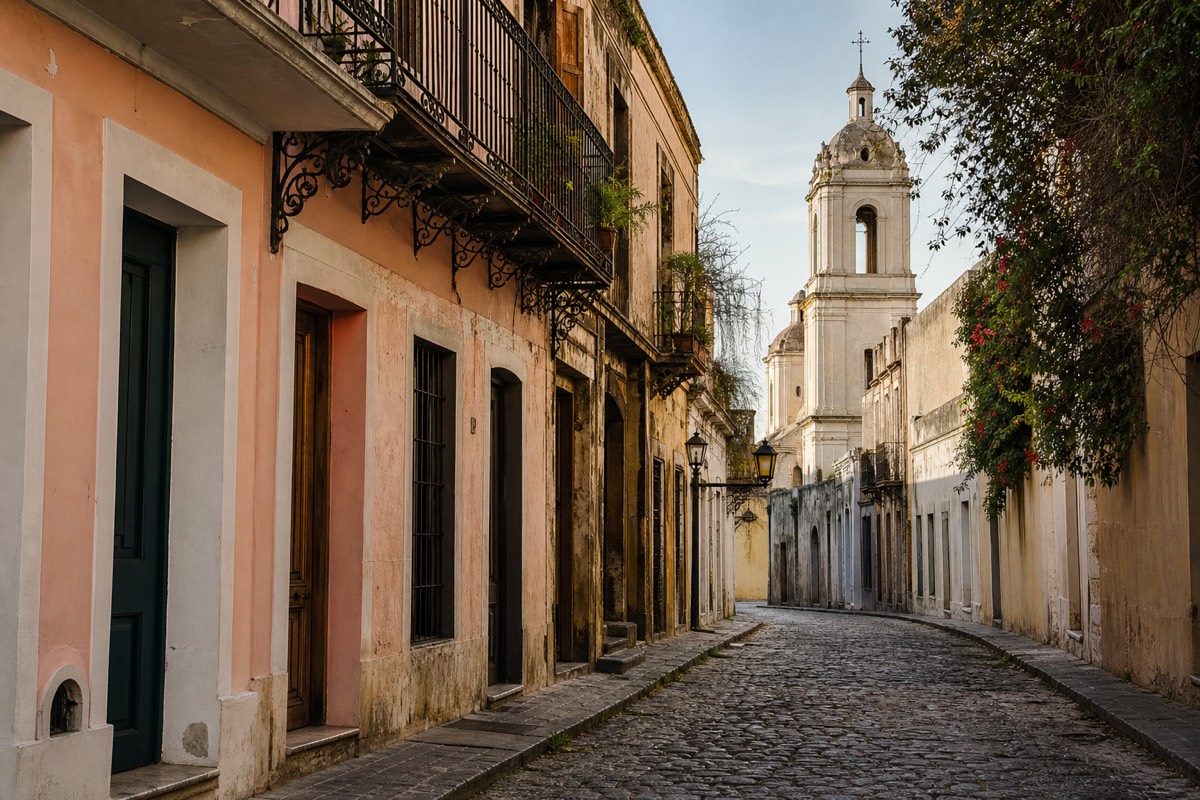
It also sits in a genuinely convenient spot. Rincón 619 is inside Ciudad Vieja, a short walk from Plaza Matriz, Sarandí street and the Mercado del Puerto, which means it slots naturally into the standard half-day walk through the old city. Our Ciudad Vieja guide maps that walk out in full.
What Actually Happened To Flight 571 In October 1972?
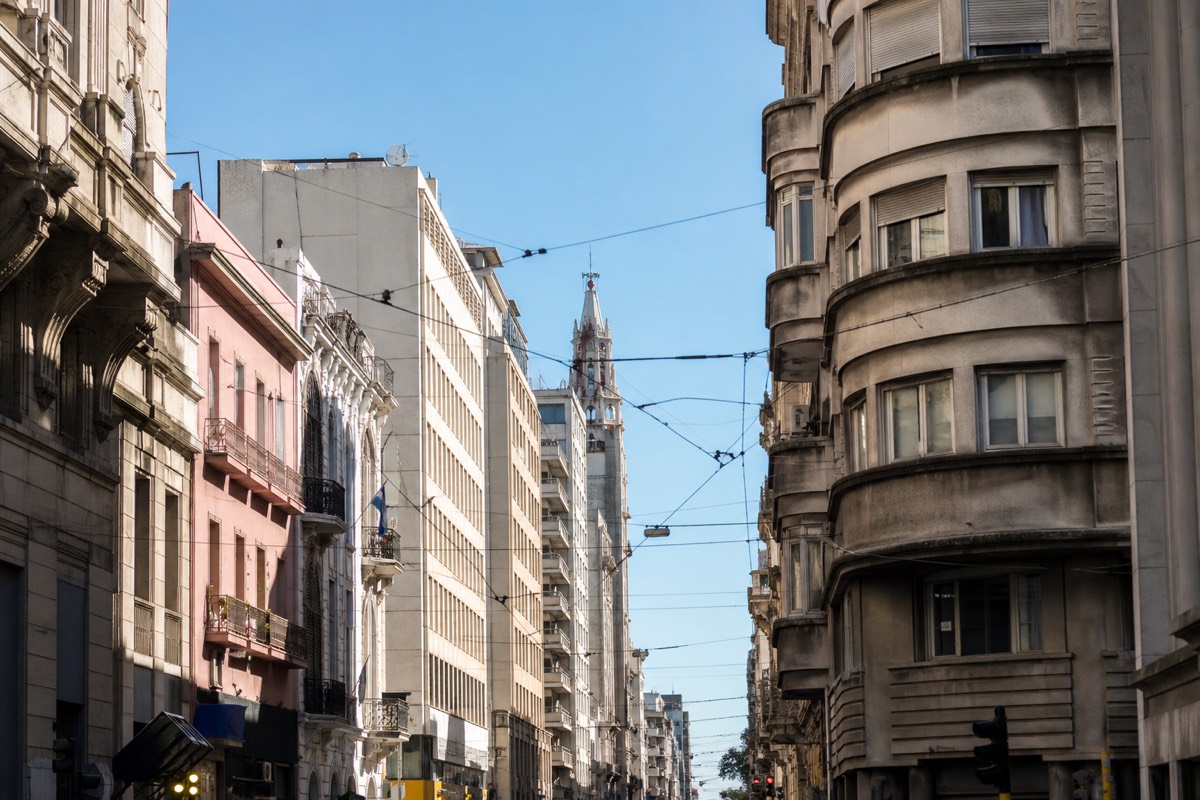
A Fairchild FH-227D chartered from the Uruguayan Air Force was flying a Montevideo rugby team to a match in Santiago, Chile. Bad weather forced an overnight stop in Mendoza, Argentina. On 13 October 1972 the aircraft struck a mountain while crossing the Andes and broke apart at roughly 3,500 metres.
The immediate cause was a navigational error compounded by weather. Crossing the Andes from Mendoza requires flying a specific pass, and the crew began their descent toward Santiago before they had actually cleared the mountains, in cloud, with no visual reference. The aircraft clipped a ridge, lost both wings and the tail section, and the fuselage slid down a snow slope on the Argentine side of the border.
Twelve people died in the crash itself or immediately after. Others died from injuries over the following days. What remained was a broken fuselage lying in deep snow in a high valley, well above the tree line, with no shelter beyond the wreck, no cold-weather clothing, almost no food, and a group of mostly young men and women in their late teens and twenties, several of them badly hurt.
Search aircraft flew over the area in the days that followed, but the fuselage was white, the terrain was white, and nobody saw it. That single visual fact determined everything that came afterward. On the eleventh day the survivors heard on a small transistor radio that the search had been called off.
Who Was On The Plane?
The charter was booked by the Old Christians Club, a rugby team formed by alumni of Stella Maris College in the Montevideo suburb of Carrasco. Alongside the players were family members, friends and supporters travelling with them, plus the five-person crew. Forty-five people were aboard.
This detail matters more than it might seem. The passengers were not strangers thrown together by a ticket booking. They were teammates, brothers, cousins and school friends from a tightly connected community in one part of one city. Several were medical students, which turned out to be consequential. Others brought mothers, sisters and friends along for what was meant to be a weekend trip to Chile.
That closeness explains a great deal about how the group behaved on the mountain. Roles emerged quickly and mostly held. The medical students, Roberto Canessa and Gustavo Zerbino among them, took on the injured. Others organised the interior of the fuselage, the melting of snow for water, the rationing. The social structure of a rugby squad, with its habits of hierarchy and mutual obligation, transferred onto a glacier with surprising directness.
It also explains the scale of the loss in Montevideo. Twenty-nine people did not come home, most of them from a small number of connected families in one neighbourhood. In a country of a few million, that lands very differently than a similar accident would in a large nation, and it is part of why the story remains so present in Uruguayan life.
What Were The Seventy-two Days On The Mountain Like?
They lived inside the broken fuselage at high altitude through the southern spring, with temperatures far below freezing at night, no proper clothing, no fuel and no food. They melted snow with sheets of aluminium in the sun, treated injuries with improvised materials, and rationed what little the aircraft carried.
| Date | What happened |
|---|---|
| 12 October 1972 | Flight leaves Montevideo, diverts to Mendoza overnight because of weather over the Andes. |
| 13 October 1972 | The aircraft strikes a ridge during the crossing and breaks up. Twelve die at once or shortly after. |
| Mid-October | Further deaths from injuries. The survivors organise the fuselage as a shelter and begin melting snow for water. |
| Around day 11 | A transistor radio carries the news that the official search has been suspended. |
| 29 October 1972 | An avalanche at night buries the fuselage and kills eight more of the group. |
| November | Short exploratory walks establish how impossible the terrain is. Plans for a longer expedition form. |
| 12 December 1972 | Nando Parrado, Roberto Canessa and Antonio Vizintín set out west. Vizintín turns back to conserve supplies. |
| 20 December 1972 | After roughly ten days on foot, Parrado and Canessa reach inhabited country in Chile and make contact with a herdsman. |
| 22 to 23 December 1972 | Helicopters reach the crash site. The last sixteen survivors are lifted out over two days. |
The physical conditions are hard to convey in a paragraph. At that altitude the sun is fierce enough by day to cause serious burns and snow blindness, and the temperature at night drops far enough to make sleep a group activity, with bodies packed together inside the fuselage. Dehydration was a constant threat despite being surrounded by frozen water, because eating snow lowers core temperature. They solved it by laying sheets of aluminium in the sun and catching the meltwater.
Injuries had to be managed with nothing. Broken legs were splinted with wreckage. A hammock was rigged for one badly injured passenger. When the avalanche came at the end of October, the survivors dug themselves and each other out through packed snow in complete darkness, and then lived for days in a space now partly filled with it.
Why Did The Survivors Eat The Dead?
Because the alternative was certain death, and because after the radio announcement that the search had ended there was no realistic prospect of outside help. The decision was taken collectively, discussed openly, and framed by many of them afterwards in the language of their Catholic upbringing, as an act of giving rather than taking.
The aircraft carried almost no food: some chocolate, a little wine, a few snacks passengers had with them. That was gone within about a week among dozens of people. Above 3,000 metres there is no vegetation, no animal life to speak of, and nothing else edible in any direction. The bodies of the dead lay preserved in the snow around the fuselage.
The survivors have spoken about it publicly and consistently in the decades since, and their accounts are remarkably unified. Several described making an explicit pact among themselves: if I die, use my body. Several framed it through communion, an image that came naturally to young men educated by Christian Brothers. The Catholic Church in Uruguay did not condemn them, and the widespread public reaction on their return was closer to compassion than to horror.
The museum handles this without sensationalism, and visitors should approach it the same way. It is the single detail that makes the story famous internationally, and it is not the detail that matters most to Uruguayans, who tend to talk instead about the organisation of the group, the care of the injured and the decision to walk out. Coming in expecting a grim spectacle is a good way to miss what is actually on display.
This part of the story involves death and survival under extreme conditions. Read it on its own terms; it does not call for a sales pitch.
What Was The Avalanche, And How Did The Group Nearly End?
On the night of 29 October 1972, more than two weeks after the crash, an avalanche came down the slope above the fuselage and filled it with snow while the survivors slept inside. Eight more people died, buried where they lay. It was the closest the group came to being lost entirely.
The fuselage had been packed with snow up to the ceiling in places. Those who could move dug with their hands, found faces, cleared airways, pulled people out. Some were saved. Eight were not, including several of the people who had held the group together, and the loss of them changed the balance of the whole camp.
Worse, the survivors were now sealed in. It took days to dig an exit through the compacted snow at the front of the aircraft, and during that period they lived in a space with a ceiling barely high enough to sit up in, in near darkness, with the dead still inside. Accounts of that stretch are the bleakest in the whole story.
The avalanche is also the point at which the decision to attempt a crossing became inevitable. Waiting had already failed once. Waiting had now nearly killed everyone. From the end of October onward, the group's energy went into working out who could walk, in which direction, and with what.
The avalanche account describes a tragedy. No paid recommendation adds a useful decision here; give the account space before continuing.
How Did The Rescue Finally Happen?
On 12 December 1972 three of the fittest survivors set out west on foot. One turned back to leave more food for the others. Nando Parrado and Roberto Canessa kept going for roughly ten days across high mountain terrain in improvised gear, descended into Chile, and made contact with a herdsman across a river on 20 December.
Their equipment was what the wreck provided. Sleeping bags stitched from insulation material taken out of the aircraft's tail. Rugby boots. Layers of whatever clothing the dead no longer needed. Snow goggles improvised from the plane. No map, no compass, no climbing gear, no experience of mountains at all. They walked west because they believed Chile lay that way, and because from the top of the first ridge they could see, terribly, that the mountains kept going.
The Chilean arriero they eventually reached, Sergio Catalán, was on the far side of a river too loud to shout across. Parrado wrote a note explaining who they were and where they had come from, weighted it with a stone, and threw it over. Catalán read it, threw back bread, and rode for hours to raise the alarm.
On 22 and 23 December 1972 helicopters lifted the remaining fourteen survivors off the mountain in two operations, weather permitting only part of the group to be taken on the first day. The sixteen arrived back into a country that had held funerals for them two months earlier. The museum in Ciudad Vieja is, in a real sense, about that return as much as about the mountain.
What Is Actually Inside The Museum?
Museo Andes 1972 is a small private thematic museum built around objects, images, documents and testimony connected to the flight, its victims and its survivors. The emphasis is commemorative: the people, the decisions they made, and the values of solidarity and resilience the story has come to represent in Uruguay.
Set your expectations for scale correctly. This is not a large state museum with multiple floors and an audio-guide system. It is an intimate space in a historic building, and the experience is closer to visiting a carefully assembled private collection than to touring a national institution. That intimacy is a large part of why people find it moving.
Because it is privately run and its displays develop over time, the most reliable approach is to check the museum's own current information for what is on show, its opening hours and its entry fee before you set out. We deliberately do not publish those details here, because a small institution's schedule changes and an out-of-date figure on a travel page is worse than none.
The museum has bilingual English and Spanish panels and videos. English-speaking visitors can follow the displays without booking a separate city guide. Spoken guide language is not confirmed for every admission option; ask the museum or booking provider if an English-led visit is essential.
How Long Do You Need, And How Does It Fit Into A Ciudad Vieja Walk?
Budget forty-five minutes to an hour and a half depending on how much you read. Rincón 619 sits in the middle of Ciudad Vieja, so the natural shape is Plaza Independencia, then Sarandí street, then Plaza Matriz, then the museum, then lunch at the Mercado del Puerto.
Ciudad Vieja is the colonial peninsula at the western end of Montevideo, and almost everything a first-time visitor wants to see on foot is inside it or on its edge: the Cathedral, Plaza Matriz, Teatro Solís, the Puerta de la Ciudadela, the port market. Distances are short. You can cover the whole quarter in a morning at a slow pace.
Two sequencing suggestions, useful whether you walk independently or join a half-day city sightseeing tour. First, do the museum before lunch rather than after, because it is a fairly heavy hour and the Mercado del Puerto is a loud, cheerful, meat-scented antidote to it. Second, do not stack it on the same morning as another emotionally weighty stop. It works better as the single serious thing in an otherwise light day.
If you would rather have the wider city framed first and then return here on your own, our half-day small-group sightseeing tour gives you the geography of Montevideo in a morning, including Plaza Independencia and the port area, at around $35 at the time of writing. Check the live listing for current pricing. Ciudad Vieja then makes far more sense on foot in the afternoon.
Have "Alive" And "Society Of The Snow" Changed Who Visits?
Yes. Interest in the story has come in waves tied to how it has been told: Piers Paul Read's 1974 book "Alive", the 1993 film of the same name, Pablo Vierci's Spanish-language account and the 2023 film "Society of the Snow" drawn from it. Each has brought a new audience to Montevideo asking where they can learn more.
The two films take noticeably different approaches, and which one you have seen shapes what you expect. The 1993 English-language version is a Hollywood survival picture with American actors. The 2023 Spanish-language film, directed by J.A. Bayona, was made with Uruguayan and Argentine actors, in the language the passengers actually spoke, and gives far more weight to the dead as individuals rather than treating them as a backdrop for the survivors.
That second approach is much closer to the spirit of the museum, which lists and honours the people who did not return alongside those who did. Visitors who arrive from the 2023 film generally find the tone familiar. Visitors who arrive from the 1993 one sometimes find the emphasis surprising.
Books are worth mentioning too, because they carry more detail than any film can. Read's "Alive" was written with the survivors' cooperation in the years immediately afterwards. Nando Parrado's own account, published decades later, describes the walk out from the inside. If you want to prepare properly for a visit, one of those will do more for you than another trailer.
Is It Suitable For Children, And How Should You Approach The Visit?
Use judgement. The subject is a fatal accident, the deaths of young people and a decision about human remains, presented respectfully but not softened. Older teenagers generally handle it well, particularly if they have read or watched something first. Younger children are better left out of it.
The behavioural expectations are the ones you would apply at any memorial. Some of the people commemorated here have living family in this city. Photography rules are set by the museum, so ask rather than assume. Keep your voice down. This is not a place for jokes about the famous part of the story, and staff have heard all of them.
It is also reasonable to decide this is not for you. Not every traveller wants a serious hour, and Montevideo has plenty of lighter options within a few streets, from a street food walk with a local guide to a beginner tango class at Baar Fun Fun. Our things to do in Montevideo guide covers the alternatives if you would rather spend the morning elsewhere.
For those who do go, the thing most visitors report afterwards is not horror but a kind of admiration for the ordinary logistics of it: the melting of snow, the rationing, the splinting of legs, the daily discipline of a group of young men who had no reason left to expect rescue and organised themselves anyway. That is what the museum is about.
Adults should decide whether the subject matter suits each child. No booking label replaces that judgment; children must be accompanied at the museum.
Where Else In Uruguay Does This Story Surface?
The most tangible connection outside Montevideo is Casapueblo at Punta Ballena, near Punta del Este. It was built by the artist Carlos Páez Vilaró, whose son was among the survivors, and who spent months mounting private searches in the Andes after the official effort was called off.
Casapueblo is a white, hand-shaped structure poured down a cliff face over decades, and it functions as museum, gallery and hotel. Most visitors go for the architecture and the sunset over the river. Knowing the family connection adds a layer that the guidebooks often skip. It sits on the Atlantic coast route east of the capital, which our Atlantic coast guide covers, though we should be clear that we do not currently sell tours to that stretch of coast.
In Montevideo itself, the story is woven quietly into the ordinary city. The team came out of Stella Maris College in Carrasco, a residential neighbourhood east along the coast, and the Old Christians Club still exists. None of that is set up for tourism, and it should not be treated as a trail to be walked. The museum is the place that exists precisely so that visitors have somewhere appropriate to go.
Finally, the story is a genuine part of how Uruguayans understand themselves, alongside two World Cup wins and a national attachment to modesty and endurance. Our post on what Montevideo is known for puts it in that wider context. If you want the city walked and explained properly around it, everything we run is listed on our Montevideo tours homepage.