Uruguay's Atlantic Coast: Punta Del Este, José Ignacio & Piriápolis
Three beach towns sit within a two-and-a-half-hour drive east of Montevideo, and they could hardly be less alike. One has casinos and towers, one is a village arranged around a lighthouse, one is an old-fashioned family resort with a hill you can climb before lunch.
Drive time from Montevideo to Uruguay's coastal towns
Choose one coastal outing that fits a full day. Punta del Este and Piriápolis are served by verified excursions; a guaranteed José Ignacio visit needs a different confirmed itinerary.
Booking Shortlist: Punta Del Este Day Trip. Reach Punta del Este, the Hand sculpture and coastal viewpoints on a guided day from Montevideo.
Ranges reflect published driving-time estimates for each route; real journeys vary with traffic, especially on summer weekends. Colonia del Sacramento is shown for comparison and lies west, not east, of Montevideo.
What Is Uruguay's Atlantic Coast Actually Like?
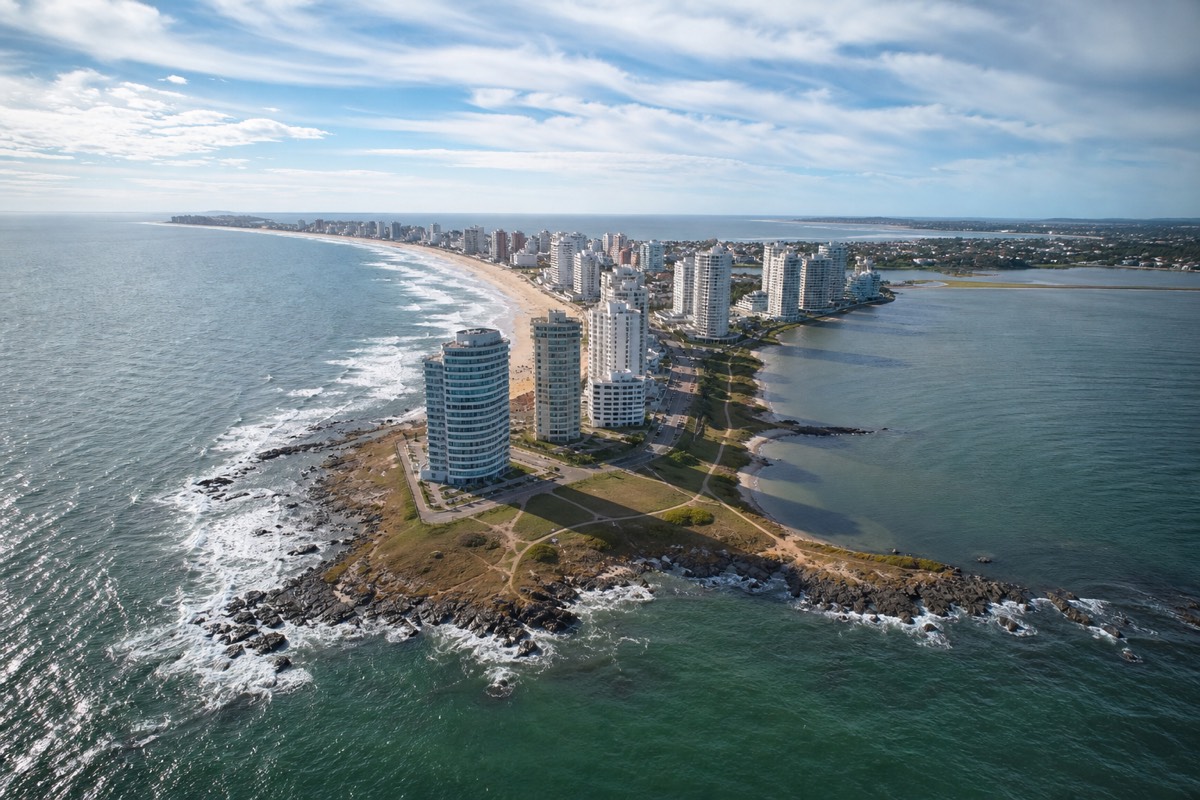
The coast east of Montevideo is a chain of separate small resort towns rather than one continuous beach city. Piriápolis is the oldest and most domestic, Punta del Este is the glossy high-rise resort with casinos and a famous sculpture, and José Ignacio is a low, quiet village. All three sit within a two-and-a-half-hour drive.
The thing that catches most first-time visitors off guard is how sharply seasonal it all is. From December through March the coast runs at full volume: restaurants serve until midnight, the beaches fill, and the coastal road backs up on Sunday evenings as everyone drives home to the capital. Outside that window the same streets go quiet enough that a good share of the businesses close until the following summer. That is not a defect. It is simply the rhythm of a resort coast in a country of roughly three and a half million people, and it means a July visit and a January visit are close to two different destinations.
Geographically the coast is gentle. There are no serious cliffs, no fjords, no headlands that dominate a horizon. What you get instead is a long series of sandy bays, pine and eucalyptus planted a century ago to hold the dunes, and the point at Punta del Este where the brown, brackish Río de la Plata gives way to the open blue Atlantic. Locals still use the old shorthand for the two sides of that point: the mansa side, calm and river-fed, and the brava side, rougher and properly oceanic. If you want swimming with children, you want mansa. If you want surf and wind, you want brava.
One more framing point is worth having straight before you plan anything. None of these towns is a substitute for Montevideo, and Montevideo is not a substitute for them. The capital is where the museums, the markets, the tango bars and the working city are. The coast is where Uruguayans and Argentines go to stop working. Travellers who try to compress both into a single 48-hour stop usually end up doing neither well, which is why our team generally suggests anchoring in the capital, taking a guided half-day in the city first, and treating the coast as an add-on rather than the main event.
How Far Is Each Coastal Town From Montevideo?
Piriápolis is the closest at roughly 96 to 97 kilometres and about 1h33m to 1h45m of driving. Punta del Este is roughly 116 to 134 kilometres and about 1h45m to 2h06m. José Ignacio sits further east again, at roughly 2 to 2.5 hours. Nothing on this coast is more than a half-day away.

| Destination | Typical drive from Montevideo | Distance figures published | Realistic day-trip verdict |
|---|---|---|---|
| Piriápolis | 1h33m to 1h45m | approx. 96 to 97 km | Comfortable day trip, back for dinner |
| Punta del Este | 1h45m to 2h06m | approx. 116 to 134 km | Doable in a day, better with a night in peak season |
| José Ignacio | 2h to 2h30m | quoted figures vary widely by source and route | Long day; pairs best with a Punta del Este overnight |
| Colonia del Sacramento (west) | 2h10m to 2h33m | approx. 179 to 181 km | Classic full-day trip, and the one we actually run |
A note on those numbers: published distances for José Ignacio vary a lot depending on which route and which starting point a source measures from, so plan around the drive time rather than the kilometre figure. The practical takeaway is the ordering. Piriápolis first, Punta del Este next, José Ignacio beyond it, each step adding roughly twenty to thirty minutes of road.
Summer traffic changes the arithmetic more than any map will tell you. In January and February, a Sunday evening return from Punta del Este can add a serious amount of time to that 1h45m figure, because most of Montevideo is on the same road at the same hour. If you are driving yourself, leaving the coast by mid-afternoon or waiting until after nine in the evening both work better than the four-to-seven window.
There is no passenger rail service linking Montevideo to these towns, so your options are a rental car, a long-distance coach from Tres Cruces bus terminal in Montevideo, or a private driver. Coaches are frequent, cheap and genuinely reliable, and they are how a large share of Uruguayans travel. The trade-off is that once you arrive you are on foot or in a taxi, which matters more in spread-out José Ignacio than in compact Piriápolis.
Punta Del Este, José Ignacio Or Piriápolis: Which Fits Your Trip?
Choose Punta del Este for nightlife, restaurants, shopping and the famous hand sculpture. Choose José Ignacio for quiet, space and a slower, more expensive kind of exclusivity. Choose Piriápolis if you want an old-fashioned seaside town with a hill, a promenade and prices that do not sting.
| Punta del Este | José Ignacio | Piriápolis | |
|---|---|---|---|
| Character | Built-up resort city, towers along the beach | Low-rise village, sand streets, lighthouse | Early-20th-century family resort |
| Best for | Restaurants, casinos, nightlife, shopping | Quiet, design hotels, long empty beach | Families, walkers, budget-conscious travellers |
| Signature sight | La Mano on Playa Brava | The lighthouse and the point | Cerro San Antonio and the seafront promenade |
| Peak-season feel | Very busy, international, dressed up | Busy but small; reservations essential | Busy with Uruguayan families, relaxed |
| Off-season feel | Half-shut but walkable and atmospheric | Almost closed | Quiet but still functioning as a real town |
| Day trip from Montevideo? | Yes, with an early start | Possible but long | Easily |
| Rough cost level | High in season | Highest on the coast | Moderate |
If you are travelling in a group with mixed tastes, Punta del Este is the safe compromise, because it contains enough of everything: quiet beach on the mansa side, surf on the brava side, a proper restaurant scene, and a walkable peninsula for people who would rather not sit on sand at all. José Ignacio rewards a very specific traveller, the one who wants to read a book, eat one excellent long lunch and see almost nobody.
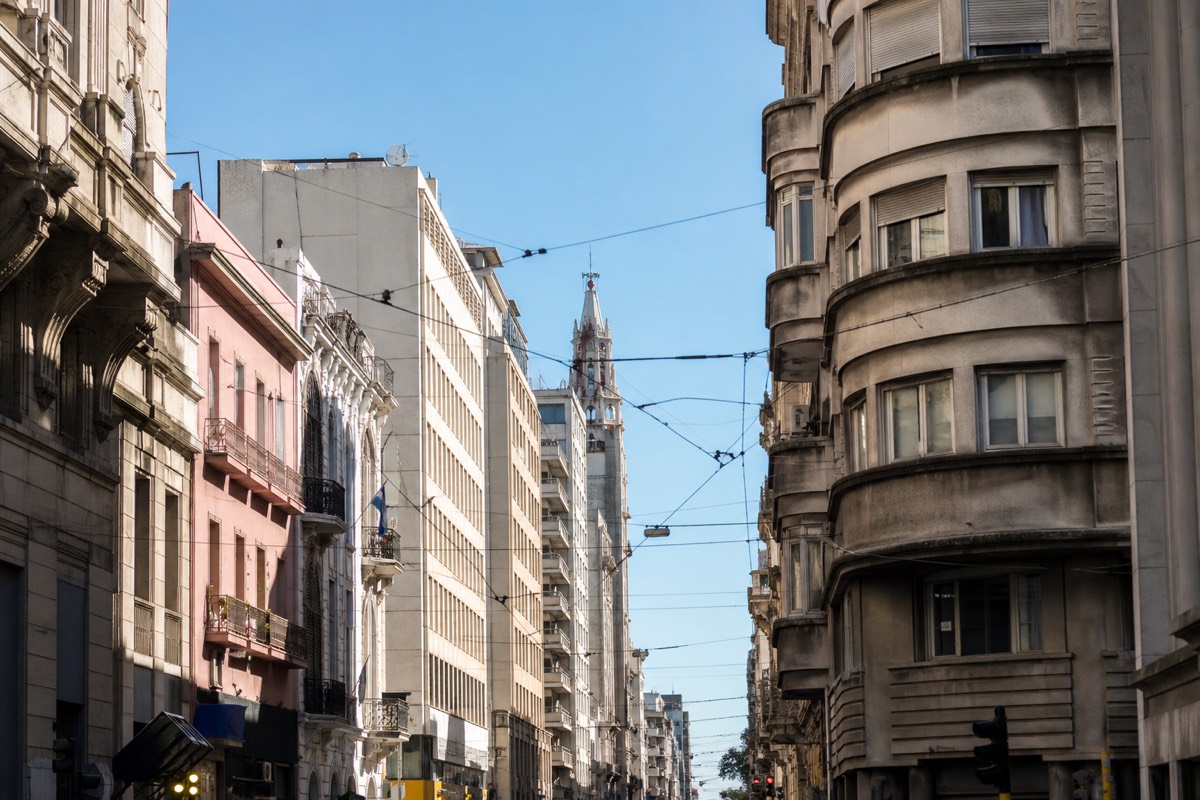
Piriápolis is the one that gets undersold in English-language travel writing. It has a genuine sense of period to it, laid out in the early twentieth century by the businessman Francisco Piria, with a grand old seafront hotel and a chairlift up Cerro San Antonio. It also stays alive out of season in a way the more fashionable towns do not, which makes it the better winter choice by a wide margin.
What Is There To Do In Punta Del Este Besides The Beach?
Punta del Este's most photographed thing is La Mano, the sculpture of fingers emerging from the sand on Playa Brava, created by the Chilean artist Mario Irarrázabal. Beyond it you get a walkable peninsula, a port with sea lions, casinos, a dense restaurant scene, and the Punta Ballena headland just west of town.
La Mano, also called Los Dedos, is the single image that represents Uruguay abroad, and yes, there will be a queue of people posing between the fingers. Go early or go at dusk. The sculpture sits directly on the sand on the ocean-facing Brava side, so the visit costs nothing and takes as long as your patience for photographs holds out.
The peninsula itself is small enough to walk end to end in under an hour. On the port side you can usually watch sea lions loitering near the fishing boats, waiting on scraps, which is free entertainment and reliably better than it sounds. Punta's casinos are a long-standing part of the town's identity and part of why the resort grew the way it did, drawing Argentine visitors across the river for decades.
Just west, the Punta Ballena headland holds Casapueblo, the white, hand-shaped cliffside building the Uruguayan artist Carlos Páez Vilaró built and lived in. It reads like a Mediterranean village poured over a rock face. There is a deeper Uruguayan story attached to it too: Páez Vilaró was the father of one of the young men aboard the plane that crashed in the Andes in 1972, and he spent months leading private search efforts for the missing. If that thread interests you, our guide to Museo Andes 1972 in Montevideo covers the full story and where to see it told properly.
What Punta del Este does not have is much history you can walk into. It is a twentieth-century resort, not a colonial town. Travellers who want old streets, stone and layered history are better served by Ciudad Vieja in the capital or by a guided full-day trip to Colonia del Sacramento, which we do run and which delivers exactly that.
Why Do Travellers Choose José Ignacio Instead?
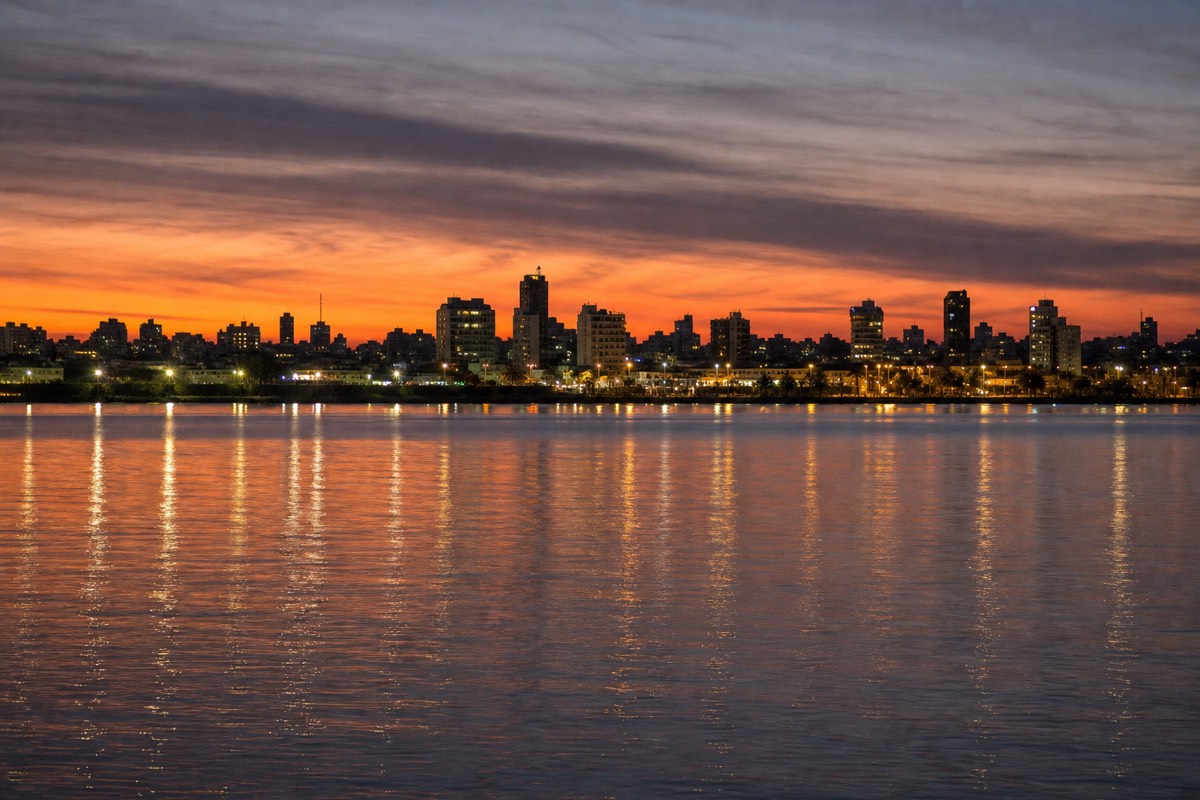
José Ignacio is what Punta del Este's visitors go looking for when Punta del Este gets too loud. It is a small, low, expensive village on a point between two beaches, built around a lighthouse, with a handful of celebrated restaurants and very little else by design.
The appeal is subtraction. No towers, no casino, no shopping street. The village sits on a narrow point with a calm beach on one side and open Atlantic on the other, and the lighthouse at the tip is the orientation device for the whole place. In January the population multiplies and reservations become genuinely necessary for dinner. In June you may find almost nothing open at all.
Two things to know before you commit a day to it. First, the drive is the longest of the three, at roughly two to two and a half hours each way, so a Montevideo day trip means four to five hours in a vehicle for maybe five hours on the ground. Second, José Ignacio prices sit at the top of the Uruguayan range. A long lunch here costs what a good dinner costs in Montevideo. Neither is a reason to skip it, but both are reasons to be honest with yourself about what you are buying.
The travellers who love José Ignacio most tend to be the ones already staying somewhere on the coast, who arrive mid-morning, swim, eat slowly, walk the beach, and drive back at sunset. As a compressed round trip from the capital it works far less well. If your Uruguay time is short and Montevideo-based, the better use of a day is usually the capital itself on a private guided day tour, then a coastal night later in the trip if the schedule allows.
The researched private Punta del Este itinerary lists José Ignacio only if time permits. That is not a guaranteed José Ignacio outing, so no matching booking is recommended for this specific choice.
Is Piriápolis Worth The Drive For A Day?
Yes, and it is the easiest coastal day trip of the three: roughly 96 to 97 kilometres and about an hour and a half each way. Piriápolis is an older, family-oriented resort town with a long seafront promenade and Cerro San Antonio, a hill you can ride or walk up for a view over the whole bay.
Piriápolis feels like a resort from a different era, because it is one. It was conceived and largely built by Francisco Piria at the turn of the twentieth century as a planned seaside town, and that intentionality still shows in the layout: a curved bay, a wide rambla, a grand hotel facing the water, hills at either end. Compared with Punta del Este's glass towers, it reads as human-scale and slightly nostalgic.
Cerro San Antonio is the standout. The hill rises directly behind the eastern end of town, and from the top you get the bay, the town's grid and the coastline running away in both directions. There is a chairlift as well as a road, so it suits a range of fitness levels. Most visitors give it an hour including photographs.
The town also works out of season in a way its neighbours do not. Because a meaningful number of people live in Piriápolis year-round, cafés stay open in winter, the promenade still gets walkers, and the place does not feel abandoned in the way an off-season José Ignacio can. For anyone visiting Montevideo between May and September who still wants to see some coast, this is the pick. Our guide to the best time to visit Montevideo goes into how the seasons shift what is worth doing.
When Is The Best Time To Visit Uruguay's Atlantic Coast?
December to March is the season, and it is not a close call. That is Uruguayan summer, when the water is swimmable, the towns are fully open and the coast is doing what it exists to do. January and February are the absolute peak, with the highest prices and the biggest crowds.
Inside that window there are real differences. December is the gentlest month: warm, open, and not yet at full pressure, since Uruguayan and Argentine holidays have not fully started. January is the loudest, when Buenos Aires empties across the river. February stays busy but eases in the second half. March is quietly the best value of the four, with warm water, thinning crowds and most places still trading.
Outside December to March, treat the coast as scenery rather than as a beach holiday. April and May can give you beautiful light and empty sand, and the drive is pleasant, but you are visiting a closed resort. June to August is genuinely cold and windy on this coast. Anyone in Uruguay in winter is better served spending the time in the capital, where a guided tour of Montevideo runs year-round and the city does not shut down.
One further seasonal note that affects planning more than weather: Montevideo's carnival occupies roughly forty days from mid or late January into late February or early March, which overlaps exactly with peak beach season. Travellers who want both should build the trip around the capital and take the coast on quieter weekdays. Our candombe and carnival guide explains how that calendar works.
Can You See The Coast As A Day Trip, Or Should You Sleep Out There?
Piriápolis works cleanly as a day trip. Punta del Este works as a day trip if you leave early and accept a long day. José Ignacio really wants an overnight somewhere on the coast. As a rule, one town per day is the honest maximum if you want to enjoy any of it.
Here is a realistic single-day Punta del Este plan from Montevideo. Leave by 8am. Arrive around 10am. Walk the peninsula and the port, see the sea lions, then La Mano on Playa Brava before the midday light gets flat. Long lunch. An afternoon on the mansa-side beach or a drive out to Punta Ballena for Casapueblo. Leave the coast by 5pm on a weekday, or 3pm on a summer Sunday. Home in Montevideo for a late dinner, which is normal there anyway, because Uruguayans eat late.
Trying to chain Piriápolis and Punta del Este in one day is technically possible, since they sit on the same road, and our team still would not recommend it. You end up with two rushed ninety-minute stops and four hours of driving. If you want the sampler experience, a private driver for the day is the format that actually delivers it, because you skip the parking and the coach timetables and can bail on any stop that is not working.
If you do stay a night, base in Punta del Este rather than José Ignacio unless money is genuinely not a factor. Punta has the range of accommodation, the restaurant options at multiple price points and the transport links, and José Ignacio is a forty-minute drive from it.
What About Colonia Del Sacramento In The Other Direction?
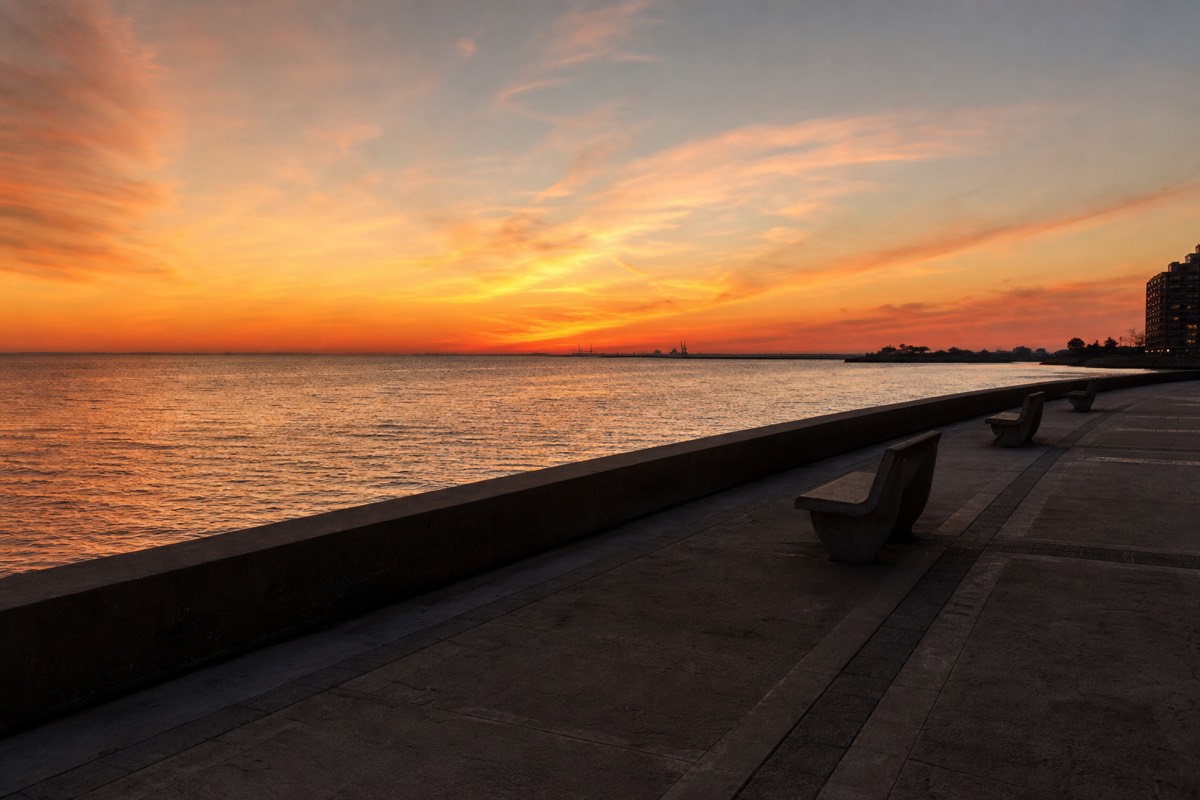
Colonia del Sacramento is Uruguay's other great day trip, and it goes west rather than east: roughly 179 to 181 kilometres, about 2h10m to 2h33m. Founded by the Portuguese in 1680 and fought over with Spain for a century, its Historic Quarter has been on the UNESCO World Heritage list since 1995.
The two directions offer genuinely different things. East is beach, resort and summer. West is cobblestones, colonial architecture, a lighthouse over convent ruins and a river sunset. If you have exactly one free day in Montevideo and you are not there specifically to swim, Colonia is the stronger choice, and it holds up in every month of the year, which the beaches emphatically do not.
Colonia's history is unusually legible on the ground. The Portuguese founded it in 1680 as a smuggling and trading outpost directly opposite Spanish Buenos Aires, and it changed hands repeatedly. You can still read the two building traditions street by street: Portuguese houses drain to the middle of the cobbled lane, Spanish ones to the sides. The UNESCO inscription in 1995 recognised precisely that fused, contested urban fabric under criterion iv on the World Heritage list.
Verified excursions from Montevideo now cover Punta del Este and Piriápolis, with shared and private formats. The José Ignacio stop in one researched private itinerary is explicitly dependent on remaining time, so it is not a guaranteed option. Colonia remains a separate western day trip for travelers who want the UNESCO historic town instead of the Atlantic coast.
What Do First-timers Get Wrong About The Uruguayan Coast?
The four recurring mistakes: going outside the December-to-March window and expecting an open resort, underestimating summer return traffic, trying to see all three towns in one day, and assuming Punta del Este will deliver history. Each one is easy to avoid once you know it.
The seasonal mistake is the expensive one. Arriving in Punta del Este in July with a beach itinerary means finding shuttered restaurants and a cold wind off the Atlantic. There is nothing wrong with an off-season coastal visit, but plan it as a moody walk and a seafood lunch, not as a beach day.
The traffic mistake costs an evening. Summer Sunday returns to Montevideo can turn a comfortable drive into a long one. Shift your departure earlier or much later.
The third mistake is greed with the map. The three towns sit close together on paper, but the point of the coast is slowness, and a schedule that allots ninety minutes each defeats the purpose entirely. Pick one. Do it properly.
The fourth is a category error. People arrive in Punta del Este expecting the sort of old town they saw photographs of, and Punta del Este is not that place. The old stone streets are in Ciudad Vieja and in Colonia. Our Ciudad Vieja walking guide covers the capital's version, which most visitors can reach on foot from their hotel.
How Should You Build The Coast Into A Montevideo Trip?
Anchor in Montevideo, take the capital seriously for the first day or two, then add coast. A common workable shape is: day one Montevideo city orientation, day two Colonia or a winery, day three the coast if you have it. Reversing that order tends to leave the city as an afterthought.
The reason is practical rather than sentimental. Montevideo is where the flights, the port, the hotels and the transport hub are, and it is the only place on this list that functions fully in all twelve months. Using it as the base means you can decide about the coast on the morning of, based on actual weather, instead of committing months ahead to a beach day that turns out grey.
For a first full day in the capital, a guided orientation earns its keep, because Montevideo's highlights are spread across several distinct neighbourhoods rather than concentrated in one walkable core. Our half-day city sightseeing tour runs the Plaza Independencia, Legislative Palace, Centenario Stadium and Rambla circuit in a small group, which is around $35 at the time of writing, though you should check the live listing for current pricing. Travellers who want to set their own route often prefer a private day tour built around their own interests.
If wine matters to you, note that Uruguay's vineyard country sits close to Montevideo rather than out on the coast, in Canelones just outside the city, which makes a winery visit a far shorter round trip than Punta del Este. There is also a real estancia tradition inland, with working ranches such as Estancia Los Plátanos, Estancia El Ceibo and Finca Piedra open to visitors. We do not sell those, so arrange them directly, but they are the answer for anyone who wants rural Uruguay rather than resort Uruguay. For everything else about basing yourself in the capital, start with our Montevideo travel guide.