Ciudad Vieja: Montevideo's Historic Center
Montevideo was founded on this peninsula in the 1720s because of the harbour on its northern side, and the Spanish built a wall around it. The wall came down by 1829. One gate survives, on Plaza Independencia, and almost every good walk through the old town starts by passing under it.
The Ciudad Vieja walking spine
Ciudad Vieja works well on foot. Pay for a guided introduction or a specific interior when it adds something you want to understand.
Booking Shortlist: Museo Andes 1972 Admission. Follow the 1972 story through original objects, documents and a day-by-day timeline in Ciudad Vieja.
Schematic, not to scale. Dates from the historic record: the colonial wall was removed by 1829, Mercado del Puerto was inaugurated on 10 October 1868, Palacio Salvo was completed in 1928.
What Is Ciudad Vieja And Why Does It Matter?
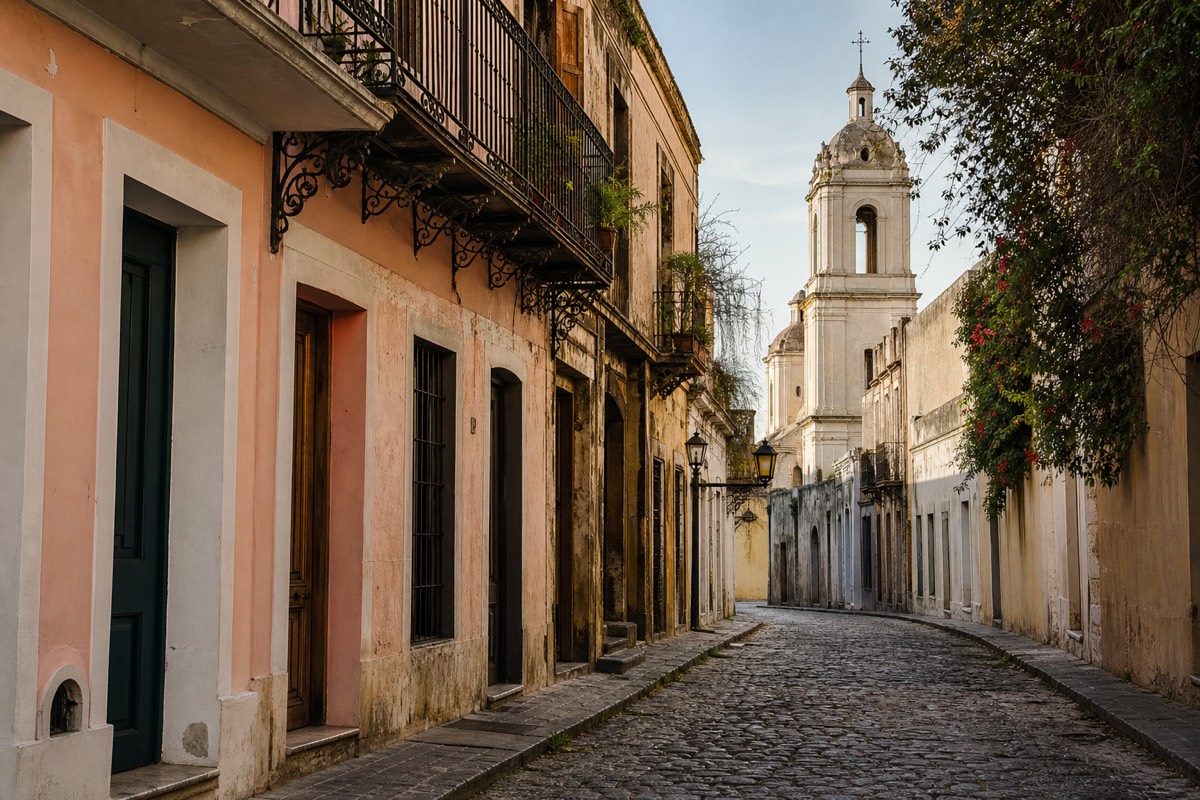
Ciudad Vieja is the original walled city of Montevideo, occupying a peninsula at the entrance to the natural harbour. Bruno Mauricio de Zabala founded the settlement in the 1720s as a Spanish fortification against Portuguese expansion. The defensive walls were largely removed by 1829, but the colonial street grid and the historic core remain.
Every city has a founding logic, and here it is entirely geographic. The peninsula creates a sheltered bay on one side and open river on the other, which made it the best natural port on this stretch of the Rio de la Plata and therefore worth building a fort on. Spain built one. Portugal wanted it. That rivalry runs through the early history of Uruguay and explains a great deal about the country's existence as a buffer state between two much larger neighbours.
What you walk through today is roughly 100 blocks of that original grid, bounded by water on three sides and by Plaza Independencia at its neck. The architecture is layered rather than uniform: colonial houses with iron balconies next to grand nineteenth-century bank buildings, Art Deco apartment blocks, a 1928 skyscraper, and stretches of decay and restoration sitting on the same street.
It is also a functioning district. Ministries, banks, shipping agents, the port authority and a working container terminal all operate here, so the quarter has a strong weekday pulse and a much quieter evening. That rhythm shapes almost every practical decision about visiting, from when to eat to when to head back, and we come to it below.
If you only do one guided thing in Montevideo, doing it here makes the most sense, because this is the part of the city where the visible surface and the actual story diverge the most. The half-day small-group city tour starts in this quarter before spreading out across the rest of the city.
What Is The Best Walking Route Through Ciudad Vieja?
Start at Plaza Independencia, pass under the Puerta de la Ciudadela, walk west down the pedestrianised Sarandi street to Plaza Matriz, and continue toward the port to finish at Mercado del Puerto in time for lunch. That single line covers the majority of the quarter's landmarks and takes two to three hours with stops.
The reason this route works is that Ciudad Vieja has a spine. Sarandi runs the length of the peninsula, it is closed to traffic through its most interesting stretch, and nearly everything worth seeing is either on it or one block off it. You do not need a complicated loop. You need one line and the willingness to detour.
| Stop | What it is | Key date | Time to allow |
|---|---|---|---|
| Plaza Independencia | Main square, Artigas mausoleum below ground | Remains interred 1974 | 30 minutes |
| Palacio Salvo | Eclectic-style tower, 27 storeys, 105m | Built 1925 to 1928 | 15 minutes outside |
| Teatro Solis | Uruguay's oldest working theatre | Opened 1856 | 20 minutes, longer with a guided visit |
| Puerta de la Ciudadela | Surviving gate of the colonial wall | Wall removed by 1829 | 10 minutes |
| Sarandi pedestrian street | Cafes, bookshops, buskers, weekend market | Colonial grid | 45 minutes at a browse |
| Plaza Matriz | Cathedral and Cabildo on the old central square | Colonial core | 30 minutes |
| Mercado del Puerto | Iron market hall, now parrilla restaurants | Inaugurated 10 Oct 1868 | 90 minutes with lunch |
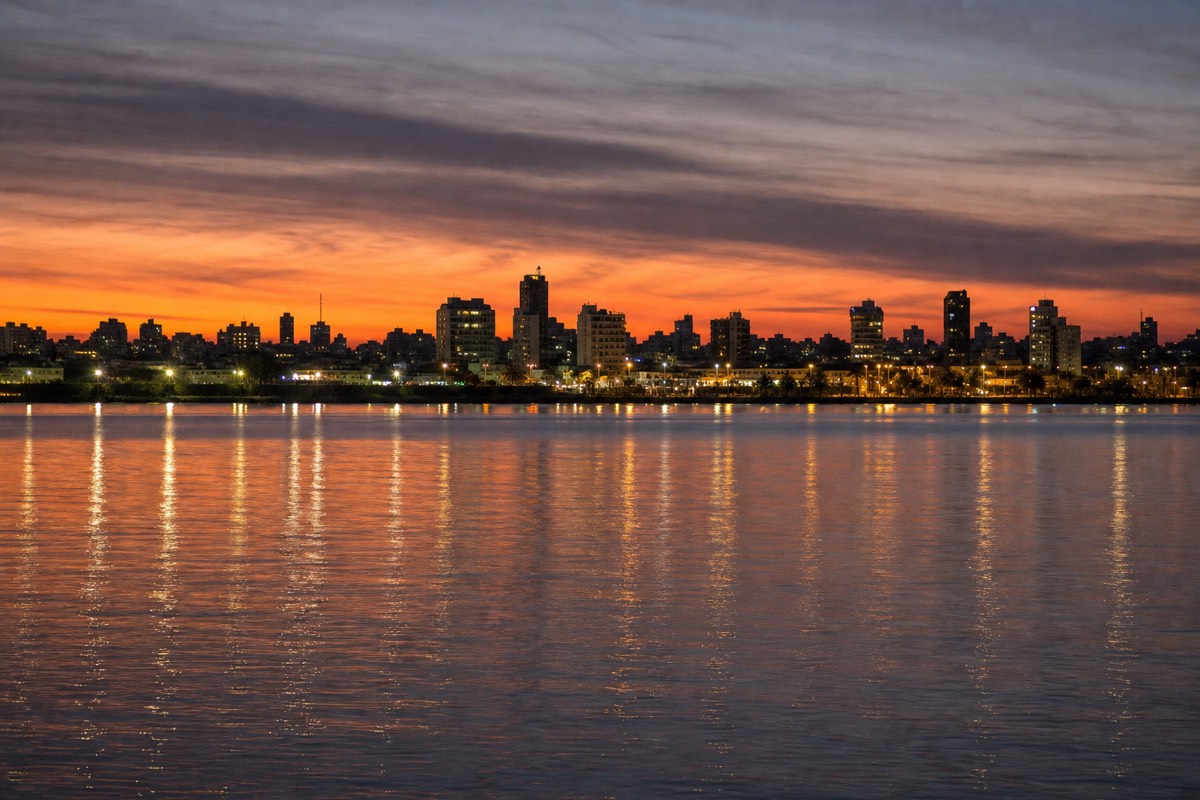
Two worthwhile detours hang off that spine. Plaza Zabala, a formal square a couple of blocks south with an equestrian statue of the founder and the Palacio Taranco facing it, is the quietest green space in the quarter. And the harbour-side Rambla at the northern edge gives you the working port in full view, cranes and all, which is a useful corrective to the postcard version of the old town.
Walking it with someone who knows the buildings changes the experience substantially, because the facades here do not explain themselves. A private discovery tour with a local guide can take this route at your own pace and add the Palacio Legislativo, the Cerro fortress and the Rambla afterwards.
What Should You See On Plaza Independencia?
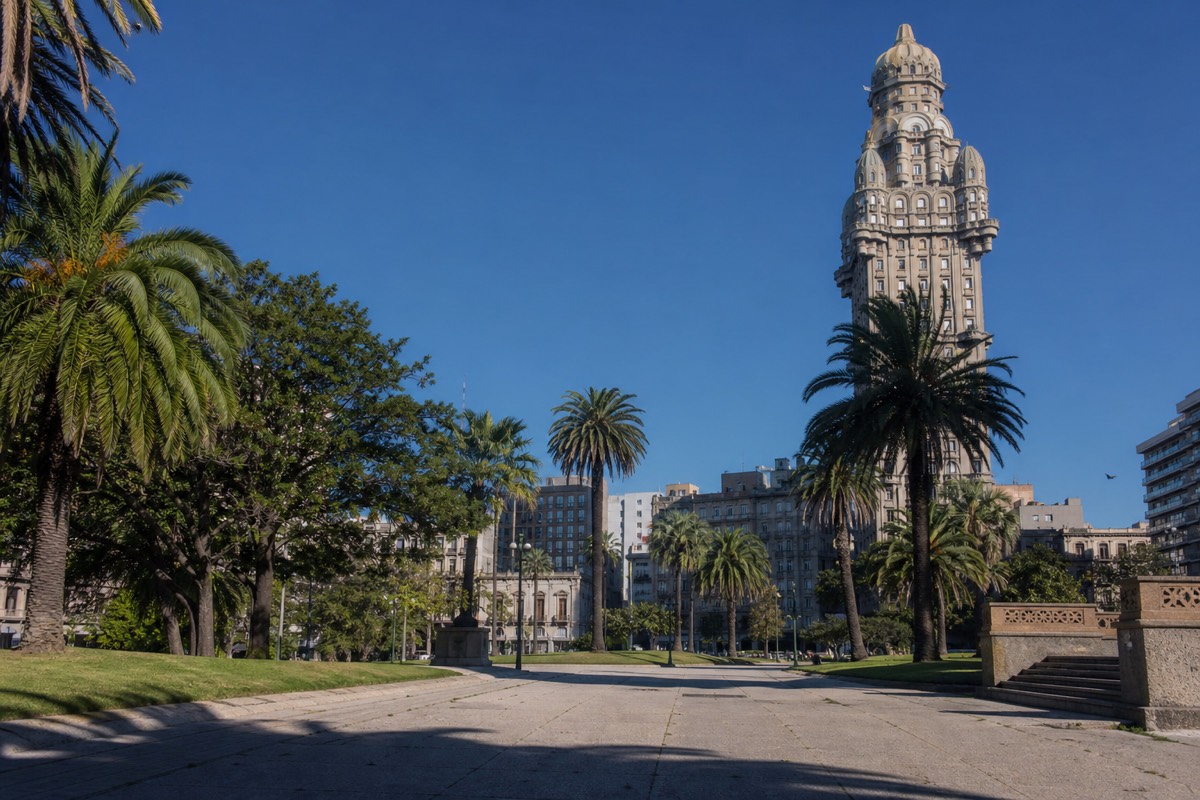
Plaza Independencia is the hinge between the colonial old town and the nineteenth-century city. On it stand Palacio Salvo, the Puerta de la Ciudadela, the presidential Torre Ejecutiva and the equestrian statue of Jose Gervasio Artigas, beneath which lies the underground mausoleum holding the national hero's remains since 1974.
The mausoleum is the part most visitors miss because it is invisible from the square. Steps lead down beneath the statue into a marble chamber where an honour guard in nineteenth-century Blandengues uniform stands watch over the urn. It is free to enter, it takes ten minutes, and it tells you more about Uruguayan national feeling than any museum in the city. Artigas is the figure Uruguay organises its self-image around, the leader of the independence struggle against Spain and later Brazil, and the reverence here is genuine.
Above ground, the square is deliberately transitional. To the west, the gate leads into the tight colonial grid. To the east, Avenida 18 de Julio strikes out in a straight line through the modern city, past the Palacio Municipal and toward Parque Batlle. Standing in the middle you can see both halves of Montevideo at once, which is exactly what the nineteenth-century planners intended when they cleared the fortifications.
The buildings ringing the plaza run through a century of ambition in a single lap: the neoclassical Estevez Palace, once the seat of government, the modernist Torre Ejecutiva that replaced it in function, hotels, and Salvo looming over everything with its improbable silhouette. Advisories do counsel caution around the plaza and the avenue at night, which is a reason to do your looking in daylight rather than a reason to skip it.
Is Palacio Salvo Worth Going Inside?
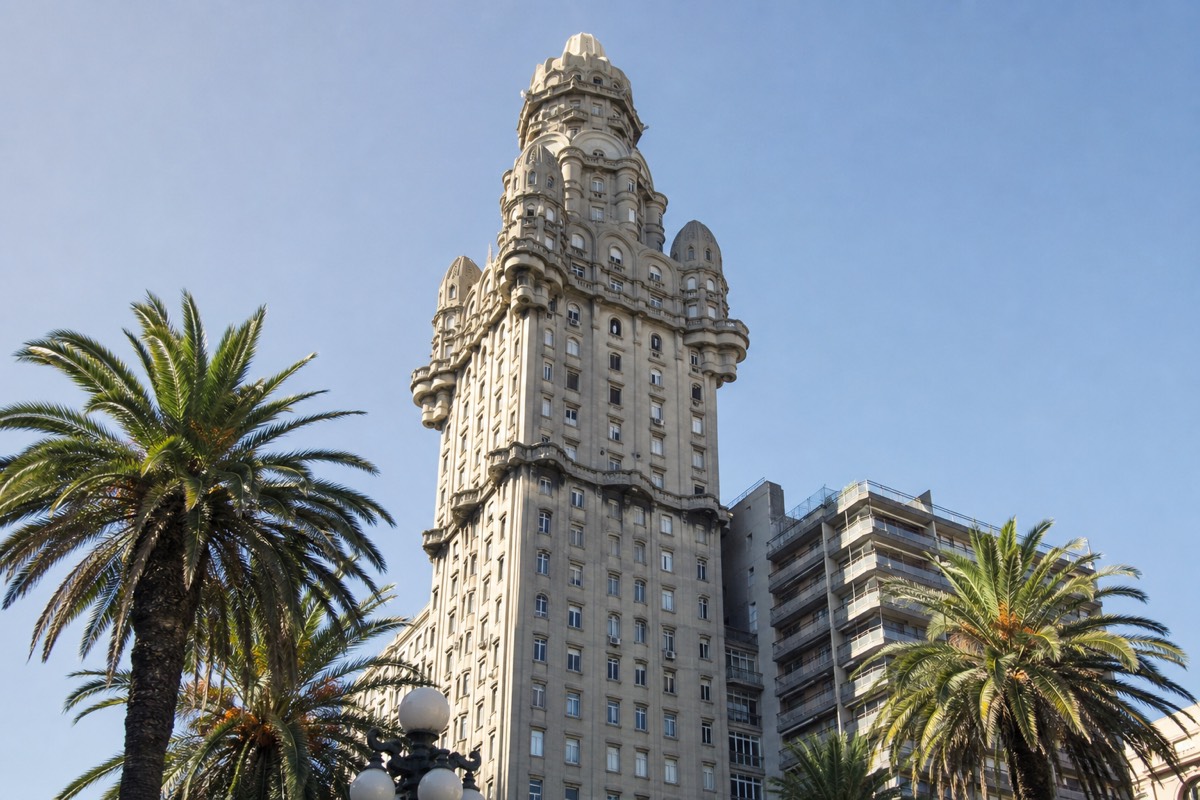
Palacio Salvo is the building everyone photographs and few understand. Italian architect Mario Palanti began it in 1925 and finished in 1928, producing an eclectic 27-storey tower of 105 metres, or 344 feet, that was for a time the tallest building in South America. Guided visits to parts of the building have operated in recent years; check current availability before making a plan around it.
The design has no straightforward classification, which is why it is usually filed under eclecticism. There is Gothic in the massing, Art Nouveau in the detailing, something almost Babylonian in the crown, and the whole thing was originally intended as a hotel before becoming a mix of apartments and offices. Palanti had already built a sibling tower, the Palacio Barolo, across the river in Buenos Aires, and the family resemblance between them is unmistakable.
What makes it worth more than a photograph is its position in the city's imagination. Salvo is the shape Montevideo puts on its own postcards, the landmark that tells you at a glance which capital you are in, and it stands directly over the square where the country buries its founding hero. That is a lot of symbolic weight for one building, and Uruguayans are fond of it and rude about it in roughly equal measure.
A tango museum has operated inside, which fits: the building's ground floor once housed the confiteria where La Cumparsita, the tango composed in Montevideo in 1917 and probably the most recognised tango melody in the world, is associated with its early performances. Hours for these spaces change, so treat any internal visit as something to confirm on the day rather than a fixed item in your itinerary.
From the outside, the best angles are from the far side of Plaza Independencia in the morning, when the light hits the east face, and from Avenida 18 de Julio looking back, where the tower closes the vista at the end of the street.
What Makes Teatro Solis Worth Stopping For?
Teatro Solis opened in 1856, was designed by the Italian neoclassical architect Carlo Zucchi, and is Uruguay's oldest theatre still in operation as well as the oldest in South America. It sits just off Plaza Independencia and remains a working venue with a full programme of opera, ballet, orchestral concerts and drama.
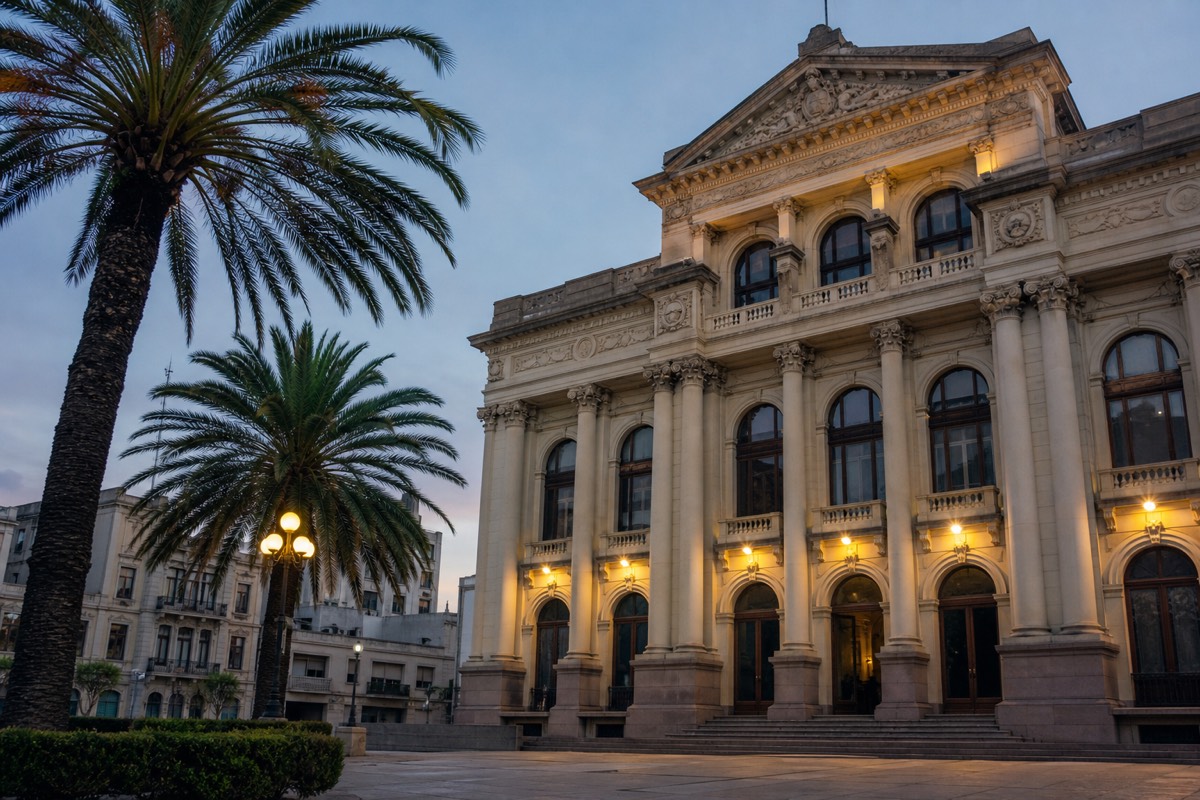
The exterior is restrained Italian neoclassicism, a portico of columns and a plain pediment, which understates what is behind it. The auditorium is a horseshoe of tiered boxes in the European tradition, and the building has been restored in the modern era rather than left as a museum piece. That distinction matters: this is not a preserved ruin, it is the place where the city goes to hear an orchestra on a Thursday night.
Guided visits of the interior have long been part of the theatre's public offer, typically running on set days at set times and sometimes free or reduced on one day of the week. Schedules change with the performance calendar, so check on the day. If the timings do not line up, the cafe and the portico are worth a pause anyway, and the small square in front is one of the pleasanter places to sit in the quarter.
The better option, if your dates allow it, is to see something. Tickets for many performances are inexpensive by European or North American standards, the acoustics are well regarded, and sitting in an 1856 auditorium in a South American capital watching a national orchestra is a considerably better evening than most tourist entertainment.
Directly behind the theatre, on Ciudadela street, sits Baar Fun Fun, running since 1895 and declared Cultural Heritage of Montevideo. A tango class and show there pairs a 45-minute beginner lesson with professional dancers, a glass of the bar's secret-recipe Uvita, local snacks and entry to the nightly live tango without a separate cover charge. It is a tidy way to turn an afternoon in Ciudad Vieja into a full evening.
The verified city walks do not include Teatro Solís interior admission. Arrange a dedicated theater visit separately if going inside is the reason for your stop.
Is Mercado Del Puerto Still A Real Market?
Not in its original sense. Mercado del Puerto was inaugurated on 10 October 1868 as a market selling fruit, vegetables and meat, and it now operates as a cluster of parrilla restaurants and tourist businesses under the original iron structure. Doors typically open around 10 or 11am and the market winds down between 5 and 6pm, later at weekends.
Understanding the transformation makes the visit better rather than worse. Nineteenth-century port cities built iron market halls because the technology allowed wide spans, high ceilings and good ventilation for perishable goods, and this one served the working port on its doorstep. When the produce trade moved elsewhere, the grills stayed, and by the late twentieth century the hall had become the place both locals and visitors associate with Uruguayan asado.
Inside, half a dozen or more parrillas work side by side over wood fires, with counters facing the grill so you can sit and watch your food cook. Order asado de tira, entrana, morcilla dulce if you are curious, and provoleta, the grilled provolone that arrives blistered and bubbling. Drink medio y medio, the local half sparkling, half still white wine blend. Expect noise, smoke and a certain amount of showmanship.
The fair criticisms are that prices sit above the neighbourhood average and that at peak cruise-season hours it can feel like an attraction rather than a market. The fix is timing. Weekday around noon is a different place from Saturday at half past one. Arrive early, eat, and be out before the crowd builds.
Around the hall, the surrounding blocks have their own life, with craft stalls, a carnival museum near the waterfront and bars that keep going after the market closes. A private street food walk works through Ciudad Vieja with tastings of empanadas, chivito and mate before finishing here, which gives you context rather than dropping you cold into a room full of grills. Our Montevideo restaurant guide covers where residents eat when they are not at the port.
Which Museums And Galleries Are In Ciudad Vieja?
The quarter holds a dense concentration of Montevideo's museums, including the Museo Torres Garcia on Sarandi, the Museo Andes 1972 telling the story of the 1972 Andes flight disaster, the national history museum's colonial houses, the decorative arts collection at Palacio Taranco on Plaza Zabala, and a carnival museum near the port.
Joaquin Torres Garcia is the artist to know if you know only one. He developed a constructivist visual language in Europe, returned to Montevideo in the 1930s, and produced the famous inverted map of South America with the south at the top, an image that became shorthand for a whole continent's cultural self-assertion. The museum devoted to him on the pedestrian stretch of Sarandi is small, free or inexpensive, and takes under an hour.
The Museo Andes 1972 covers the crash of a Uruguayan air force flight carrying a rugby team over the Andes and the 72 days that followed before the survivors were rescued. It is a story that belongs to this city, since the young men on board were from Montevideo, and the museum treats it as a local tragedy rather than an international curiosity. Our separate guide to the Museo Andes 1972 covers what is inside and how much time to allow.
Plaza Zabala rewards the detour. The square is formal and green, the equestrian statue at its centre honours the city's founder, and Palacio Taranco on one side is an early twentieth-century mansion built in French style that now holds a decorative arts collection. Entry is usually free or nominal. The contrast between that interior and the working port four blocks north says something true about how this city was built.
A practical note that catches people out: many Montevideo museums close on Mondays and several keep short afternoon hours. Build your museum day into a Tuesday-to-Friday slot and keep Sunday for the street, the market and the drums.
Is Ciudad Vieja Safe, And What Hours Should You Keep?
Ciudad Vieja is busy and comfortable during the working day and into the evening, and quiet after office hours. Government advisories counsel caution in parts of it at night, and UK advice specifically warns against walking downtown or in the port area alone at night and at weekends. Daylight and early evening are the practical window.
The cause is the commuter pattern described earlier. When the ministries and banks empty out, so do the side streets, and the residential population left behind is small relative to the daytime crowd. Empty streets in any city are where opportunistic theft happens, and the local pattern in Montevideo includes snatch thefts by pairs on motorcycles who target people standing still with a phone or a bag.
Simple habits cover almost all of it. Keep your phone in a pocket rather than your hand while walking. Carry a bag on the inside shoulder rather than the street side. Use ATMs inside banks or shopping centres rather than street-facing machines. Stay on the busier arteries after dark, and take a taxi or an Uber back rather than walking out through quiet blocks. Uber operates legally and 24 hours here, which makes that easy.
None of this makes Ciudad Vieja a no-go area. Uruguay ranks as the most peaceful country in South America on the 2026 Global Peace Index, there is a tourist police unit patrolling this quarter along with Centro, Pocitos and Punta Carretas, and the overwhelming majority of visitors come and go without incident. It simply means treating a working port district like a working port district.
Our full Montevideo safety guide goes through the advisories in detail, including which outer neighbourhoods are flagged and what to do if something does happen. The emergency number across Uruguay is 911.
When Is The Best Time Of Day And Week To Visit Ciudad Vieja?
Weekday mornings and lunchtimes are when the quarter is at its most alive, with offices open, cafes full and the market grilling. Saturday brings the Sarandi flea market and a browsing crowd. Sunday is quiet in the old town but is the day candombe drumming happens in the neighbourhoods just south. Evenings empty out fast.
| When | What it feels like | Best for |
|---|---|---|
| Weekday 9am to noon | Commuter energy, cool light, museums opening | Photography, the mausoleum, Teatro Solis visits |
| Weekday noon to 3pm | Busiest hours, grills at full tilt | Mercado del Puerto lunch, street life |
| Weekday late afternoon | Offices emptying, market winding down | A last coffee before heading to the Rambla |
| Saturday | Flea market and buskers on Sarandi, relaxed | Browsing, antiques, a slow walk |
| Sunday | Very quiet in the old town | Head south to Barrio Sur and Palermo for candombe instead |
| After dark | Streets thin quickly outside restaurant clusters | Dinner or tango with a booked ride home |
Season matters less here than in the beach neighbourhoods, because this is an indoor and architectural experience as much as an outdoor one. The southern summer, December to March, brings the biggest crowds and the most cruise traffic. April and May give you golden light and comfortable walking temperatures. Winter is cool and windy off the water, and the market's covered hall is a genuine relief on a grey day.
Cruise passengers should note the arithmetic: with a ship in port for eight to ten hours, this quarter plus a market lunch plus a stretch of Rambla is a full and satisfying day, and anything more ambitious starts putting your ship's departure at risk. The cruise port guide works through the timing.
How Do You Get To Ciudad Vieja?
Ciudad Vieja is at the western end of the city centre, adjacent to the cruise and ferry terminals at Puerto de Montevideo. From Pocitos or Punta Carretas it is a 10 to 20 minute ride depending on traffic. From Carrasco International Airport it is roughly 20 kilometres, or 25 to 40 minutes by taxi, Uber or private transfer.
By rideshare or taxi, name a landmark rather than an address if your Spanish is limited. Plaza Independencia, Teatro Solis or Mercado del Puerto are all universally recognised drop-off points, and all three put you within a few minutes' walk of everything in this guide.
By bus, the STM network runs services along 18 de Julio and into the old town from across the city. A rechargeable STM card, bought at Abitab or Redpagos outlets, is cheaper than paying cash, roughly 46 pesos against 56 pesos on a common fare as of August 2026. Fares and exchange rates move, so treat that as an indication rather than a promise. The Uruguayan peso traded at approximately 40 to the US dollar in August 2026.
On foot, the quarter connects to Centro along 18 de Julio, and along the Rambla you can walk east toward Parque Rodo and eventually Pocitos, though that last stretch is long enough that most people ride part of it. The guided electric bike tour links Pocitos, Parque Batlle, 18 de Julio, Plaza Independencia, Sarandi and Plaza Matriz in one three and a half hour circuit, which solves the distance problem neatly for anyone who would rather not spend the day in taxis.
Arriving by ship or ferry, you are already here: the terminals sit against the northern edge of the quarter. Walking out is common in daylight, though official advice warns against doing it alone, and most tours meet at the Ministry of Tourism building by the port exit instead. For the full range of ways to see the old town and the rest of the city, browse our Montevideo tours.