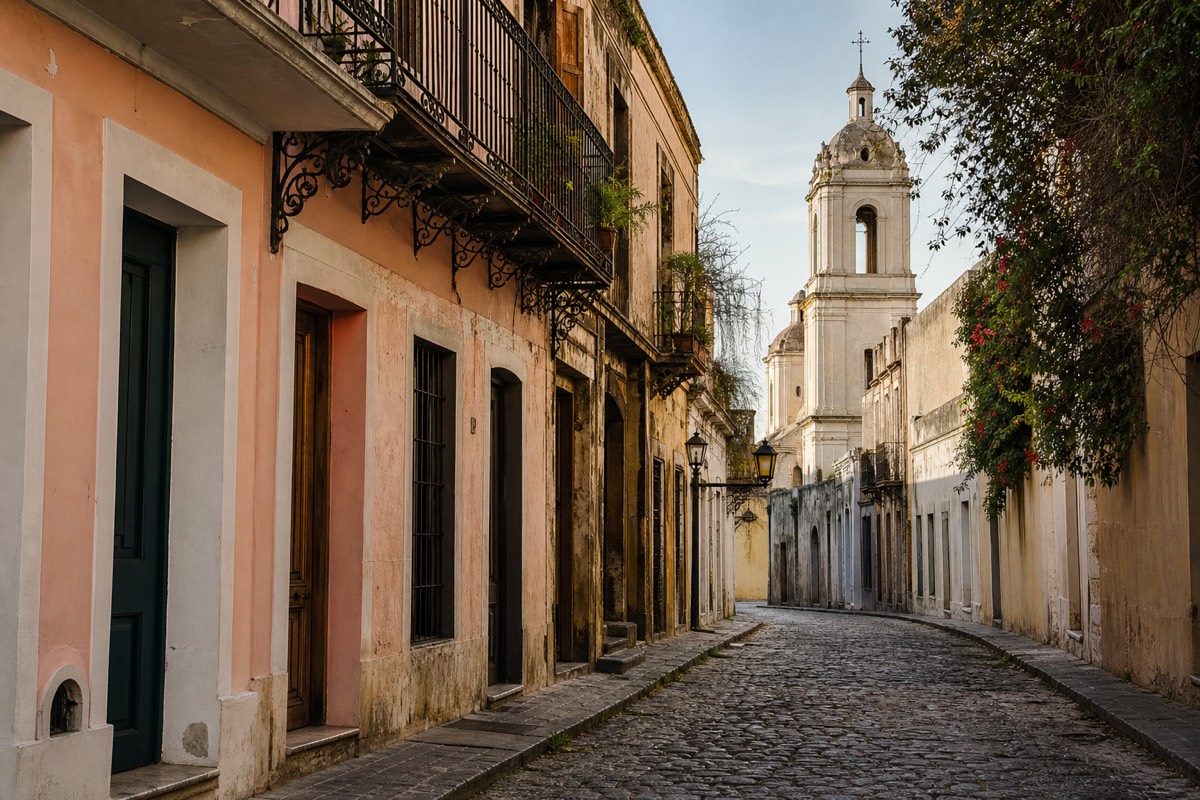
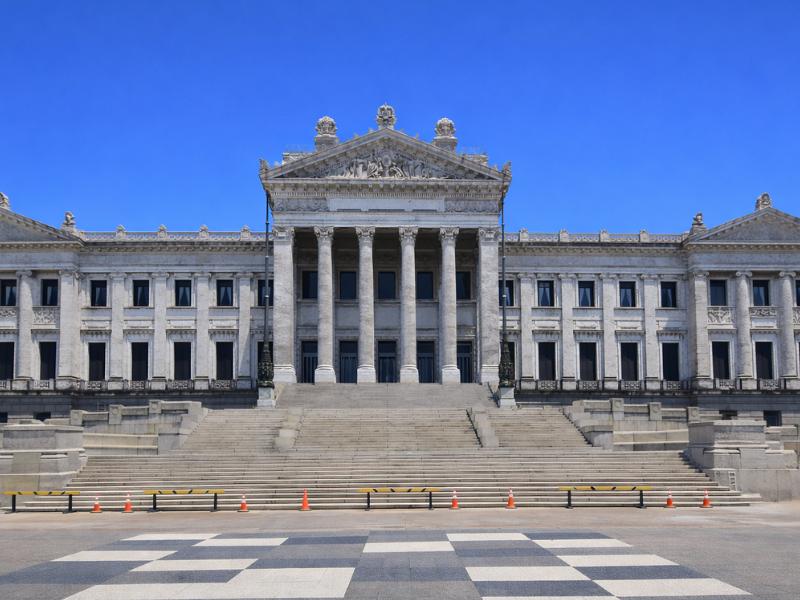
Palacio Salvo: Tickets, Tour And History
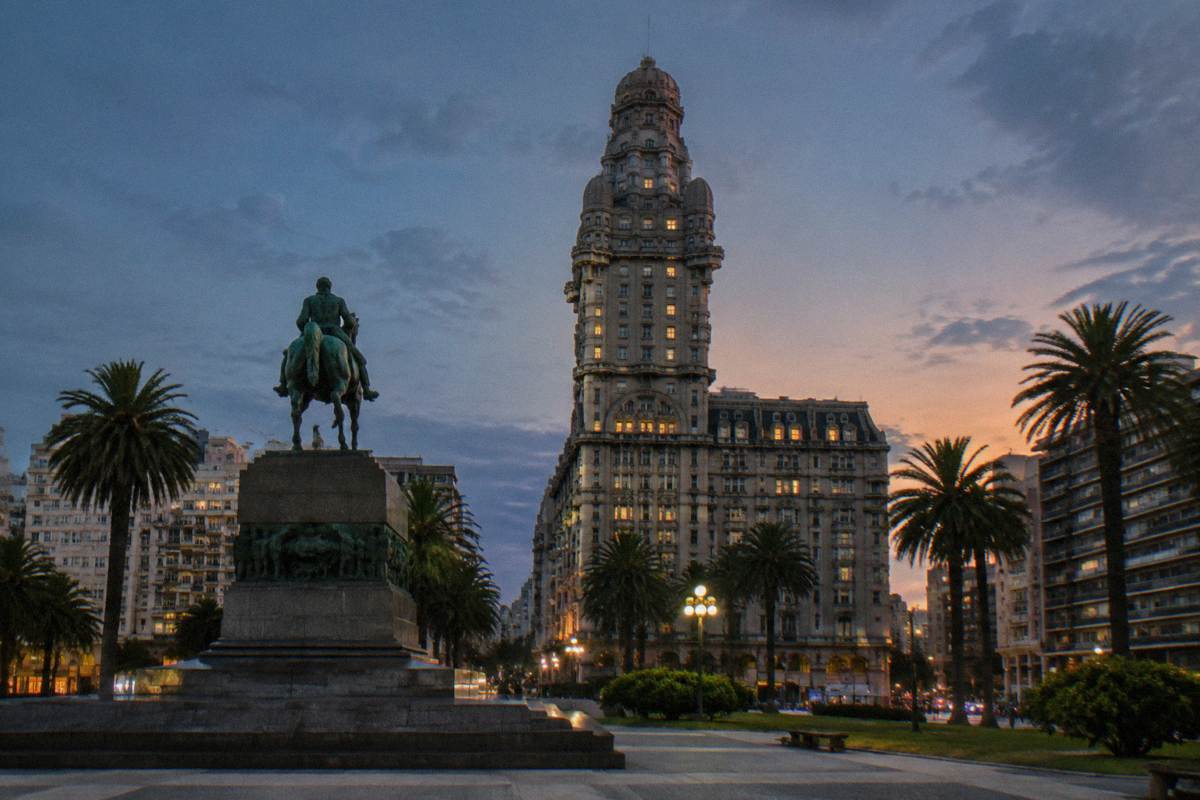
Palacio Salvo opened in 1928 as a hotel and briefly stood as the tallest building in South America, rising 101 meters over Plaza Independencia with 27 floors above two basements. Designed by Italian architect Mario Palanti, it occupies the site where La Cumparsita, Uruguay's most famous tango, premiered in 1917. Today its halls and upper viewpoints can be visited on a guided tour lasting about 45 minutes.
What Is Palacio Salvo's Original Purpose?
Palacio Salvo was conceived as a hotel, with offices and commercial spaces packed into the lower floors, commissioned by the Salvo brothers and designed by Italian architect Mario Palanti. When it opened in 1928 it was the tallest building in South America and, by several accounts, the tallest reinforced concrete structure in the world at that moment. The hotel function never dominated for long, and the building gradually shifted toward the mixed residential, office and commercial use you see today.
The Salvo brothers, members of a wealthy Uruguayan family of Italian origin, wanted a statement building on Montevideo's most important square, Plaza Independencia. They hired Mario Palanti, the same Milanese architect who had recently completed Palacio Barolo in Buenos Aires, and gave him a free hand to design something monumental. What he delivered was an eclectic tower of 27 floors above ground plus two basement levels, topped by a stepped crown and a beacon that brings the total height to about 105 meters, against roughly 101 meters for the architectural structure itself.
The hotel ambition is worth dwelling on because it explains the building's strange internal layout. A grand lobby, ballroom and commercial arcades made sense for guests; the narrow upper floors made sense for hotel rooms of the era. But the Salvo family reportedly converted much of the building to apartments and offices before the hotel plan fully materialized, and the tower never operated as the grand hotel originally imagined. Sources differ on how much of the hotel actually functioned, so treat the exact sequence as a matter of historical debate rather than settled fact.
What is settled is the record. Upon completion in 1928, Palacio Salvo claimed the title of tallest building in South America, and it held that record until roughly 1935, when taller towers elsewhere on the continent overtook it. For a city of fewer than half a million people at the time, that was a remarkable statement of ambition, and it made the palace an instant symbol of Montevideo, a role it has never really surrendered. Wikipedia's entry on the building records the 1925 construction start, the 1928 inauguration and the height figures cited above (the English Wikipedia article on Palacio Salvo).
Why The Hotel Never Quite Happened
Historical accounts agree that the original program combined a hotel with offices and ground-floor commerce, but they diverge on why the hotel component faded. The most common explanation is economic: the climate of the years after the tower's completion made a 27-floor luxury hotel in Montevideo a difficult proposition, and apartments plus offices offered a steadier return. The Spanish-language Wikipedia entry on the building describes the same mixed original purpose, with a construction start sometimes dated to 1922 rather than 1925, one of several discrepancies between sources you should keep in mind when reading older accounts.
Whatever the precise commercial logic, the outcome is the building you visit today: a vertical neighborhood of residences and offices over a commercial base, with a museum and guided-tour operation grafted onto the historic halls. That layered history is part of what makes a visit interesting. You are not touring a preserved monument frozen in 1928; you are walking through a living building whose ground floor still hums with shops and whose elevators still carry residents to their apartments.
When Was Palacio Salvo Built?
Construction of Palacio Salvo began in 1925 according to most English-language sources, with some Spanish-language sources dating the start to 1922, and the building was inaugurated in 1928. It was declared a National Historic Monument in 1996, cementing its status as one of Uruguay's protected heritage landmarks.
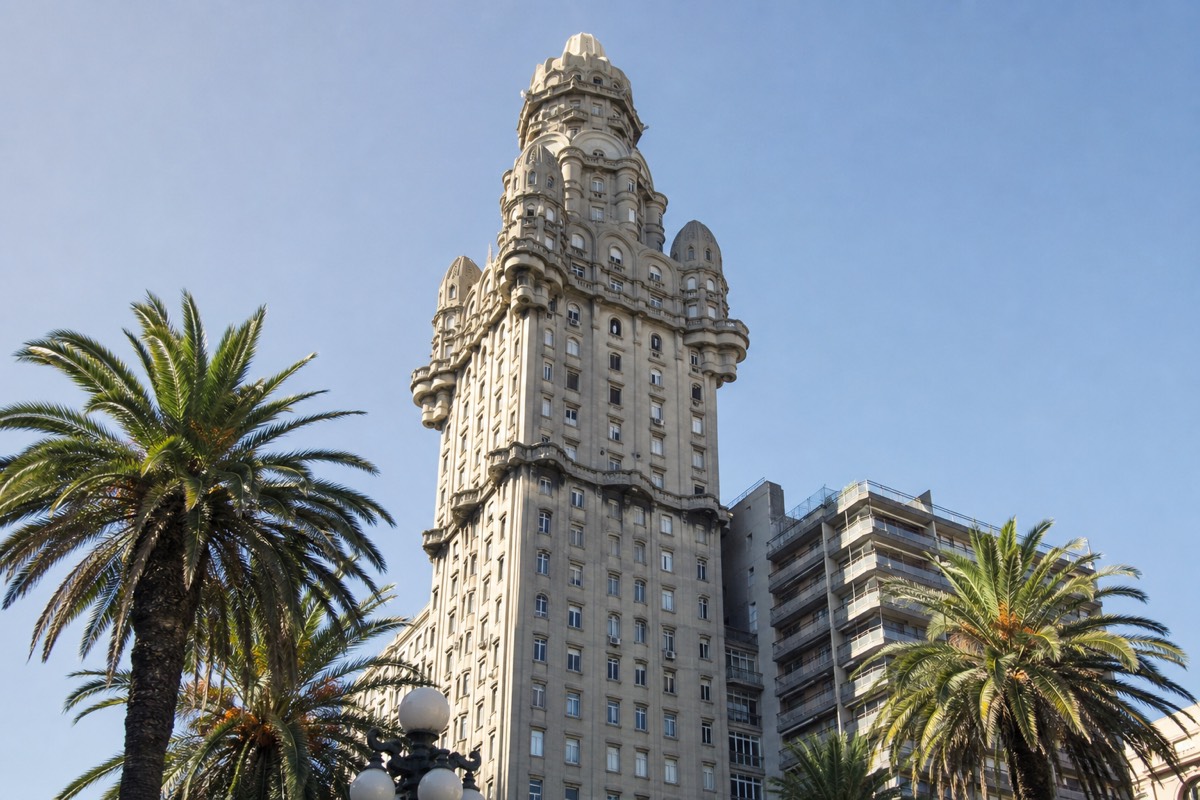
The discrepancy in start dates is not a typo on anyone's part; it reflects how big projects of that era were financed and built in phases. Excavation, foundations and early structural work may have begun before the formal construction contract or permit date that different sources cite. When you read about Palacio Salvo elsewhere, you will see both 1922 and 1925, and the honest answer is that the sources genuinely conflict. The inauguration year of 1928, by contrast, is consistent everywhere, and the Uruguayan government's 1996 monument resolution confirms the 1928 inauguration (the national monument resolution of 1996).
Building a tower of this scale from groundbreaking to inauguration in a handful of years was fast for a reinforced concrete high-rise of its era. Palanti's design leaned heavily on concrete at a time when the material was still proving itself for tall buildings, and the result was, by several accounts, the tallest reinforced concrete structure in the world at the moment of completion. That engineering claim is repeated across sources but is best treated as a widely reported record rather than a formally certified one.
| Year Or Period | Event | Notes |
|---|---|---|
| 1917 | La Cumparsita premieres at Confitería La Giralda | The tango by Gerardo Matos Rodríguez debuted on the site where the palace now stands |
| 1922 or 1925 | Construction begins | Sources conflict; English sources favor 1925, some Spanish sources 1922 |
| 1928 | Inauguration | Becomes the tallest building in South America |
| Around 1935 | Loses the continental height record | Overtaken by newer towers in the region |
| 1996 | Declared a National Historic Monument | Formal heritage protection under Uruguayan law |
The Architect Behind The Tower
Mario Palanti deserves a paragraph of his own. He was an Italian architect working mostly in Buenos Aires, and Palacio Salvo belongs to the same family of ideas as his Palacio Barolo on Avenida de Mayo, completed a few years earlier. Both buildings are eclectic in style, drawing on Gothic and Art Deco tendencies before Art Deco had a name, and both are popularly said to encode symbolism from Dante's Divine Comedy, with the tower's levels read as a progression through hell, purgatory and heaven. That Dante reading is charming and widely repeated on tours, but you should know it is attributed rather than documented: sources consistently describe it as a claim or a legend, not something verified in Palanti's own papers.
Palanti's twin towers in the Río de la Plata region give travelers a nice comparison opportunity. If you have visited or will visit Buenos Aires, stand in the lobby of Palacio Salvo and think of Barolo: same architect, similar silhouette, different city. The pair is one of the more striking architectural dialogues between the two capitals, and it comes up on most guided tours of the building.
What Is Located Inside Palacio Salvo?
Inside Palacio Salvo today you find a mix of private apartments, offices and ground-floor commercial establishments, plus the Museo del Tango de Montevideo and the historic halls and viewpoints visited on guided tours. The building is not a single museum; it is a working tower with a museum and tour operation inside it. The tango museum exists because the palace stands on the site of Confitería La Giralda, where La Cumparsita premiered in 1917.
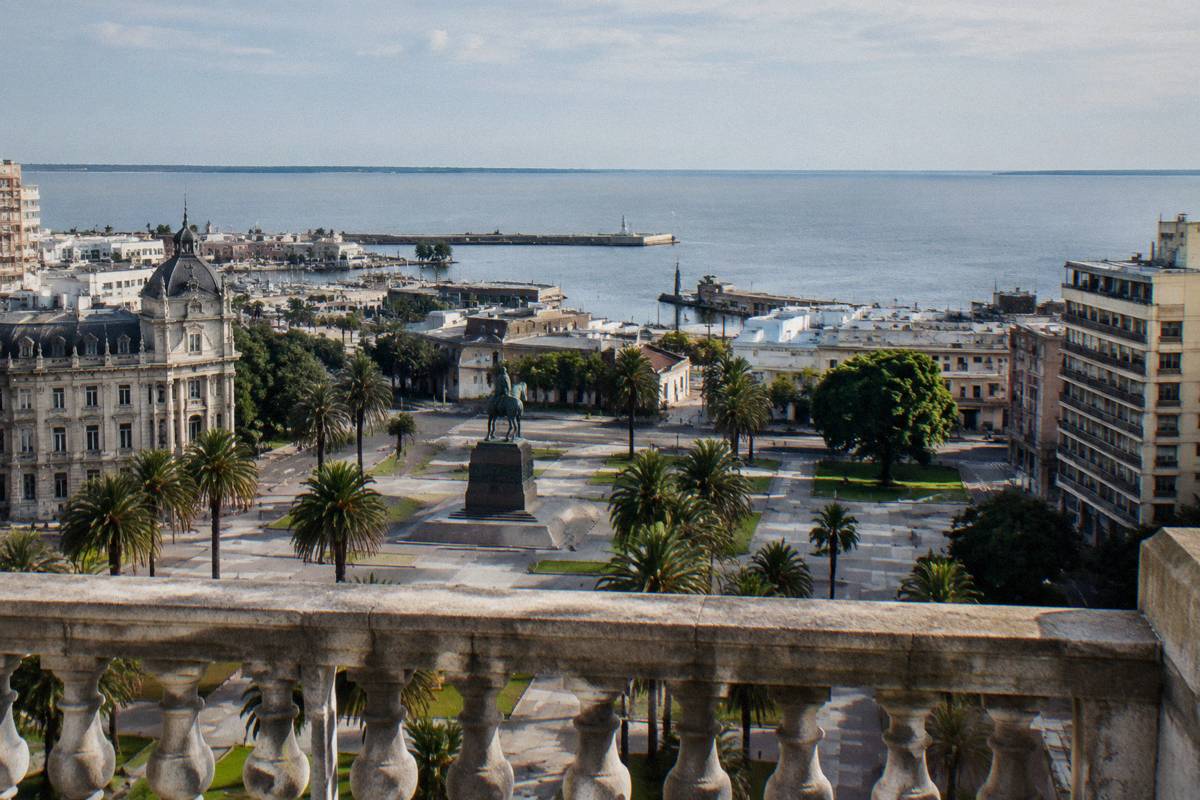
The ground floor is the most publicly accessible part. Commercial spaces open onto Plaza Independencia, and the main hall at Plaza Independencia 848 serves as the meeting point for guided tours. Above that base, the floors belong to residents and businesses, which is why independent wandering is not possible: you can only go beyond the lobby as part of an organized visit. This is a common misunderstanding among visitors who show up expecting a museum-style building with open access to every floor.
The Museo del Tango de Montevideo is the cultural anchor. Its presence is a direct response to the site's history: before the palace existed, the Confitería La Giralda occupied the corner, and it was there that Gerardo Matos Rodríguez's La Cumparsita, later adopted as Uruguay's cultural anthem, was first played publicly in 1917. The building, in other words, sits on one of the most important plots in tango history, and the museum makes that story explicit with exhibits on the genre's Montevideo dimension. If the tangle of tango, candombe and carnival traditions interests you, our guide to Candombe and Carnival in Montevideo covers the rest of the city's musical heritage.
What The Guided Tour Actually Shows You
The guided visit takes you through spaces you could never see from the street: the old halls with their surviving details, stained glass, and the upper viewpoints. The tour reaches an open terrace on the 11th floor and a higher, enclosed mirador above it, which is where the best photographs of Plaza Independencia, the Ciudad Vieja rooftops and the Río de la Plata skyline come from. Be aware that the final stretch to the highest viewpoint involves around 30 steps of stairs, and the operators state plainly that the tour is not suitable for people with mobility impairments.
What you will not get is access to private apartments or working offices. The tour route covers the public-facing and heritage layers of the building: lobby, historic halls, elevator or stair transitions, terrace and mirador. Tour commentary typically weaves together the Salvo family story, Palanti's design, the height records, the La Giralda and La Cumparsita connection, and the Dante legend, with the caveat noted earlier that the Dante symbolism is attributed rather than verified.
| Space | Accessible On A Guided Tour? | What You See |
|---|---|---|
| Main hall, Plaza Independencia 848 | Yes, meeting point | Grand lobby, tour check-in |
| Ground-floor commercial spaces | Yes, freely | Shops and establishments open to the square |
| Historic halls and staircases | Yes, tour route | Period details, stained glass, architecture |
| 11th floor open terrace | Yes, tour route | Open-air views over Plaza Independencia |
| Higher enclosed mirador | Yes, about 30 steps up | Panoramic views toward the Río de la Plata |
| Residences and offices | No | Private floors of a working building |
| Museo del Tango de Montevideo | Check on the day | Tango history exhibits tied to the La Giralda site |
How The Guided Tour And Tower Visit Work
The guided tour lasts about 45 minutes, runs Monday to Saturday at set departure times, and is conducted in Spanish with English available at specific slots. You meet in the main hall at Plaza Independencia 848, and the route climbs to the 11th floor open terrace and a higher enclosed mirador, with roughly 30 steps to the highest point. The tour is not suitable for visitors with mobility impairments, and unaccompanied minors are not admitted.
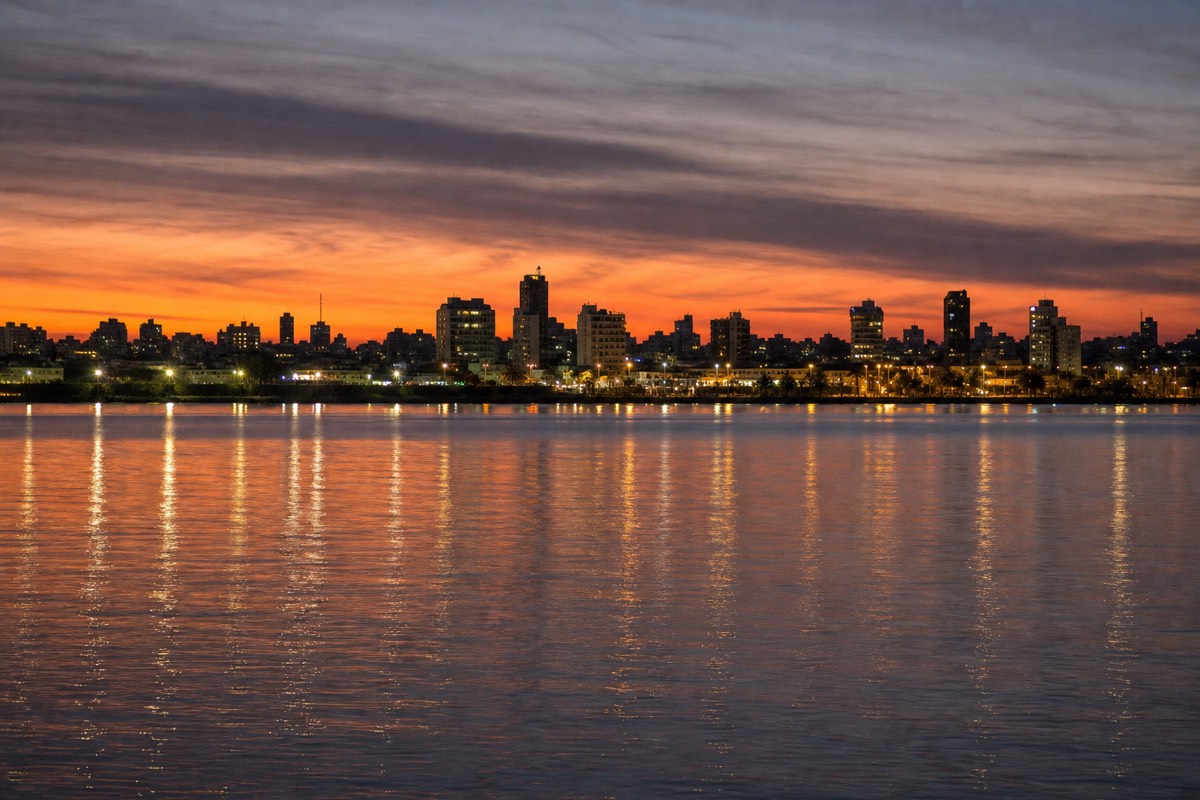
Schedules vary, so treat any specific time you read online as indicative rather than guaranteed. Commonly cited departures include slots around late morning and mid to late afternoon, such as 10:30, 11:00, 12:00, 14:00, 15:00, 16:00 and 17:00, with English-language departures offered at particular times rather than every slot. Some sources also mention Sunday operation. The practical advice: confirm the day's departures and the English schedule before you plan your visit, either through the operator's listing or by contacting the tour operation directly at palaciosalvooficial@gmail.com or 098 456 370, contact details published by Uruguay's tourism portal (the Portales del Uruguay page on Palacio Salvo).
The structure of the visit is simple. You gather in the lobby, the guide covers the building's history as you move through the halls, and the vertical portion takes you up to the terrace and mirador. Photographers should note that the open terrace is the best spot for shots of the square below, including the statue of José Artigas at its center, while the enclosed mirador, reached by the final flight of about 30 steps, gives the widest panorama. If you want the best light, an afternoon departure generally puts the sun behind you looking south toward the river, but check the day's weather; the terrace is exposed and windy in strong conditions.
One bookable option worth knowing is the Palacio Salvo Guided Admission, a roughly one-hour guided visit in Spanish that goes beyond the facade to the old halls, stained glass and upper viewpoints, meeting in the palace lobby at Plaza Independencia 848. Like the standard operation, it notes the 30 steps to the last viewpoint and excludes unaccompanied minors. If you want a broader introduction to the city in English or other languages, the Montevideo Highlights Walking Tour runs two to three hours in English, Spanish, Portuguese, French or Italian, though you should confirm its itinerary and whether it includes attraction entry before booking.
| Tour Feature | Details | Plan For This |
|---|---|---|
| Duration | About 45 minutes | Easy to fit between other Ciudad Vieja stops |
| Days | Monday to Saturday, Sunday in some listings | Confirm before visiting on a weekend |
| Languages | Spanish, English at set slots, Portuguese in some mentions | Ask which departure is in English |
| Meeting point | Main hall, Plaza Independencia 848 | Arrive a few minutes early |
| Accessibility | About 30 steps to the highest mirador | Not suitable for mobility impairments |
| Children | No unaccompanied minors | Children must be accompanied by an adult |
Tickets, Times And How To Book
Tickets for the Palacio Salvo guided tour are bought through the operator's listing or by contacting the tour operation directly, with the published contact points being palaciosalvooficial@gmail.com and 098 456 370. There is no reliably published standard price across sources for the current seasons, so check the live price on the operator's listing before you go. Tours run Monday to Saturday at set times, with English offered at specific departures, and the visit lasts about 45 minutes.
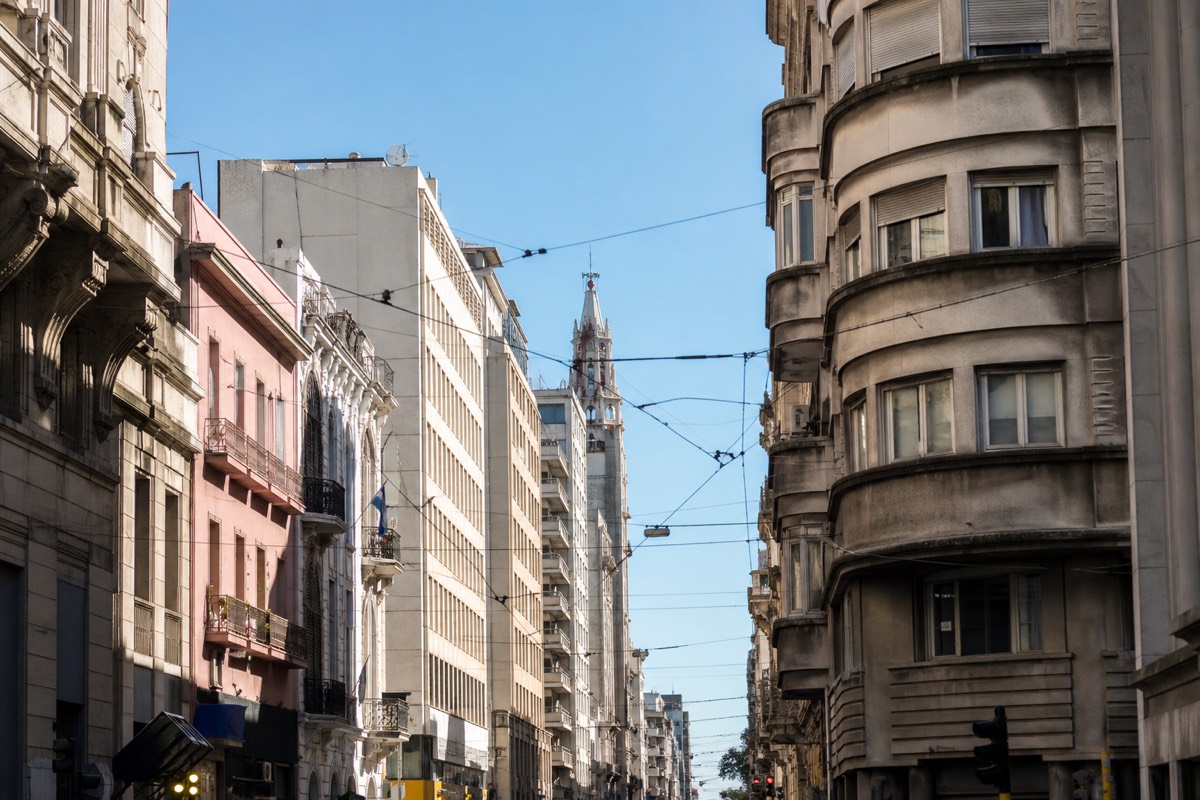
Because prices and schedules are not uniformly verified for the current season, the booking advice matters more than any number we could quote. Book through the operator's listing for the standard guided visit, or email or call the office if you have a specific question about language slots or group arrangements. If you are already in Montevideo, you can also ask at your accommodation or the tourism information points on Plaza Independencia, though the surest route is the official contact above.
Timing your visit well matters more here than at most attractions, because departures are at fixed times and the building sits in the middle of the city's most walkable district. A sensible pattern: book a late-morning Palacio Salvo tour, spend the early afternoon in the Ciudad Vieja, and finish at the waterfront. Our Ciudad Vieja: Montevideo's Historic Center guide lays out the neighborhood stop by stop, and the Montevideo itinerary for 1, 2 and 3 days shows where the tower visit fits in a fuller plan.
If you would rather fold Palacio Salvo into a guided overview of the whole city, several options pass through or near Plaza Independencia. The Best Half-Day Montevideo City Sightseeing Tour covers the city's history and architecture with a small group of up to 16 people, from around 35 USD, while the Classic Hop-On Hop-Off Bus Tour stops at Independence Square among its highlights and lets you explore at your own pace, also from around 35 USD. For a fully tailored day, the Private Montevideo Discovery Tour with a local guide runs from around 400 USD and can adapt its route to your interests. These tours show you the palace from the square; to go inside and up to the viewpoints, you need the dedicated guided admission described above. Our comparison of private versus shared Montevideo city tours breaks down which format suits which traveler.
| Way To Experience Palacio Salvo | Duration | Best For | Language Notes |
|---|---|---|---|
| Guided tour of the palace and viewpoints | About 45 minutes | Architecture and history lovers, photographers | Spanish, English at set slots |
| Palacio Salvo Guided Admission (bookable product) | About 1 hour | Travelers who want a guaranteed slot | Spanish guided |
| Montevideo Highlights Walking Tour (bookable product) | 2 to 3 hours | A guided introduction to the city on foot | English, Spanish, Portuguese, French, Italian |
| Half-day city sightseeing tour | Half day | Orientation and context for the whole city | Multilingual guides, small group |
| Viewing from Plaza Independencia only | Any time | Short visits and cruise stopovers | No booking needed |
Common Booking Mistakes To Avoid
The first mistake is assuming open access. Palacio Salvo is a working building, and beyond the lobby and shops you must be on a tour. The second is assuming English runs at every departure; it does not, so specify the language when you book. The third is showing up with a stroller, wheelchair or limited mobility and expecting to reach the mirador; the operators are explicit that the stairs make the tour unsuitable for mobility impairments. The fourth is leaving it to the last day: departures are limited, and in high season slots can fill. If your time in the city is short, our Montevideo cruise port guide explains how to sequence a shore day that includes the palace.
Palacio Salvo And Plaza Independencia On One Walk
Palacio Salvo anchors the southeast side of Plaza Independencia, the grand square marking the boundary between the Ciudad Vieja and the modern downtown, so the tower visit combines naturally with everything around it. Within the same square are the Mausoleo de Artigas beneath the statue of José Artigas, the Puerta de la Ciudadela leading into the old city, and the start of Avenida 18 de Julio. Teatro Solís, opened in 1856, sits a few minutes' walk into the Ciudad Vieja.
The square itself is the hinge of Montevideo. Stand at the palace steps and look west: the Puerta de la Ciudadela, the surviving gate of the colonial city wall, frames the entrance to the Ciudad Vieja, where the cathedral, museums and cobbled streets continue. Look east and Avenida 18 de Julio, the main commercial avenue of modern Montevideo, runs away toward the Tres Cruces district. This is why almost every city tour, from the half-day sightseeing options to private guided days, passes through the square, and why we recommend starting or ending a walking day here.
A practical route for one walk: begin at Plaza Independencia and visit the Artigas mausoleo, which sits beneath the square's central monument. Then take the Palacio Salvo tour, ideally a late-morning departure. Afterward, pass through the Puerta de la Ciudadela into the Ciudad Vieja, walk the pedestrian stretch of Sarandí to the Plaza Matriz, and continue to Teatro Solís, which offers its own guided visits of the 1856 building, with free tours on Wednesdays and paid visits the rest of the week according to the municipal schedule; our Teatro Solís: Guided Tours, Shows And Tickets guide has the current details. Finish at the Rambla for the river sunset, following the suggestions in our Montevideo Rambla and beaches guide.
| Stop | What It Is | Suggested Time |
|---|---|---|
| Plaza Independencia and Artigas mausoleo | The city's ceremonial square, monument and mausoleo | 20 to 30 minutes |
| Palacio Salvo guided tour | Historic halls, terrace and mirador, about 45 minutes | Book a fixed departure |
| Puerta de la Ciudadela and Sarandí | Colonial gate and pedestrian street into the old city | 15 minutes walking |
| Plaza Matriz and cathedral | Historic heart of the Ciudad Vieja | 30 minutes |
| Teatro Solís | 1856 theatre with guided visits and shows | 45 to 60 minutes |
| Rambla waterfront | Riverfront promenade toward the sunset | As long as you like |
There are no published walking times between these sights, but the whole sequence is compact: everything listed sits within the square and the first blocks of the old city, and the terrain is flat except for the palace's internal stairs. If you are deciding how much of Montevideo you can see in a day or two, our guide to the best things to do in Montevideo ranks the sights, and the Montevideo travel guide covers the practical layer of transport, currency and connectivity. For a sense of how the city compares with its neighbor across the river, see our piece on Montevideo versus Buenos Aires.