Best Things To Do In Montevideo
On a Sunday evening in Barrio Sur you hear the drums a full block before you see anyone carrying one. Candombe, the Afro-Uruguayan drumming tradition UNESCO added to its intangible heritage list in 2009, is the sound Montevideo makes when nobody is performing for tourists.
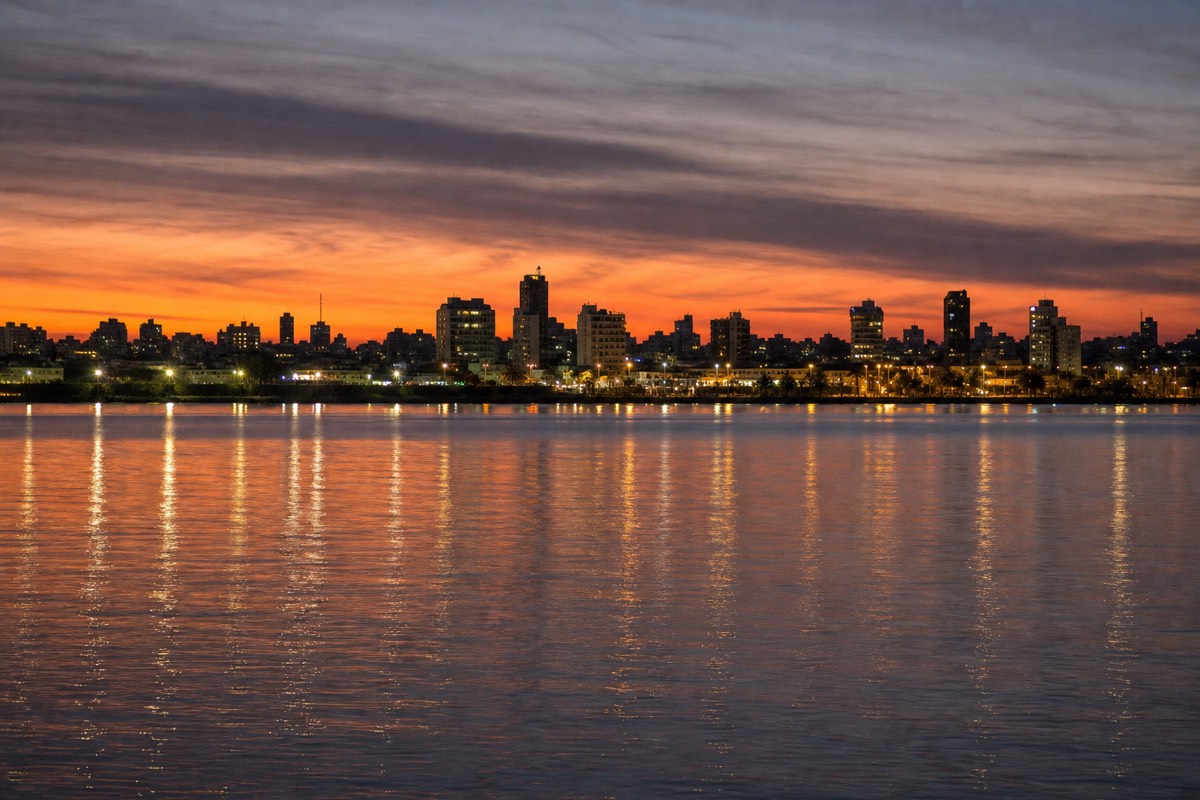
What Are The Best Things To Do In Montevideo?
The best things to do in Montevideo are walking the colonial core of Ciudad Vieja, following the Rambla along the Rio de la Plata, eating at the parrillas of Mercado del Puerto, standing at Estadio Centenario where the first World Cup was decided in 1930, hearing candombe drums on a Sunday, and tasting Tannat at a family winery outside the city.
Give the historic core and waterfront time first, then reserve one food, music or wine experience that matters to you.
Booking Shortlist: Half-Day Montevideo City Tour. Link the old town, Agricultural Market and Pocitos waterfront in one guided loop.
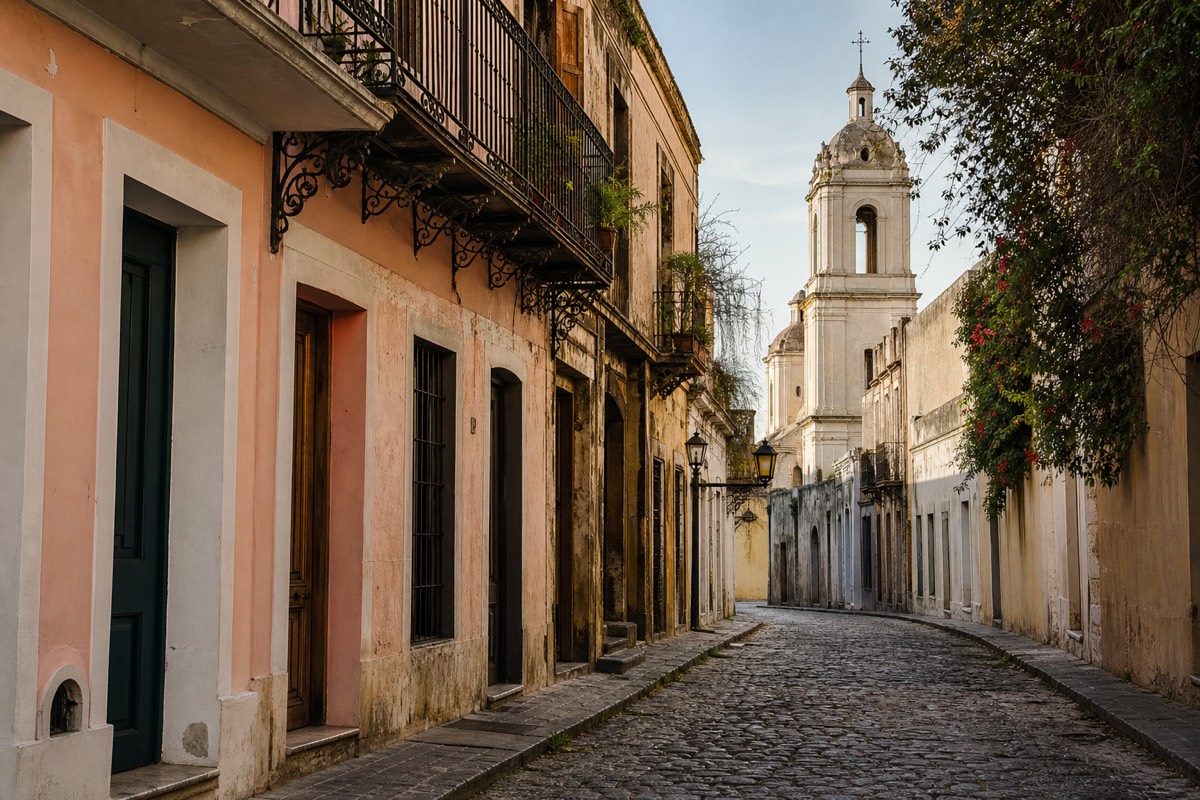
Montevideo does not hand you a single postcard monument the way Rio or Buenos Aires does. That trips some visitors up. They arrive expecting an obvious centrepiece, find a low-rise working capital of about 1.3 million people wrapped around a river that looks like the sea, and decide there is nothing to do. There is plenty. It just rewards a slower reading.
The city's pleasures are horizontal rather than vertical: a 22 kilometre waterfront promenade, a food culture built on fire and beef, a music tradition that spills into the street on Sunday afternoons, and a colonial peninsula small enough to cross on foot in twenty minutes. Roughly half of Uruguay's population lives in this metropolitan area, so the streets are busy with people going about ordinary lives rather than lining up for attractions.
Below is the honest short list, grouped by how much time each one actually costs you. If you have three days, you can do nearly all of it. If you are here for a cruise call or a long layover, the first four lines are the ones that matter, and a half-day small-group city tour covers most of them in one loop.
| Experience | Time to set aside | Best for | Book ahead? |
|---|---|---|---|
| Ciudad Vieja walk | 2 to 3 hours | First-timers, architecture, history | No, but a guide adds a lot |
| The Rambla, on foot or by bike | 1 to 3 hours | Everyone, especially at sunset | No |
| Lunch at Mercado del Puerto | 90 minutes | Meat eaters, first-day orientation | No, but arrive before 1pm |
| Estadio Centenario | 1 to 2 hours | Football history | No |
| Candombe on a Sunday | 1 hour, late afternoon | Music, culture, free | No |
| Winery visit in Canelones | Half a day | Wine, long lunches | Yes |
| Colonia del Sacramento | Full day, around 9 hours | UNESCO towns, day-trippers | Yes |
| Tango in a historic bar | An evening | Nightlife, culture | Yes |
| Hop-on hop-off bus | Flexible, 24-hour ticket | Short stays, cruise calls | Recommended |
Why Does Ciudad Vieja Belong At The Top Of Every Montevideo List?
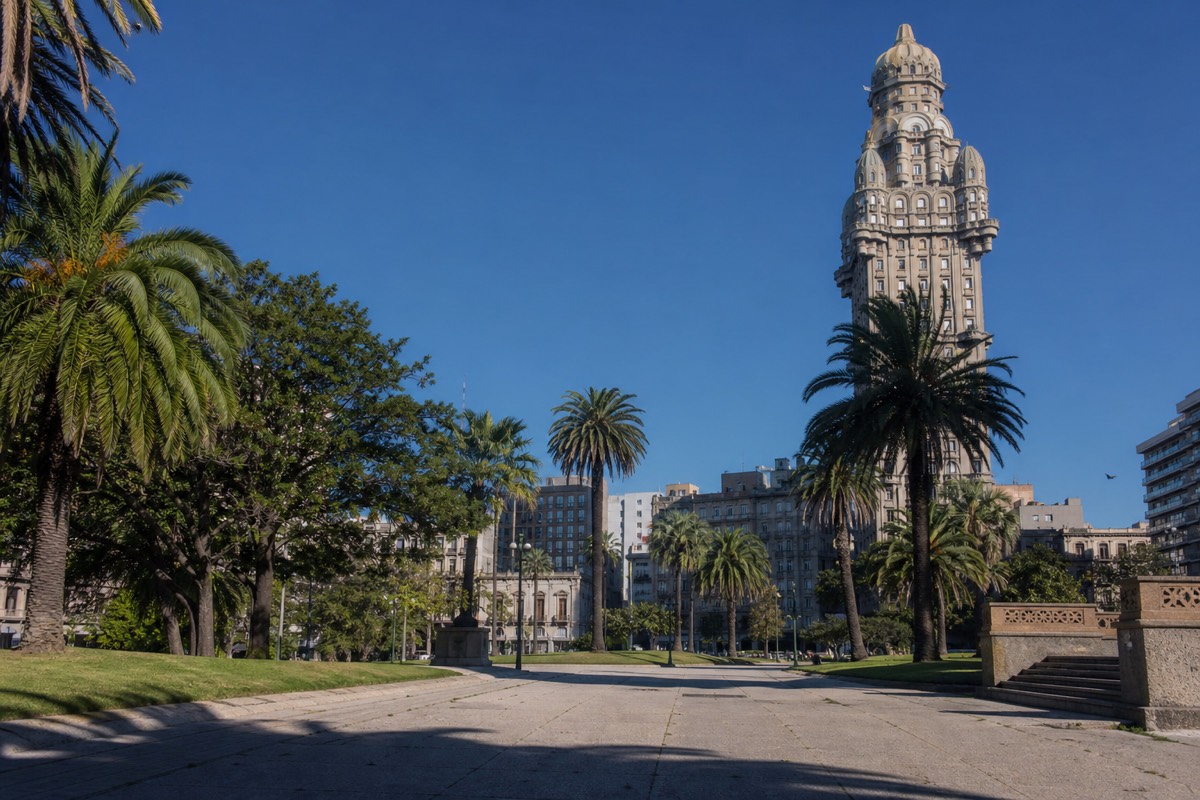
Ciudad Vieja is the peninsula where the city began, founded in the 1720s as a walled Spanish colonial port. In about two hours on foot you pass Plaza Independencia, the 1928 Palacio Salvo, the 1856 Teatro Solis, the cathedral on Plaza Matriz and the 1868 iron market hall by the water.
The geography does half the work. Ciudad Vieja sits on a spit of land at the entrance to the natural harbour, which is exactly why Bruno Mauricio de Zabala's men built here in the first place. The defensive walls came down by 1829, but the street grid they enclosed survived, and it is still a tight, walkable rectangle of narrow blocks between two waterfronts.
Plaza Independencia is the hinge. On one side, the old Gate of the Citadel, the last surviving fragment of the colonial wall. On the other, Palacio Salvo, the 27-storey eclectic tower that Italian architect Mario Palanti finished in 1928 and that still looks like something dreamed rather than designed. Under the square itself lies the mausoleum of Jose Gervasio Artigas, the national hero, whose remains were interred there in 1974. Soldiers in nineteenth-century Blandengues uniform stand guard at the entrance.
West of the plaza, Sarandi street goes pedestrian and runs the length of the peninsula: bookshops, antique dealers, cafes with pavement tables, buskers, and on weekend afternoons a flea market. It delivers you to Plaza Matriz, then eventually to the port end and the smoke of Mercado del Puerto. Our full Ciudad Vieja walking guide breaks the route down block by block, including which corners are worth a detour and when the neighbourhood empties out.
One practical note. Ciudad Vieja is a working district, not a preserved theme park. It buzzes on weekday lunchtimes and quiets down sharply after office hours, and government advisories single out parts of it, along with the port area, for caution after dark. Daytime and early evening are the sweet spot.
What Makes The Rambla Montevideo's Real Main Attraction?
The Rambla is an uninterrupted waterfront promenade of more than 22 kilometres, one of the longest continuous seafront walkways anywhere. It runs from the port around the whole southern edge of the city past Parque Rodo, Punta Carretas, Pocitos, Buceo, Malvin and Carrasco, and it is where Montevideo actually socialises.
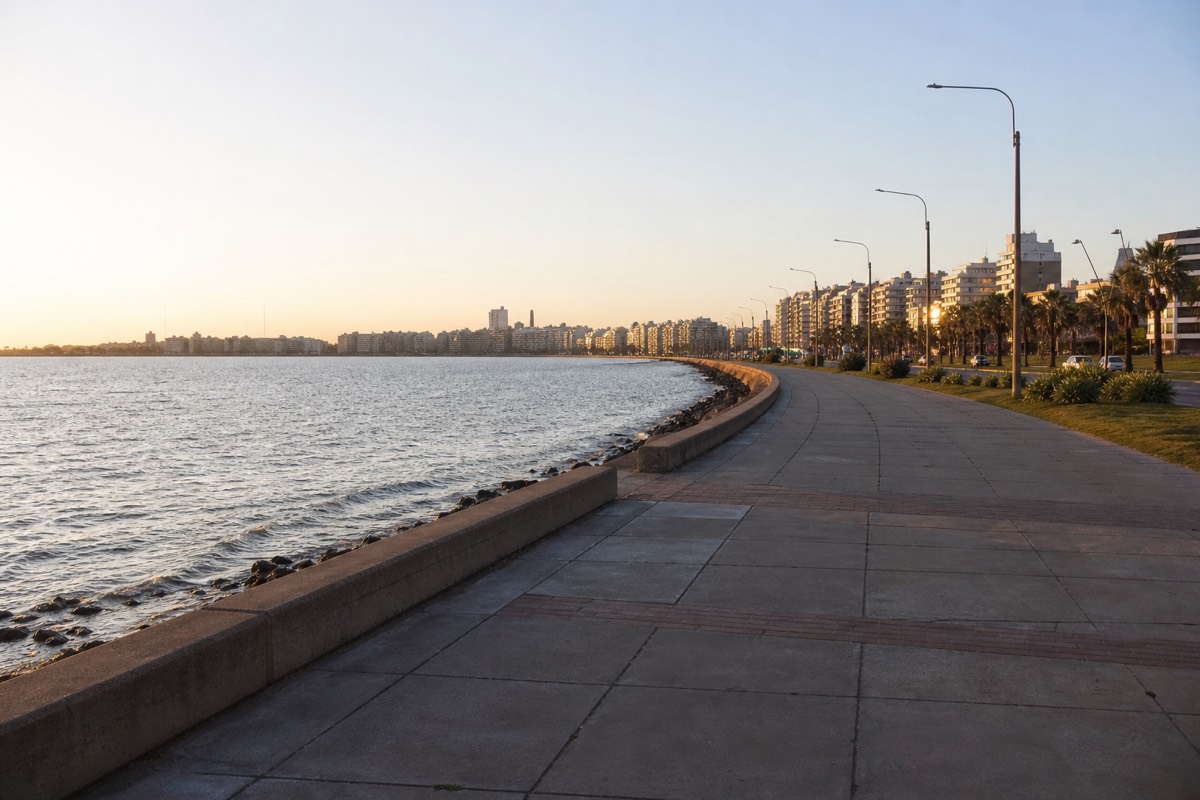
Calling it a promenade undersells what it does for the city. The Rambla is a public living room. On any decent afternoon you will find fishermen on the rocks, teenagers with a shared thermos and a mate gourd, runners, dog walkers, couples on the sea wall watching a sun that sets straight into the river. Nobody is charging for any of it.
The water is the Rio de la Plata, and it is brown. That surprises people who came expecting Caribbean blue. It is the world's widest river estuary carrying silt from a continent's worth of drainage, and once you stop judging it against a postcard, the colour is part of the character: heavy, flat, enormous, more inland sea than river.
Walking the whole thing is a serious undertaking. Most visitors pick a stretch. The Pocitos curve is the classic choice, a proper city beach with a crescent of sand, apartment towers behind it and the Montevideo letters sign planted at one end for the obligatory photograph. Parque Rodo is livelier and more student-heavy. Carrasco, out east near the airport, is leafy and residential and feels like a different city.
Cycling covers far more ground than walking. A guided electric bike tour starting in Pocitos strings the Rambla together with Parque Batlle, Estadio Centenario and the Old City in about three and a half hours, with an intercom system so you can still hear the guide while riding. Groups are capped at ten. For a slower version of the same coastline, the Rambla and beaches guide covers which stretch suits which kind of afternoon.
Is Mercado Del Puerto Worth The Hype, And When Should You Go?
Yes, if you go for lunch and you go early. Mercado del Puerto opened on 10 October 1868 as a fruit, vegetable and meat market, and its wrought-iron hall now shelters a row of parrillas grilling over open wood fires. Doors open around 10 or 11am and most of the action is done by 5 or 6pm, later on weekends.
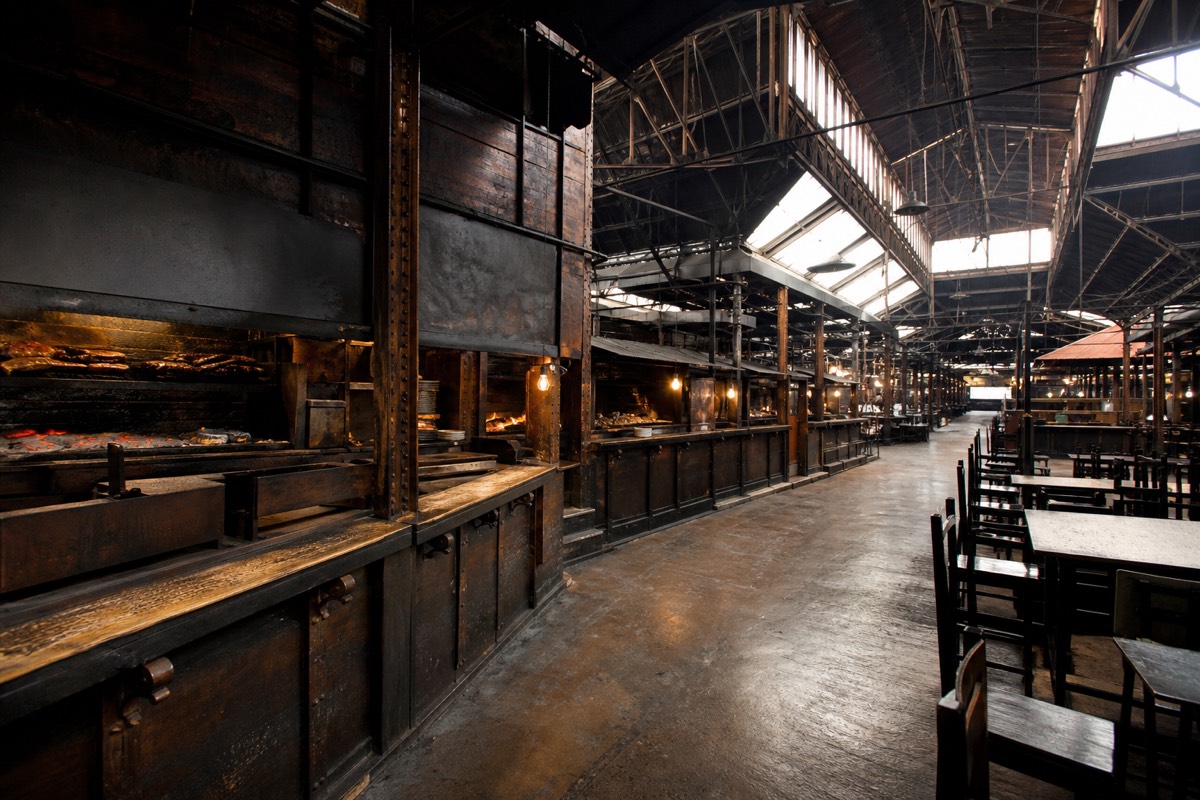
The building itself is the first reason to come. The iron structure was shipped in and assembled in the nineteenth century, and standing under it while a dozen grills work at once is a sensory event: wood smoke, the clatter of tongs on iron, waiters shouting orders across the aisle. It is loud, it is not remotely elegant, and that is the point.
What you order is beef, mostly. Asado de tira, entrana, morcilla, chorizo, provoleta melted on the grill until it blisters. The traditional accompaniment is medio y medio, a half-and-half blend of still white wine and sparkling that is sweeter than you expect and goes down faster than it should. Vegetarians will not starve but will not be spoiled either.
Two honest caveats. First, prices here run above what you would pay at a neighbourhood parrilla away from the water, because you are paying for the setting and the crowd. Second, it is genuinely touristy at peak hours in cruise season, when several ships can be in port at once. Go at noon on a weekday and it still feels like a market. Go at 1.30pm on a Saturday in January and it feels like a queue.
If food is the reason you came, a private street food walk with a local guide works through Ciudad Vieja with stops for empanadas, a chivito and mate before finishing at the market, which is a better introduction than walking in cold and pointing at the first grill. Our Montevideo restaurant guide goes further into where locals eat when they are not at the port.
Why Does Estadio Centenario Matter More Than A Normal Stadium Stop?
Estadio Centenario hosted the final of the first FIFA World Cup in 1930, which Uruguay won on home ground. The stadium in Parque Batlle is still in use, and for a country of roughly 3.4 million people it functions as a national monument rather than a sports venue.
Understanding Uruguayan football is close to understanding Uruguay. A nation this small winning the inaugural World Cup, then winning again in 1950 in Brazil in the match Brazilians still call the Maracanazo, produced a self-image that has outlasted several generations. The stadium is where that story is kept.
Parque Batlle around it is worth the walk on its own. The park holds the vast bronze La Carreta monument from 1934, an ox-cart group commemorating the country's rural pioneers, plus wide lawns and stands of trees that turn properly golden in April and May. Most city tours pause here for photographs.
Be clear about what a standard tour includes. On the half-day city sightseeing tour, the stadium is an exterior photo stop rather than an interior visit, and entrance fees for building interiors are generally not included on group tours anywhere in the city. If going inside the stands and the football museum matters to you, plan it as its own outing or ask a private guide to build it in.
The football does not stop at the Centenario, either. Montevideo is home to Penarol and Nacional, two of the oldest and most decorated clubs in South America, and their derby is one of the fiercest on the continent. If your dates line up with a fixture, ask a local guide about tickets and about which sections are sensible for visitors.
Where Do You Hear Candombe And See Real Tango?
Candombe is played in the street, traditionally on Sundays and holidays in the neighbourhoods of Barrio Sur, Palermo and Cordon, just south of the city centre. UNESCO inscribed it on the Representative List of the Intangible Cultural Heritage of Humanity in 2009. Tango, by contrast, lives indoors, in a handful of historic bars.
A candombe llamada is not a show. Drummers assemble with three sizes of drum, the chico, repique and piano, tune the skins over a street fire until the pitch is right, and then walk, playing, through the neighbourhood they come from. People fall in behind. The tradition traces directly to the enslaved Africans brought to the Rio de la Plata and to the tenement courtyards where their descendants kept the rhythm alive. You can read the UNESCO inscription for candombe for the full account of why it is protected.
To hear it, be in Barrio Sur or Palermo on a Sunday in the late afternoon or early evening and follow your ears. Nobody sells tickets. Ask your guide or your hotel which street the local comparsa is likely to start from, keep your phone in your pocket rather than filming everything, and be aware that these are residential neighbourhoods rather than a tourist zone.
Tango in Montevideo is quieter and less commercial than across the river in Buenos Aires, which is exactly its appeal. Baar Fun Fun has been running since 1895, is a declared Cultural Heritage of Montevideo, and carries the legend that Carlos Gardel drank its house Uvita there and sang informally. The tango experience at Baar Fun Fun pairs a 45-minute beginner class taught by professional dancers with a glass of that same Uvita, snacks, and entry to the nightly live show without a separate cover. No experience needed, which is the honest requirement for most of us.
February brings all of this to a peak. Uruguay's carnival season is often described as the longest in the world, and the Desfile de Llamadas sends drumming comparsas down the streets of Barrio Sur and Palermo in front of enormous crowds. The candombe and carnival guide covers the dates, the parade route and what to expect if your trip lands in that window.
Can You Visit Uruguayan Wine Country In Half A Day?
Yes. Uruguay's main wine region, Canelones, starts on Montevideo's doorstep, and several family bodegas sit within 30 to 45 minutes of the city centre. Most visits run two and a half to four hours door to door, including a cellar tour, four to seven tastings and often lunch.
Tannat is the grape to understand. Brought from southwest France in the nineteenth century by Basque immigrants, it found a climate it liked better than home and became the national red: dark, tannic, built for beef. Uruguay also does surprising things with Albarino, and several bodegas make traditional-method sparkling wine. If you have only tasted Argentine Malbec and Chilean Cabernet, this is a genuinely different corner of South American wine.
The estates are small and family-run in a way the big Mendoza names are not. You are often shown around by the winemaker or an owner rather than a hospitality employee, which changes the tone of the visit completely. Group sizes are small. Lunches are long.
| Winery experience | Roughly | Format | What sets it apart |
|---|---|---|---|
| Vina Varela Zarranz | Around $70 | Private, hotel pickup | Making wine since 1933; four wines with a countryside platter of Uruguayan cheeses, breads and olives |
| Bodega Santa Rosa | Around $86 | Private, 2.5 hours | Family estate founded 1898, the largest active underground cellar in Uruguay, seven tastings and a three-course lunch below ground |
| Bouza Winery | Around $95 | 3 to 4 hours, minivan transfer included | Boutique estate with a classic car collection in the tasting garage; four wines with paired tapas |
| Bodega Moizo | Around $99 | Visit and tasting | Fifth-generation family winery established 1956, hosted by the winemakers themselves |
| Wine Lovers Delight | Around $220 | Small group, full lunch | Award-winning family estate with a three-course paired lunch built around Tannat |
Prices move, so treat those figures as a rough sense of the market and check the live listing before you commit. Almost all of these include or offer transport, which matters, because tasting five wines and then driving yourself back into a capital city is a bad plan in any country.
Which Day Trips Are Worth Giving Up A Whole Day For?
Colonia del Sacramento is the standout: a UNESCO-listed Portuguese and Spanish colonial quarter about two hours west by road, usually done as a nine-hour round trip. The Atlantic beach towns east of the city and the wine country of Canelones are the other two contenders, and Canelones needs only half a day.
Colonia earns the full day. The historic quarter is a compact grid of cobbled lanes, sycamore shade and low colonial houses on a promontory in the river, with the Porton de Campo city gate, the Calle de los Suspiros and its distinctive wedge-set drainage cobbles, the 1857 lighthouse built over convent ruins, and the Basilica del Santisimo Sacramento. Five kilometres north sits the Real de San Carlos bullring, a Mudejar-style arena inaugurated in 1910 and abandoned soon after when bullfighting was banned.
There are two sensible ways to do it. The shared full-day coach tour runs around nine hours from about $60, picks up from a long list of central hotels, uses buses with individual seat speakers so the multilingual commentary is audible, and includes a tasting stop at Granja Arenas on the way. The private version costs considerably more but sets its own pace and its own start time, which suits families and anyone who hates being counted back onto a bus.
East along the Atlantic coast the calculation is different. Punta del Este, the country's glossy summer resort, is roughly two hours away, and the quieter fishing villages and dunes beyond it are further still. In January the beaches justify the drive. In July they do not. The Atlantic coast day trips guide is honest about which months make that trip worthwhile.
One thing to resist: trying to squeeze Colonia into a cruise call. Ships are typically in port for eight to ten hours and the round trip alone eats most of that with no margin for a traffic problem. Our cruise port guide lays out what genuinely fits in the time ashore.
How Do You Fit The Best Of Montevideo Into One, Two Or Three Days?
One day covers Ciudad Vieja, Mercado del Puerto and a stretch of the Rambla. Two days adds Parque Batlle, Estadio Centenario and a proper evening. Three days lets you take either a winery afternoon or a full day in Colonia without cutting the city short.
Here is how a strong first day actually runs. Start in Plaza Independencia around 9.30am while the light is still low on Palacio Salvo. Walk down Sarandi at a browsing pace, stop at Plaza Matriz, look into the cathedral, then arrive at Mercado del Puerto around noon before the lunch crush. Eat well, then walk it off along the port-end Rambla and take a taxi or bus out to Pocitos in the late afternoon for the sunset stretch and the Montevideo sign.
Day two goes inland. Parque Batlle, La Carreta, the Centenario, then the Palacio Legislativo, whose marble interior is one of the more startling parliament buildings in the Americas. Add the Mercado Agricola, a restored nineteenth-century market hall now full of food stalls, craft beer and produce, which several city tours use as a 40-minute stop. Finish with tango or a long parrilla dinner, which in Uruguay means sitting down at 9pm rather than 7pm.
Day three is the fork in the road. Wine country if you want a slow, well-fed afternoon within an hour of the city. Colonia if you want the postcard colonial town and do not mind a long day on a bus. Both are good. Doing both in the same trip is the better answer, if you have four days.
Short on time and short on patience for planning? The hop-on hop-off bus runs two routes on a 24-hour ticket from around $35, with multilingual audio and stops from the Port Market to Malvin beach, and it solves the awkward gaps between neighbourhoods that a walking-only plan leaves you with. Our day-by-day Montevideo itinerary spells all of this out hour by hour.
What Do First-time Visitors Get Wrong In Montevideo?
The three common errors are treating Montevideo as a half-day stopover from Buenos Aires, expecting a beach holiday from a brown river, and arriving on a Sunday or Monday when much of the city is shut. All three are fixable with a day of planning.
The stopover mistake is the big one. Plenty of people cross the river, spend four hours, decide the city is dull and leave. Montevideo does not perform for a four-hour audience. It shows up in the second afternoon, when you have stopped looking for monuments and started noticing that everyone on the sea wall is passing the same gourd around. If you are weighing the two cities against each other, our Montevideo versus Buenos Aires comparison takes the question seriously rather than picking a favourite.
Opening hours catch people out constantly. Many museums close on Mondays, Mercado del Puerto is largely a daytime operation, and Sunday in the residential neighbourhoods is genuinely quiet outside the candombe hours. Meanwhile restaurants open late for dinner by northern-hemisphere standards. Plan your museum day for a Tuesday to Friday, and your Sunday for the street.
Seasonality gets underestimated too. The southern summer, December to March, is high season with warm weather, full beaches and carnival, and it is also when tour availability tightens. Winter is cool, damp and windy off the river, with far fewer visitors and a city that belongs entirely to its residents. Neither is wrong, but they are different trips. The best time to visit guide works through the trade-offs month by month.
Last, do not skip the guided version of the city just because Montevideo is easy to walk. The layers here are historical and social rather than visual, and they do not announce themselves. A guide who can explain why the mausoleum is under the square, why the wall came down in 1829 and what the drums on Sunday mean turns a pleasant walk into something you remember. Browse our full range of Montevideo tours to see which format fits your days.