Montevideo Vs Buenos Aires: Which To Visit
The two cities face each other across the widest river mouth on earth, share a language, a grape-and-beef diet and the birth of tango, and feel almost nothing alike. One holds around fifteen million people. The other sits in a country of roughly three and a half million.
Which City Should You Visit If You Can Only Pick One?
Pick Buenos Aires if you want scale: big architecture, deep nightlife, a huge restaurant and theatre scene, and a week's worth of distinct neighbourhoods. Pick Montevideo if you want calm, coast, walkability and a city that is not performing for visitors. Most first-time South America travellers should start with Buenos Aires and add Montevideo.
Choose by the pace and experiences you want. Combining the two cities needs a real crossing plan, not just a spare afternoon.
Booking Shortlist: Half-Day Montevideo City Tour. Link the old town, Agricultural Market and Pocitos waterfront in one guided loop.
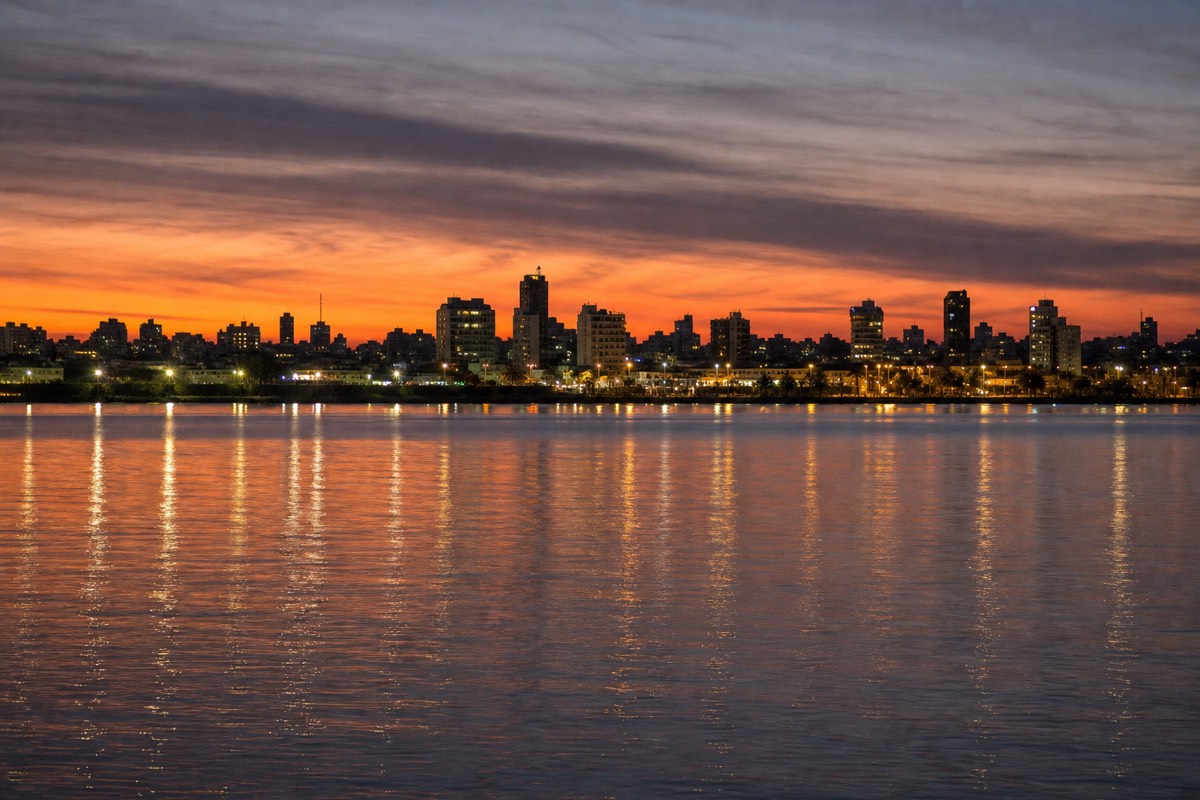
That last sentence is not a slight on Montevideo, and we would say the same thing running a Buenos Aires site. The two cities are not competing for the same job. Buenos Aires is a metropolis with the pull, the density and the sheer volume of things to do that a first big South American trip usually wants. Montevideo is a mid-sized coastal capital whose pleasures are quieter and slower and take a day or two to land.
The honest framing is that Buenos Aires is the more impressive city and Montevideo is the more liveable one. Visitors who value being impressed choose the first. Visitors who value being comfortable, walking a lot, eating well without a reservation and swimming inside city limits choose the second. Neither preference is wrong, and a surprising number of people who go for Buenos Aires come back for Montevideo.
There is also a strong case for not choosing. The two are a short hop apart across the Río de la Plata, and combining them is one of the easiest two-city trips anywhere in the Americas. If that is your inclination, skip ahead to the section on getting between them. For a more personal, less structured take on the same question, our companion post asks flatly whether Montevideo is nicer than Buenos Aires.
How Do The Two Cities Compare Category By Category?
Buenos Aires wins on scale, nightlife, dining variety, architecture and cultural volume. Montevideo wins on safety, calm, walkability, beach access and ease of travel. Cost depends heavily on when you go, since Argentine pricing for visitors has been volatile in recent years while Uruguay's has been steadier and generally higher.
| Category | Buenos Aires | Montevideo | Edge |
|---|---|---|---|
| Size and scale | Metropolitan area of roughly fifteen million | Capital of a country of roughly three and a half million | Buenos Aires |
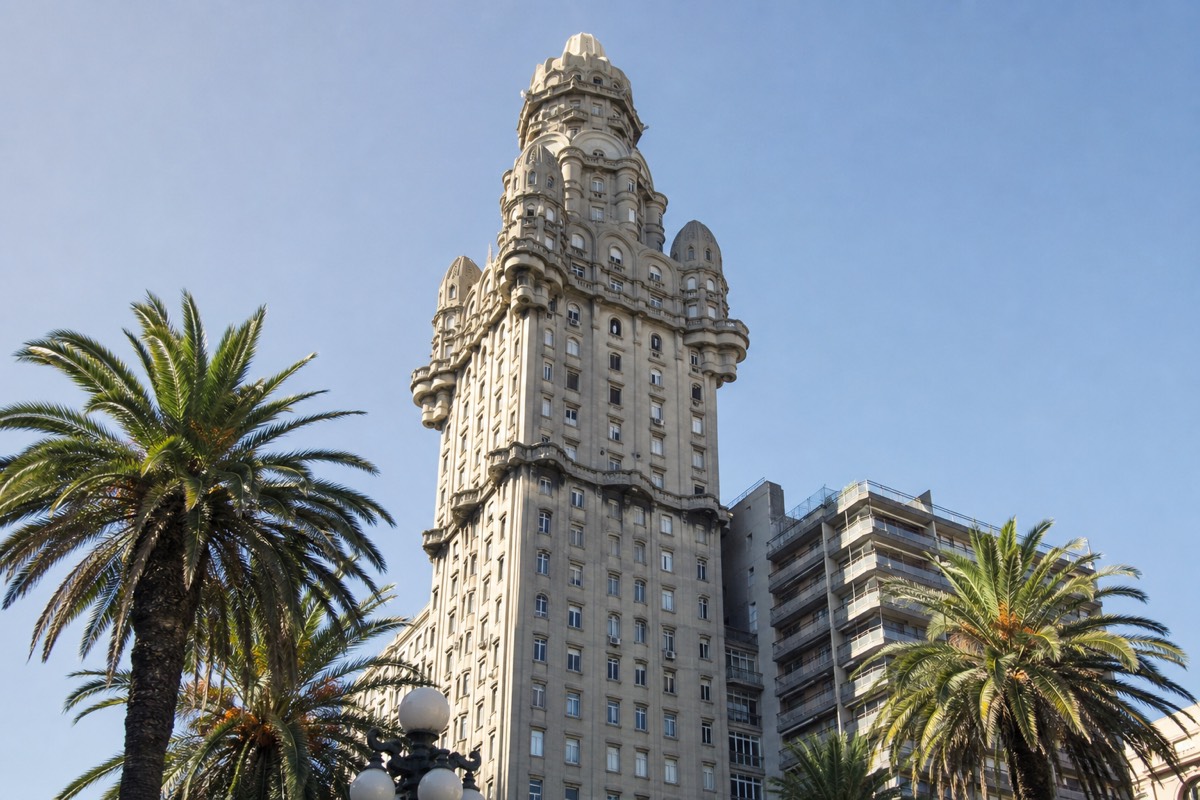
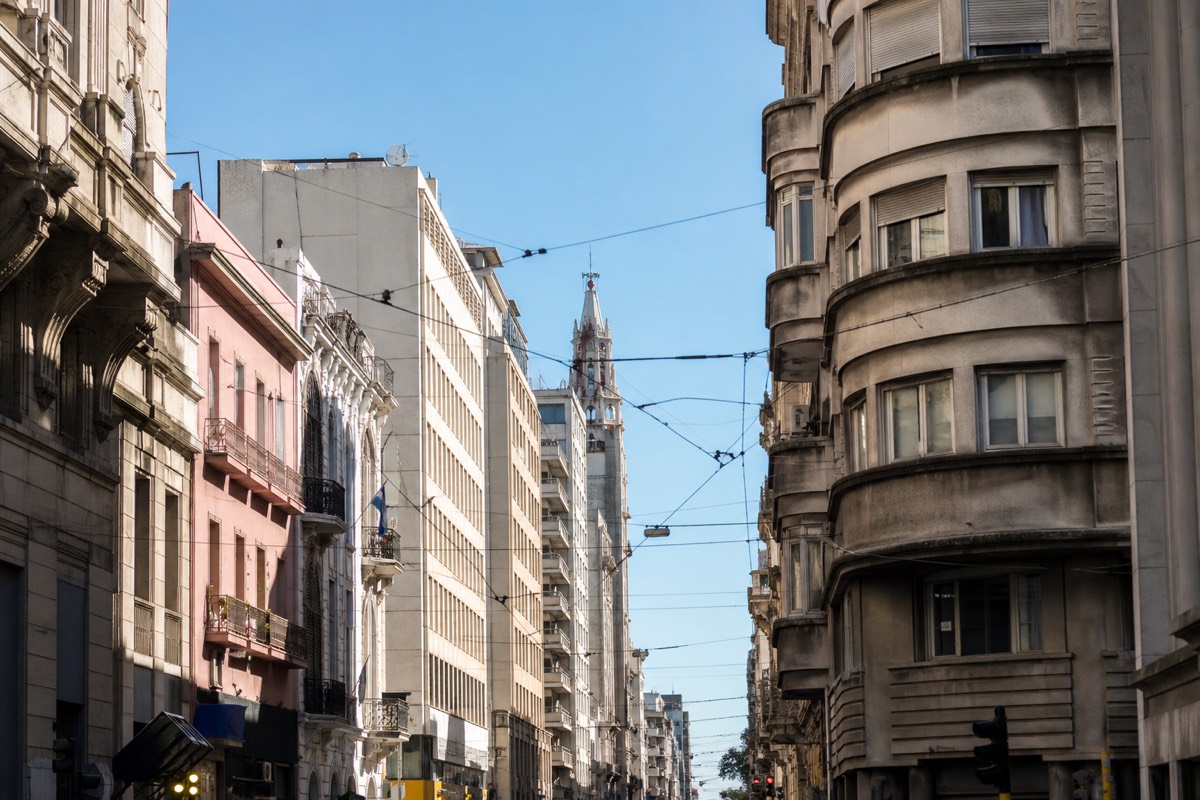
| Architecture | Grand European-influenced boulevards, Beaux-Arts, Art Deco | Colonial Ciudad Vieja, Art Deco Palacio Salvo, mid-century coast | Buenos Aires |
| Restaurants and bars | Enormous range, world-known dining scene | Smaller, strong on beef, seafood and Italian-influenced cooking | Buenos Aires |
| Nightlife | Late, dense, endless | Late but far smaller, concentrated in a few districts | Buenos Aires |
| Safety | Normal big-city precautions needed | Uruguay is the most peaceful country in South America on the 2026 index | Montevideo |
| Walkability | Walkable in patches, huge distances between them | Compact districts and a continuous waterfront promenade | Montevideo |
| Beach and water | None. The river is not for swimming here | City beaches at Pocitos, Ramírez and Malvín | Montevideo |
| Pace and stress | Fast, loud, demanding | Slow, quiet, undemanding | Montevideo |
| Days needed | Four to seven | Two to three | Depends on time |
| Tango | Bigger scene, more shows, more milongas | Smaller, older venues, less staged | Buenos Aires for volume |
Reading the table honestly: Buenos Aires takes more of the categories, and Montevideo takes the ones that determine whether a holiday feels restful. That is the whole comparison in a sentence. A traveller who is tired, travelling with small children, or coming off two weeks of hard sightseeing will often get more out of three Montevideo days than three more Buenos Aires days.
The days-needed row matters more than it looks. Buenos Aires genuinely requires four or more days to make sense, because its neighbourhoods are far apart and each has its own character. Montevideo delivers most of its value in two, which makes it the far easier city to fit into a wider South American itinerary.
How Different Do The Two Cities Feel On The Ground?
Buenos Aires feels like a European capital that grew enormous and slightly frayed: monumental avenues, constant noise, a city that never fully stops. Montevideo feels like a large coastal town that happens to be a capital, with sea air at the end of most streets and a population that is visibly not in a hurry.
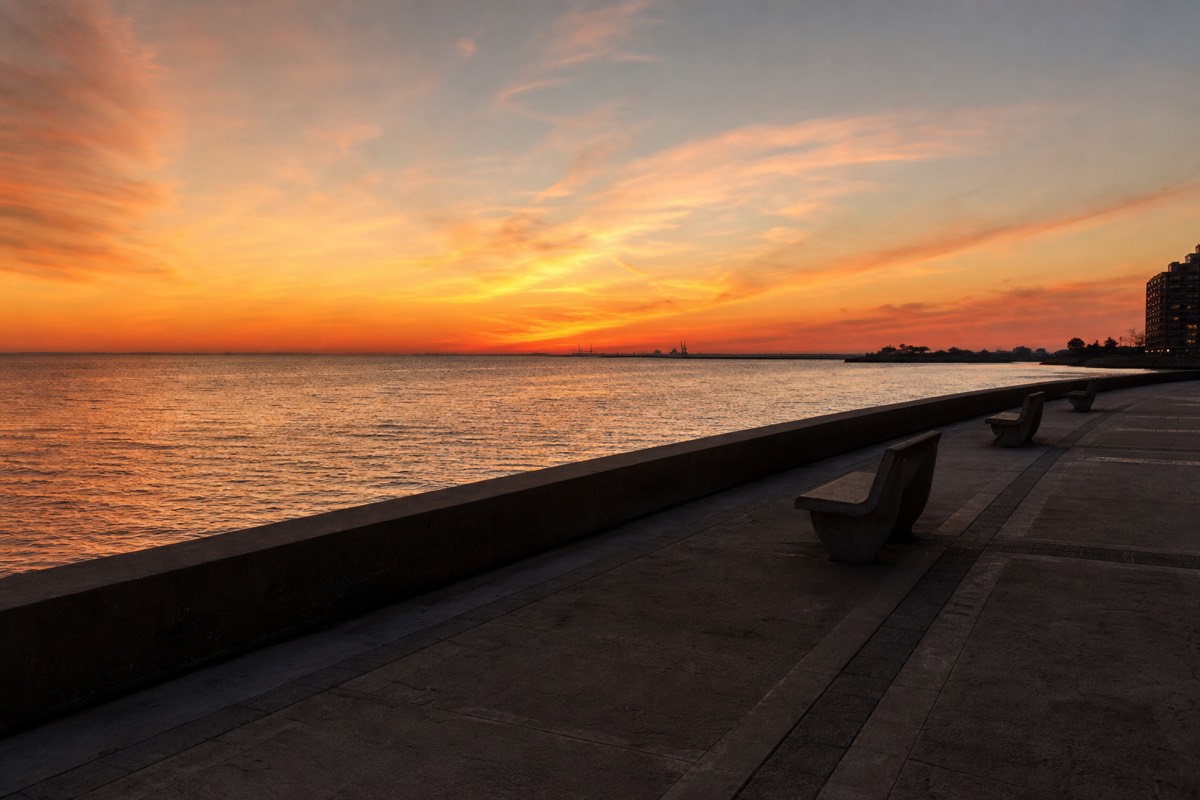
The physical difference starts with the water. Both cities sit on the Río de la Plata, but Buenos Aires turns its back on the river, which is brown, industrial-edged and not somewhere anyone swims. Montevideo faces its water directly along the Rambla, a continuous waterfront promenade that runs the length of the city and functions as its main public space. On a Sunday afternoon that promenade holds joggers, fishermen, families, dog walkers and hundreds of people sitting on the wall with a thermos and a gourd of mate. Nothing in Buenos Aires plays that role.
The second difference is density of stimulation. Buenos Aires constantly presents you with something: a protest, a street tango, a bookshop in an old theatre, a queue outside a pizzeria. Montevideo does not. Its best hours are unremarkable ones. That is exactly why some visitors adore it and others leave saying there was nothing to do, and both reports are accurate descriptions of the same city.
The third is the human scale of the institutions. Uruguay's parliament, national theatre, main football stadium and central market are all things a visitor can walk to and walk into, in a capital small enough that they are not lost among a hundred equivalents. Standing in the Estadio Centenario, which hosted the first World Cup final in 1930, in a country of a few million people, tells you something about Uruguay's self-image that no equivalent Buenos Aires visit quite does.
Which City Has The Better Food?
Buenos Aires has the bigger and more varied scene by a wide margin, with more high-end dining, more international cooking and more of everything. Montevideo has a narrower range done confidently: wood-fired beef, seafood, Italian-influenced home cooking, and the chivito, which is Uruguay's own contribution.

Both cities share a foundation: Spanish and Italian immigration, cattle, wheat and wine. You will eat well in both. The difference is that Buenos Aires offers you two hundred options for any given meal and Montevideo offers twenty, of which perhaps eight are genuinely good.
Montevideo's signature meal is the parrilla, and its most theatrical version is the Mercado del Puerto, a nineteenth-century iron market hall in Ciudad Vieja where a row of grill restaurants cook over wood in the open. It is touristy in the sense that everyone goes, and it is also simply where the food is. The chivito is the other thing to try: a steak sandwich loaded with ham, cheese, egg, olives and salad, which is closer to an engineering project than a sandwich.
Then there is mate, and this is one place where Uruguay is genuinely more committed than Argentina. Uruguayans carry a thermos under one arm and a gourd in the other hand through supermarkets, along the Rambla, on buses, at work. It is not performed for anyone. If you want to understand the daily texture of the country in one image, that is it. Our street food tour with a local guide includes the mate ritual alongside empanadas and chivito, at around $66 at the time of writing. For sit-down options, see our Montevideo restaurant guide.
One more Uruguayan advantage: wine. Tannat, a dense red grape brought from southwest France, has become Uruguay's signature, and the vineyards sit in Canelones just outside Montevideo rather than a thousand kilometres away in Mendoza. That makes a serious winery visit a half-day trip from the capital, which is not something Buenos Aires can offer.
Which City Is Safer For Visitors?
Uruguay ranks as the most peaceful country in South America and 43rd globally on the 2026 Global Peace Index, and that reputation is a real part of why travellers choose Montevideo. Both cities need ordinary urban caution, but Montevideo asks less of you day to day.
The Global Peace Index measures a country rather than a city, so treat it as context rather than a street-level guarantee. What it does capture is real: Uruguay is a stable democracy with low political violence, strong institutions and a small population, and that shows up in the atmosphere of its capital.
In practice, both cities reward the same habits. Do not walk with a phone out in a quiet street at night. Do not carry more cash than you need. Use registered taxis or ride apps after dark. In Montevideo the specific areas visitors are advised to be careful in are limited and identifiable, and our Montevideo safety guide and the companion piece on where to avoid in Montevideo cover them properly rather than vaguely.
The practical difference is one of density. Buenos Aires is enormous, so the range of neighbourhood conditions inside it is enormous, and a visitor can wander from a very comfortable street into a much less comfortable one without noticing. Montevideo's tourist geography is compact enough that this happens less. The Ciudad Vieja to Centro to Pocitos corridor is where visitors spend their time, and it is well policed and busy.
A city comparison cannot make personal-safety guarantees. Use the precautions above in either city, with or without a guide.
Which City Is Better Value For Money?
This one genuinely depends on when you ask. Uruguay is one of the more expensive countries in South America and has been for years, with steady, predictable pricing. Argentina's cost for foreign visitors has swung sharply in recent years, so check current conditions rather than trusting an article's numbers.
The stable statement is that Uruguay is not a cheap destination by regional standards. Restaurant meals, hotels, taxis and groceries all cost meaningfully more than in most neighbouring countries, and visitors arriving from Bolivia or Peru get a shock. What Uruguay offers in return is consistency: prices are what they say they are, cards work, the currency behaves, and the exchange rate sat at roughly 40 Uruguayan pesos to the US dollar as of August 2026, though you should check the current rate before travelling.
Argentina's situation for visitors has been much less predictable, with exchange arrangements and relative costs shifting significantly over short periods. That volatility can make Buenos Aires either a bargain or an expensive city depending on the year and the mechanism you use to pay. Rather than assert a figure that will be wrong by the time you read it, our advice is to check recent traveller reports close to your departure.
Where Montevideo does win on value is in what a day costs to enjoy. The Rambla is free. The beaches are free. Ciudad Vieja is free to walk. The Mercado del Puerto is a moderately priced lunch. Guided city tours here run from around $35 for a small-group half-day circuit, and even the private options are reasonable for a group splitting the cost. You can have a very good Montevideo day on very little.
How Do You Get Between Montevideo And Buenos Aires?
Three ways: a direct fast ferry across the Río de la Plata, a shorter ferry crossing to Colonia del Sacramento followed by a bus, or a short flight of roughly an hour. The ferry routes are the ones most travellers use, and the Colonia option lets you turn the transfer into a sightseeing day.
| Option | Shape of the journey | Best for | Watch out for |
|---|---|---|---|
| Direct ferry | Buenos Aires port to Montevideo port, one crossing | Simplicity, arriving in the centre of both cities | Fewer daily departures than the Colonia route |
| Ferry to Colonia plus bus | Shorter crossing, then a coach onward to Montevideo | Cost, frequency, and stopping in Colonia on the way | Two legs, so build in transfer time |
| Flight | Roughly an hour in the air, plus airport time both ends | Speed on paper | Airport transfers can erase the time saving |
| Bus the long way round | Overland via Gualeguaychú and Fray Bentos | Travellers avoiding boats and planes | Much longer, and it misses the point of the river |
The Colonia route deserves special attention because it turns a transfer into a highlight. Colonia del Sacramento sits directly across the river from Buenos Aires and its Historic Quarter has been UNESCO-listed since 1995, recognised for the fused Portuguese and Spanish urban fabric that came out of a century of the two empires taking the town off each other. Founded by the Portuguese in 1680, it is one of the most photogenic small towns on the continent.
You can also reverse the logic: base in Montevideo and visit Colonia as a day trip rather than as a transit point, which is what most of our travellers do. Our full-day guided Colonia trip from Montevideo handles the drive, the history and the free time for lunch. Ferry timetables, terminals and ticketing are covered in detail in our Buenos Aires to Montevideo ferry guide.
Which Is Better For Tango, Music And Nightlife?
Buenos Aires has far more of everything: more milongas, more shows, more late-night venues, more choice on any given Tuesday. Montevideo has fewer venues but older and less staged ones, plus something Buenos Aires does not have at all, which is candombe.
Tango belongs to both banks of the river, and the two countries nominated it jointly when it was inscribed on UNESCO's intangible heritage list in 2009. The single most famous tango ever written, "La Cumparsita", was composed in Montevideo in 1917 by the Uruguayan Gerardo Matos Rodríguez, and Uruguay treats it with something close to national-anthem status. So the Montevideo tango scene is not an imitation of the Buenos Aires one. It is smaller, less commercial and considerably harder to find without local help.
The best-known venue is Baar Fun Fun, which has been operating since 1895 and which our tango lesson and show uses as its setting. That is a very different proposition from a large Buenos Aires dinner-show: an old bar, a small floor, and an actual lesson rather than a spectacle.
Then there is candombe, which is entirely Uruguayan and has no Buenos Aires equivalent. It is an Afro-Uruguayan drumming tradition, inscribed by UNESCO in 2009 in its own right, and it is performed on the street in the Barrio Sur, Palermo and Cordón neighbourhoods on Sundays and holidays. If you are in Montevideo on a Sunday afternoon, this is the thing to seek out, and it is free. Our candombe and carnival guide explains where and when, and how to be a respectful spectator.
On raw nightlife, Buenos Aires wins and it is not close. Montevideo's late scene is concentrated in a handful of areas and is much quieter on weeknights. Travellers whose trip is built around going out should weight that heavily.
Which Is Better For A First Trip To South America?
Buenos Aires, for most people. It has the flight connections, the range, the density of sights and the sense of arrival that a first big trip usually wants. Montevideo is a better second stop, a better place to recover, and a better choice for repeat visitors to the region.
The connectivity argument is straightforward. Buenos Aires is a major hub with direct long-haul routes from North America and Europe, and it functions as the gateway to Patagonia, Iguazú, Mendoza and the rest. Montevideo has good regional connections and fewer long-haul ones. Building a first trip around Buenos Aires simply makes the logistics easier.
The other argument is expectation management. A first-time visitor to the continent usually arrives wanting to be dazzled, and Buenos Aires obliges. Montevideo does not try to. Visitors who arrive there first, with no regional reference point, quite often conclude that South America is a bit sleepy, which is a strange thing to take away from the trip.
Reverse all of that for a returning traveller. Someone who has already done the big-ticket circuit and wants a week that is not exhausting will get far more out of Montevideo, the coast and the wine country than out of another metropolis. Our post on whether Montevideo is worth visiting works through that distinction in more depth.
Who Should Honestly Skip Montevideo?
Travellers with only a few days in the region and a long list of must-see sights. People whose trip is built entirely around nightlife and dining. Anyone expecting dramatic landscape or grand architecture. Montevideo is a rewarding city, and it is not a spectacular one, and pretending otherwise sets visitors up to be disappointed.
The clearest case for skipping is time. If you have five days in the Río de la Plata and it is your only visit, five days in Buenos Aires plus a Colonia day trip probably beats splitting the time. Buenos Aires needs four days minimum to make sense, and cutting it to two so you can add two in Montevideo weakens both.
The second case is temperament. Travellers who measure a city by how much there is to do will find Montevideo thin. There is no world-class museum here, no single unmissable monument, no dramatic setting. Its appeal is cumulative and mostly atmospheric, and that does not work for everyone.
The third case is the four-hour cruise stop, which is a real and specific problem. A short port call shows you some handsome squares and a market lunch, and it genuinely does not reveal why anyone would want to stay longer. If that is your only window, take a guided circuit with port pickup that at least gets you beyond Ciudad Vieja, and hold your judgement about the city. Our cruise port guide covers how to make the most of it.
If big-city nightlife and a dense attraction list are your priorities, no Montevideo sightseeing product changes that basic choice.
What Do People Get Wrong About This Comparison?
The two biggest errors are treating Montevideo as a smaller Buenos Aires, and treating a day trip as a fair test. Montevideo is not a miniature version of anything, and a four-hour visit is a sample too small to judge a city whose whole character is about pace.
The "small Buenos Aires" framing is the more damaging one because it sets up the wrong measuring stick. Judged as a scaled-down metropolis, Montevideo fails: fewer restaurants, fewer shows, less grandeur. Judged as what it actually is, a calm coastal capital with beaches, a working port, a strong food culture and no tourist crush, it does very well. The cities are different species, not different sizes.
The day-trip error follows from the ferry being so easy. Plenty of Buenos Aires visitors hop across for a day, walk Ciudad Vieja, eat at the Mercado del Puerto and return, and they have not really seen the city. That itinerary skips the coast, the neighbourhoods, the parks and the Sunday rhythms, which are the whole point. Our post on whether a day trip to Uruguay is worth it is direct about what that format can and cannot deliver.
A third and smaller error is assuming the languages and cultures are interchangeable. They are close but not identical: different accents, different national myths, a different relationship to football, a different politics, and in Uruguay an Afro-descendant cultural tradition in candombe that has no Argentine parallel. Treating Uruguay as an Argentine province with a flag misses most of what is interesting about it.
If you have decided to give Montevideo real time, a guided first day is the fastest way to get past the surface. Our private discovery tour with a local guide builds the day around your interests, and the half-day small-group circuit is the efficient shared version. Everything else we run is listed on our Montevideo tours homepage.