Buenos Aires To Montevideo Ferry & Day Trip Guide
The Rio de la Plata is up to 220 kilometres wide at its mouth, which is why the trip between two capitals that face each other across it is a sea crossing rather than a bridge. Getting it right comes down to one choice: the fast direct boat, or the cheaper route through Colonia.
How long each crossing really takes
Choose the arrival city and whether you need transport alone or a return package before comparing prices.
Booking Shortlist: Buenos Aires to Montevideo Ferry And Bus. Book the Colonia ferry and connecting bus as a single one-way journey between the two capitals.
Crossing times as published by the operators: Buquebus direct services run between roughly 2h30m and 4h31m depending on vessel and routing; the Colonia Express combination totals around 4h45m including the connecting coach to Montevideo. Verified August 2026. Check current schedules before booking.
What Is The Fastest Way To Get From Buenos Aires To Montevideo?
The direct Buquebus ferry. Depending on the vessel and routing, the crossing runs from around 2 hours 30 minutes at its quickest to about 4 hours 31 minutes on slower services. It leaves from Puerto Madero in Buenos Aires and arrives at the port of Montevideo, putting you in the city centre without an airport transfer at either end.
That last detail is the reason so many people pick the boat over the plane. The flight between the two cities is short, but the door-to-door time collapses once you add two airports, two security queues and two transfers. The ferry terminals sit inside both cities, so you walk off the boat into Montevideo's port area, a few minutes from Ciudad Vieja and the old town.
The fast direct services are the premium option and are priced accordingly. Not every departure runs at the quickest speed, and some sailings take a longer routing that pushes the crossing past four hours. When you compare fares, compare the sailing times attached to them rather than assuming every direct ticket is the fast one.
The alternative is the Colonia route: a shorter hop across the river to Colonia del Sacramento, then a connecting bus onward to Montevideo. Colonia Express runs this pairing at roughly 4 hours 45 minutes in total including the bus leg, and it is generally the cheaper and slower option. It also happens to pass through a UNESCO World Heritage town, which turns a transport compromise into an opportunity.
Direct Ferry Or Ferry Plus Bus Via Colonia: Which Should You Book?
Book the direct Buquebus crossing if your time is worth more than the fare difference or you are doing a tight one or two-night trip. Take the Colonia Express route if you are watching the budget, are travelling with flexibility, or want to break the journey in Colonia del Sacramento rather than treat it as dead time.
| Direct ferry (Buquebus) | Ferry plus bus via Colonia (Colonia Express) | |
|---|---|---|
| Route | Buenos Aires straight to Montevideo | Buenos Aires to Colonia del Sacramento, then coach to Montevideo |
| Total time | About 2h30m to 4h31m depending on the sailing | Around 4h45m including the connecting bus |
| Indicative fare | Typically around $70 to $170 USD one way | Usually the cheaper of the two, sold as a combined ticket |
| Buenos Aires terminal | Terminal Fluvial Buquebus, Puerto Madero | Separate operator terminal in the Puerto Madero area |
| Montevideo arrival | Port of Montevideo, walking distance from Ciudad Vieja | Usually the Tres Cruces bus terminal area |
| Best for | Short trips, business travel, arriving fresh, city-centre arrival | Budget travel, stopping in Colonia, flexible schedules |
| Main drawback | The highest fares on the river | Two legs, one transfer, a longer day and a bus terminal arrival |
Fares move with season, demand and how far ahead you book, so treat every figure above as indicative and check the operator's current pricing before you commit. The $70 to $170 band is a realistic 2026 range for a one-way direct crossing rather than a fixed price, and the cheapest seats on any given sailing go first.
There is a third consideration that the table cannot capture. The direct boat is a genuinely pleasant few hours with duty free, seating decks and a view, and plenty of people treat it as part of the trip. The Colonia route is two shorter legs, which some travellers prefer to one long sit, especially with children.
How Much Does The Buenos Aires To Montevideo Ferry Cost?
A one-way direct crossing typically runs somewhere between $70 and $170 USD as a 2026 estimate, depending on the sailing, the class of seat and how early you book. The Colonia Express combination is usually cheaper. Check current fares on the operator's site, because prices change with season and demand.
The spread inside that range is wide for real reasons. Operators sell tiered seating, from standard through to business and first-class style cabins with more space and included service. Return tickets are often better value than two singles. And like airlines, the boats price by demand, so a Friday evening sailing in January will not cost what a Tuesday morning crossing in June does.
Budget for the small extras too. If you are connecting onward from the Montevideo port you may want a taxi to your accommodation, and if you arrive at Tres Cruces on the Colonia routing you are a short ride from the centre rather than in it. Neither is expensive, but the fare comparison people do in their heads usually ignores the last leg.
On money generally: Uruguay uses the Uruguayan peso, trading at roughly 40 to the US dollar as of August 2026, though you should check the current rate. Cards are widely accepted in Montevideo's tourist areas, and you do not need to arrive with a wad of pesos. Do carry some cash for markets, kiosks and small vendors. Our practical Montevideo guide covers currency, transport cards and SIMs in full.
How Do You Actually Buy A Ferry Ticket, Step By Step?
Book online in advance on the operator's own website, enter passenger names exactly as they appear on the passport, choose the sailing by its stated duration rather than by price alone, and plan to be at the terminal well before departure because you clear border control before boarding.

Step one: pick the operator and the route. Buquebus for the direct crossing, Colonia Express for the Colonia plus bus combination. Both sell online and both sell combined tickets that include the onward coach leg where relevant. Buying direct avoids resellers adding a margin.
Step two: match the passenger details to the travel document. This is an international border crossing, so names, document numbers and nationalities need to match your passport exactly. Corrections after purchase are a nuisance, and the check-in desk will not improvise on your behalf.
Step three: choose the seat class honestly. Standard is perfectly comfortable for a two and a half hour run. On the longer four-hour sailings, or if you are working, the upgrade is more defensible. Step four: arrive early. Terminal processing on this route involves both countries' immigration formalities before you board, which is efficient once you are in the queue but not instant. Give yourself a comfortable margin rather than the minimum stated.
Step five: keep the boarding documents accessible on arrival, especially if your ticket includes an onward bus. The connection is timed against the ferry, but the transfer between the boat and the coach is your responsibility, not a guided handover.
Which Terminals Do You Leave From And Arrive At?
In Buenos Aires, the Terminal Fluvial Buquebus sits in Puerto Madero, the redeveloped dock district on the eastern edge of the city centre. In Montevideo, direct sailings arrive at the port, a short walk from Ciudad Vieja. Colonia-routed services generally connect through the Tres Cruces bus terminal area.

Puerto Madero is easy to reach from most of central Buenos Aires and is a walkable district in its own right, so arriving early is no hardship. The terminal handles check-in, baggage and border control under one roof, which is why the process feels closer to an airport than a harbour.
The Montevideo arrival is the underrated advantage of the direct boat. The port sits right beside the old city, so you can be standing in Plaza Matriz or at Mercado del Puerto within minutes of clearing the terminal. If your hotel is in Ciudad Vieja or Centro, you may not need a taxi at all. If you are heading to Pocitos or Carrasco, it is a short ride east.
Tres Cruces, where the Colonia coach connections run, is Montevideo's main intercity bus terminal north-east of the centre. It is well connected by city bus and taxi, has shops and food, and is also where onward buses to the Atlantic coast leave from. That makes it a convenient arrival if your next move is out of the city rather than into it. For what to do the moment you land, our list of the best things to do in Montevideo is organised by neighbourhood.
Can You Really Do Montevideo As A Day Trip From Buenos Aires?
You can, but it is a long day and the honest answer is that one night makes it a far better trip. A direct morning crossing and a late evening return gives you roughly six to eight useful hours in Montevideo, which covers Ciudad Vieja, a parrilla lunch and a stretch of the Rambla, and not much else.
Run the arithmetic. Allow an hour at the Buenos Aires terminal, two and a half to four and a half hours on the water, then the same in reverse at the end of the day. On the fastest sailings that is still around seven hours of travel and terminal time bracketing your visit. On slower services it approaches ten.
What fits in the middle is a compressed but genuine version of the city. The old town is compact and walkable, Mercado del Puerto is minutes from the arrival point and open through the middle of the day, and a half-day guided loop covers the landmarks efficiently. The half-day city sightseeing tour runs about 3.5 hours in a small group with pickup at the Ministry of Tourism by the port exit, which is exactly the shape a day-tripper needs.
What does not fit is the beach, the wine country, a museum programme or an unhurried dinner, because Uruguayans eat late and you will be back on a boat by then. Our verdict, argued at length in is a day trip to Uruguay worth it, is that the day trip is worth doing if that is all your itinerary allows and slightly wasteful if you had the option of a night. The related comparison of the two capitals sits in Montevideo vs Buenos Aires.
Should You Stop In Colonia Del Sacramento Instead?
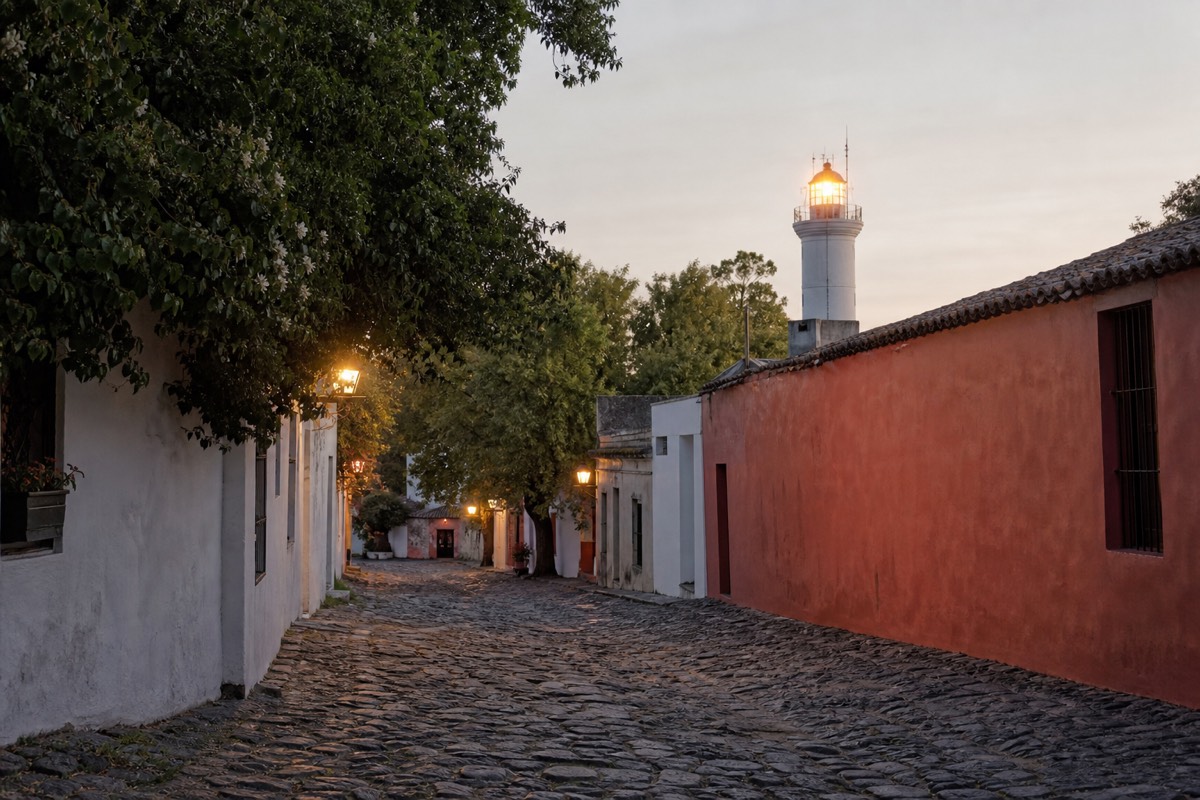
Colonia del Sacramento is a UNESCO World Heritage site, the best-preserved colonial town on the Uruguayan side of the river, and it sits directly on the cheaper ferry route. If you are already crossing via Colonia, building in a stop there turns a slower journey into a second destination for almost no extra cost.
The historic quarter is small, walkable and genuinely atmospheric: cobbled streets laid with wedge-shaped drainage, the Porton de Campo city gate and surviving walls, the Calle de los Suspiros, the lighthouse built over convent ruins, Plaza Mayor and the Basilica del Santisimo Sacramento. UNESCO's own listing for the Historic Quarter of the City of Colonia del Sacramento sets out why the Portuguese and Spanish layers of the town matter.
You can also do the reverse, which is what most of our travellers actually do: base yourself in Montevideo and take a day trip west. The full-day Colonia tour from Montevideo runs around nine hours with hotel pickup, a multilingual guide, individual seat audio on the coach, a guided walk of the historic quarter, a stop at the Real de San Carlos bullring and a tasting stop at Granja Arenas, at around $60 per person.
If you would rather set your own pace, the private UNESCO city tour of Colonia is a nine to ten-hour private day with your own guide and vehicle, wifi on board, the Puerta de la Ciudadela, the lighthouse, the bullring and the unusual Pencil Museum at Granja Arenas, priced from around $600 for the vehicle and guide rather than per head. Check the live listing for the current group pricing.
What Do You Need At The Border, And How Does Control Work?
You need the passport you booked with, and you clear both countries' immigration formalities at the departure terminal before boarding rather than on arrival. That is why check-in for this crossing closes well before departure and why arriving early is not optional advice.
The practical consequence is pleasant: once you step off the boat in Montevideo, you are simply in the city. There is no arrivals hall queue to fight through after four hours at sea. The cost is front-loaded onto the departure terminal, where you should treat the process as you would a short-haul flight.
Entry requirements depend on your nationality, and they change. We are not going to publish a visa table that could be out of date by the time you read it. Check your own government's travel advice and Uruguay's official requirements before booking, and confirm passport validity rules, because the terminal is not the place to discover a problem.
A few things travellers ask about routinely: duty free is sold on the direct crossings and there are limits on what you can bring in, pets and vehicles have their own procedures and must be arranged with the operator in advance, and if you are travelling with children who are not with both parents, additional documentation rules can apply. All of these are operator and government matters rather than guesswork, so ask them directly.
No tour or ferry voucher replaces the documents required to cross the border. Check your own eligibility before paying.
Are There Other Ways To Travel Between The Two Cities?
Three realistic options exist: the direct ferry, the ferry plus bus through Colonia, and flying. There is also a fully overland bus route that loops around the head of the estuary via the international bridges, which takes the best part of a day and only makes sense for travellers who will not fly or sail.
Flying is the fastest in pure air time and the slowest to feel fast. Between checking in at Buenos Aires, the flight itself, and the transfer from Carrasco International Airport into Montevideo, which is about 20 kilometres from the centre and takes 25 to 40 minutes by taxi or private transfer, the total is much closer to the ferry than the timetable suggests. It becomes the clear winner mainly when fares fall or when you are connecting from a long-haul flight anyway.
The overland coach exists because the Rio de la Plata has no bridge across it. Buses run north out of Buenos Aires province and cross into Uruguay at the international bridges upstream, then come back down the Uruguayan side to Montevideo. It is cheap and it is long. Almost nobody chooses it on a short trip.
Which leaves the water, which is what the locals use. The direct boat for speed, the Colonia route for value and a stop worth making. If you want to work out whether the two cities are worth splitting your trip between at all, the head-to-head in Montevideo vs Buenos Aires makes the case for each.
What Is The Crossing Actually Like On Board?
Closer to a short-haul flight than a cruise. You board through a terminal, sit in assigned seating across several decks, and have duty free, cafes and outside deck space to move around. The river is usually calm, though the wide central section can pick up a swell in bad weather.
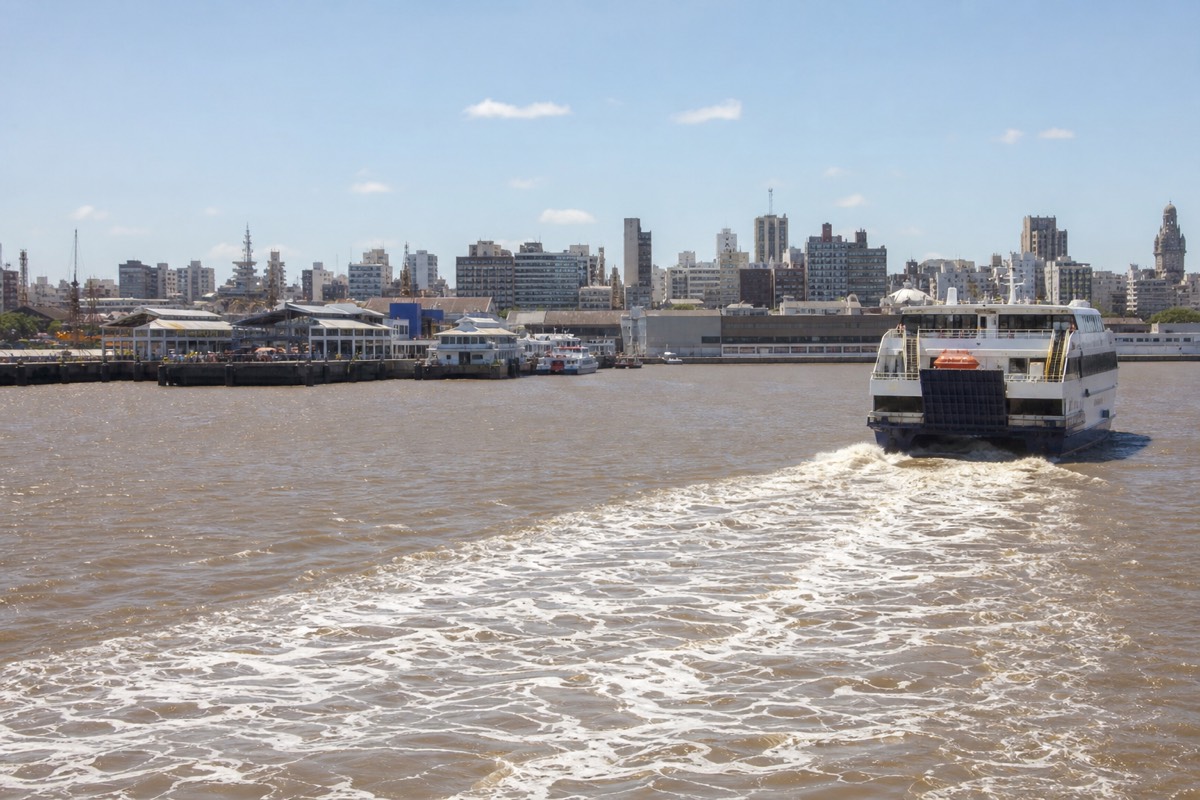
The first half hour out of Puerto Madero is the interesting part, with the Buenos Aires skyline pulling away behind the wake. After that the estuary opens up until neither shore is visible, which surprises people who assumed a river crossing meant land on both sides throughout. The Rio de la Plata is enormous, and for a stretch in the middle it behaves like open water.
Duty free shopping is a genuine feature rather than a footnote on the direct services, and plenty of regular travellers treat it as part of the trip. There is wifi on some vessels but do not rely on it for anything important, and mobile coverage drops out mid-crossing. Bring something to read or work on offline.
Practically: bring a layer, because the air conditioning runs cool and the outside decks are windy on a river that is rarely still. If you are prone to seasickness, the larger fast vessels are stable in normal conditions, but take your usual precautions before boarding rather than after. And eat before you sail or plan on the on-board cafe, because by the time you reach Montevideo you may be arriving in the awkward gap between local lunch and local dinner.
What Does A Realistic Buenos Aires To Montevideo Travel Day Look Like?
A workable one-night plan: 8am at the Puerto Madero terminal, mid-morning arrival in Montevideo, drop bags and walk Ciudad Vieja, parrilla lunch at Mercado del Puerto, Rambla and Pocitos in the afternoon, late dinner, then a full second day before an evening return.
Morning one starts early because the good direct sailings do. Terminal by 8am for a mid-morning departure, immigration cleared before boarding, then two and a half to four and a half hours on the water depending on the service you booked. Sleep, work or watch the river widen out until both shores disappear.
Arrive at the port of Montevideo and walk straight into Ciudad Vieja. Drop bags at the hotel, then head for Mercado del Puerto, which opens around 10 or 11am and closes around 5 or 6pm, so lunch there has to happen on day one if it is going to happen at all. Sit at a grill counter, order a mixed parrillada and a glass of Tannat, and take two hours over it.
Afternoon: walk Sarandi, the pedestrian street through the old town, to Plaza Independencia, then out to the Rambla. If your legs have had enough, the hop-on hop-off bus covers the waterfront and the main landmarks at around $35. Dinner starts late here, so plan for 9pm rather than 7pm, and use day two for the beaches, the wine country or Colonia before your evening boat back.
What Mistakes Do People Make Booking This Crossing?
The big one is buying the cheapest fare without noticing it is the Colonia route with a bus attached, then being surprised by an extra two hours and a terminal transfer. Close behind: cutting the terminal arrival too fine, and booking a return sailing that leaves before Montevideo has properly started its evening.
Read what you are buying. A ticket that says Buenos Aires to Montevideo can mean a direct boat or a boat plus a coach, and the total journey times differ by roughly two hours. Neither is wrong, but they suit different trips, and discovering the difference at the terminal is a bad start.
Do not cut the check-in margin. Border formalities happen before boarding on this route, and the queue does not care that your taxi was slow. The published check-in window exists because processing several hundred passengers through two immigration desks takes time.
Two smaller traps. First, leftover Argentine pesos are not spendable in Uruguay and the exchange back is rarely kind, so plan your cash rather than emptying an ATM on the last morning. Second, do not assume a card covers everything on arrival: cards work widely across Montevideo's tourist areas, but markets and small vendors often want cash. And third, if the trip is short, book at least one guided element in advance rather than arriving with an open plan. Our Montevideo tour collection lists the city loops, food walks and Colonia day trips that fit a compressed schedule.