Montevideo Practical Guide: Transport, Currency, SIM Cards
Carrasco International Airport sits about 20 kilometres east of central Montevideo, which is close enough that the taxi ride is short and far enough that you need to have decided how you are getting in. That decision, plus a bus card and a working SIM, is most of what a Montevideo trip requires.
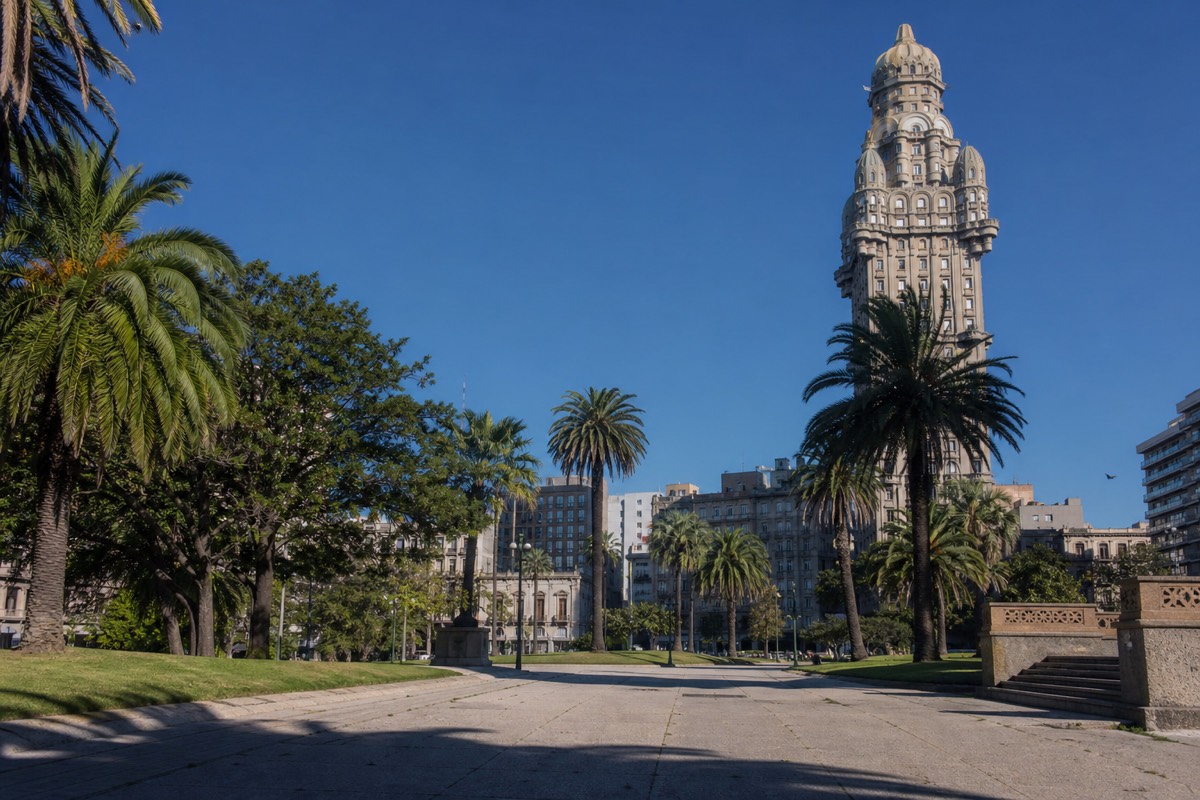
What Do You Need To Sort Out In Your First Hour In Montevideo?
Three things: a way into the city from the airport or port, some Uruguayan pesos in cash, and mobile data. Everything else can wait. Antel sells SIM cards at Carrasco airport, cards work widely across the tourist neighbourhoods, and taxis, Uber and buses all run from the terminal.
Solve the arrival first, then decide which journeys need a booked vehicle and which are easy to do independently.
Booking Shortlist: Private Montevideo Airport Or Port Transfer. Arrange a named pickup and a private vehicle between the airport or port and your Montevideo stay.
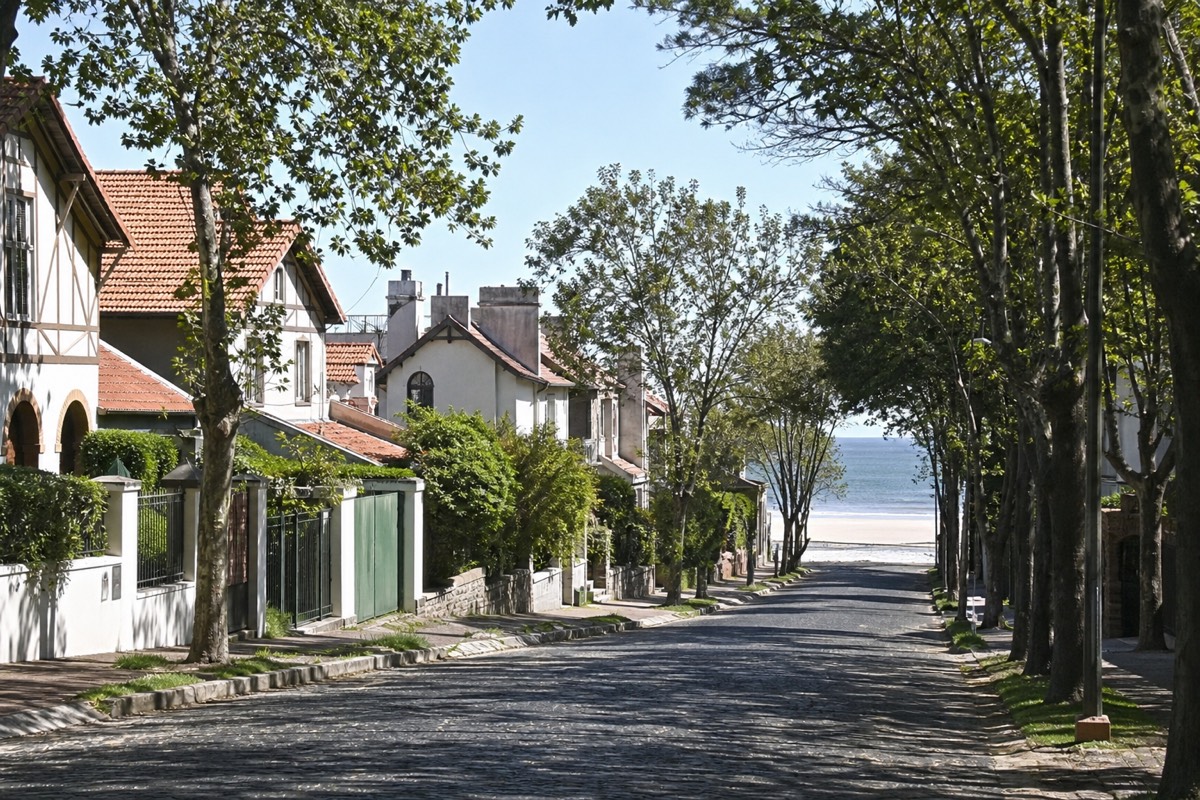
Montevideo is a low-friction capital by South American standards. It is compact, the transport works, Uber operates legally, and English is spoken in enough of the tourism industry that you will not be stranded. That means the practical layer of a trip here is genuinely short compared with, say, arriving in Lima or Sao Paulo.
The mistakes people make are small and repetitive: landing with no local cash and finding a market stall will not take a card, riding buses at the cash fare because nobody explained the STM card, or spending two days without data because they assumed roaming would be reasonable. Each takes ten minutes to fix in advance.
This guide covers the logistics in the order you will hit them: the airport transfer, money, cards and cash, city buses, taxis and Uber, connectivity, and the etiquette that makes the difference between being tolerated and being welcomed. For what to actually do once the practicalities are handled, start with the best things to do in Montevideo.
How Do You Get From Carrasco Airport Into The City?
Carrasco International Airport is about 20 kilometres from central Montevideo. A taxi, Uber or private transfer takes roughly 25 to 40 minutes depending on traffic and where you are staying. The bus takes around 45 to 60 minutes and costs a fraction of the price.
| Option | Journey time | Cost | Best for |
|---|---|---|---|
| Taxi from the rank | 25 to 40 minutes | Metered, agree or confirm before setting off | Arriving without data or an app, late-night landings |
| Uber | 25 to 40 minutes | Quoted in the app before you accept | Price certainty and no language friction |
| Pre-booked private transfer | 25 to 40 minutes | Fixed, paid in advance | Groups, families with luggage, early departures |
| Public bus | Around 45 to 60 minutes | The cheapest option by a wide margin | Solo travellers with light luggage and time |
| Hotel shuttle | Varies | Varies, sometimes included | Guests of the larger hotels, worth asking before you book anything else |
Where you are staying changes the maths. Carrasco, the upscale seaside neighbourhood in the east, is the closest district to the airport and can be a 10 to 15 minute ride. Pocitos and Punta Carretas sit in the middle. Ciudad Vieja and the port are the far end of the run, which is where the upper end of that 25 to 40 minute range applies.
If you are arriving by ferry from Buenos Aires rather than by air, none of this applies: the port sits beside Ciudad Vieja and you can walk into the old town. Our Buenos Aires ferry guide covers the terminals and border formalities on that route.
What Currency Does Uruguay Use, And Should You Bring Dollars?
Uruguay uses the Uruguayan peso, written UYU or with a dollar sign locally. As of August 2026 the rate sat at roughly 40 pesos to one US dollar, though rates move constantly so check the current rate before you travel. You do not need to arrive with a stack of pesos, but you should get some early.
The local dollar sign causes confusion worth heading off. A price written with a dollar sign in a Montevideo shop is almost always pesos, not US dollars. At around 40 to the dollar, a number that looks alarming on a menu usually is not, and a number that looks like a bargain usually is not either. Do the division before you react.
US dollars are recognised and, in some contexts such as hotel rates and property, they are the quoting currency. That does not make them a substitute for pesos in daily use. Paying in dollars at a shop or restaurant, where accepted at all, tends to attract an unfavourable rate. Change money properly or withdraw pesos from an ATM.
ATMs are widespread in the central neighbourhoods, in shopping centres and at the airport. Check what your own bank charges for foreign withdrawals, take out a sensible amount in one go rather than repeatedly, and keep some small notes, because breaking a large bill at a beach kiosk is nobody's idea of a good time.
A tour is not a currency-exchange service. Keep cash and payment decisions separate from activity bookings.
Do Cards Work Everywhere, Or Do You Need Cash?
Cards are widely accepted across Montevideo's tourist areas, restaurants, hotels, supermarkets and shopping centres. Carry cash anyway for smaller vendors, market stalls, beach kiosks, some taxis and neighbourhood shops outside the centre. A card-only trip is possible but will occasionally leave you stuck.

Practically, the split runs along the line between formal and informal business. A restaurant in Punta Carretas, a supermarket in Pocitos or a hotel in Ciudad Vieja will take a card without hesitation, and tipping can usually be added to the card total. A stall at the Mercado Agricola, a snack kiosk on the Rambla or a small parrilla in a residential street is a cash proposition.
Contactless is common in the formal sector. Bring at least two cards from different networks, tell your bank you are travelling so a foreign transaction does not trip a fraud block, and keep them separate from each other physically.
On the half-day city sightseeing tour and the other guided experiences we list, payment happens online at the time of booking, so you are not handling cash with a driver or guide. Gratuities, where you choose to leave them, are the exception and are best carried in pesos. The customary restaurant tip is around 10 percent, and it is genuinely optional rather than expected as wage replacement.
How Does The Montevideo Bus System Work, And How Do You Get An STM Card?
City buses run under the STM, the Sistema de Transporte Metropolitano. Paying with a rechargeable STM card is cheaper than paying cash: an August 2026 source put a common fare at around 46 pesos with the card against about 56 pesos in cash. You buy and top up the card at Abitab or Redpagos outlets.

Step by step. First, find an Abitab or Redpagos branch, which are payment-service shopfronts scattered across every neighbourhood and usually the easiest thing to spot on a commercial street. Ask for an STM card, pay the small issuing cost, and load it with credit in the same transaction.
Second, work out your route. The official Como Ir app is the tool for this, and it is designed specifically for the Montevideo metropolitan network. It will give you the line numbers and stops, which matters because the bus network is dense and the same street can be served by a dozen routes going different places.
Third, board at the front, tap the card on the reader or tell the conductor your destination if paying cash, and keep the ticket. Buses run frequently along the main arteries, including 18 de Julio through the centre, Avenida Italia running east, and the Rambla itself. The network is the cheapest way to move between Ciudad Vieja, Pocitos, Buceo and Carrasco by a wide margin.
Is the card worth it for a short trip? If you plan to take more than four or five bus rides, yes. If you are here for two days and mostly walking or using Uber, probably not. Buy it on day one if you are staying a week.
Is Uber Better Than A Taxi In Montevideo?
Uber operates legally in Montevideo and runs 24 hours a day, competing directly with the city's taxis. For visitors, the app usually wins on price certainty and on not needing Spanish to explain a destination. Taxis remain useful at the airport, at ranks and when you have no data.
The practical advantage of the app is the quoted fare. You see the price before accepting, you do not negotiate, and there is no ambiguity about routes or the meter. That removes the single most common friction point for travellers in an unfamiliar city, and it works at three in the morning as well as at midday.
Taxis are metered and generally straightforward, and drivers are used to visitors. Where they still have the edge is availability without connectivity: if your phone is dead or you have not sorted data, a rank outside the airport, at Tres Cruces or on a main avenue is the simpler option. Some accept cards, some prefer cash, so ask before setting off.
For longer or more complex days, the private Have It Your Way day tour with door-to-door pickup is a better tool than either. Several of the experiences we list include hotel pickup, which removes the transport question entirely: the half-day city sightseeing tour collects you from your hotel or the port exit, and the private Have It Your Way day tour builds a whole day around wherever you want to go.
How Do You Get A SIM Card Or ESIM That Actually Works?
Three networks operate in Uruguay: Antel, Movistar and Claro. Antel is the state operator and generally has the best coverage, including outside the capital, and it sells at Carrasco airport. Buy on arrival, bring your passport, and check your phone is unlocked before you travel.
Step one, before you leave home: confirm your handset is carrier-unlocked, and if you want an eSIM rather than a physical card, confirm your model supports one. An eSIM avoids the queue entirely and can be activated the moment you land, provided you have wifi at the airport.
Step two, on arrival: the Antel desk at Carrasco airport is the path of least resistance if you want a physical SIM working before you leave the terminal. Bring your passport, since registration is normal practice. If you are arriving by ferry instead, Antel, Movistar and Claro all have shops across the central neighbourhoods and in shopping centres.
Step three: pick a prepaid data package sized to your trip rather than a monthly plan, and ask the assistant to confirm data is active before you walk away. Coverage in Montevideo itself is good across all three networks, so the Antel advantage matters most if your trip includes the Atlantic coast, the interior or the wine country in Canelones.
If none of that appeals, most hotels, cafes and restaurants have wifi, and you can survive on it. But the moment you want Uber, the Como Ir bus app or a map while walking the Rambla, data stops being optional.
No SIM or eSIM product has been verified in this tour shortlist. A tour’s onboard Wi-Fi is not a substitute for mobile connectivity throughout your stay.
What Does Getting Around And Staying Connected Actually Cost?
City transport in Montevideo is cheap: a common bus fare sat at around 46 pesos with an STM card and about 56 in cash as of August 2026, roughly a dollar or so at the prevailing rate. Guided experiences are the bigger line in most budgets, ranging from around $35 for a hop-on hop-off ticket upward.
| Item | Where to get it | Indicative cost | Notes |
|---|---|---|---|
| STM bus card | Abitab or Redpagos outlets | Small issuing cost plus the credit you load | Fare around 46 pesos with the card against about 56 in cash |
| Single bus ride | On board | Around 46 to 56 pesos depending on payment method | Use the official Como Ir app for routes |
| Airport transfer by taxi or Uber | Rank or app | Metered or app-quoted | 25 to 40 minutes for roughly 20 kilometres |
| Prepaid SIM or eSIM | Antel at Carrasco airport, or Movistar and Claro in the city | Package priced by data allowance | Antel generally has the widest coverage outside the city |
| Hop-on hop-off bus | Booked online in advance | Around $35 per person | Covers the main landmarks and the Rambla at your own pace |
| Half-day city tour | Booked online in advance | Around $35 per person | About 3.5 hours, small group of up to 16, door-to-door pickup |
| Private city discovery tour | Booked online in advance | From around $400 for the private experience | Check the live listing, since private tours are often priced per group |
| Restaurant tip | Added to the bill | Around 10 percent | Customary rather than mandatory, usually addable to a card payment |
Every tour price above is indicative and current at the time of writing. Prices change with season and demand, and private tours in particular are sometimes quoted per group rather than per person, so check the live listing before you book rather than budgeting off this page.
Is Montevideo Walkable, And How Far Apart Is Everything?
Very walkable within neighbourhoods, less so between them. Ciudad Vieja is a compact grid you can cross in 15 minutes. Ciudad Vieja to Pocitos is around four kilometres along the Rambla, an hour on foot. The full Rambla runs more than 22 kilometres, which nobody walks in one go.
The city's shape helps. Most of what a visitor wants sits along or near the waterfront, running west to east: the port and old town, Centro, Parque Rodo, Punta Carretas, Pocitos, Buceo, then out toward Carrasco. That means the Rambla doubles as both the scenic walk and the mental map.
Inside each district, walk. Ciudad Vieja's colonial grid, the Sarandi pedestrian street, Plaza Independencia and Plaza Matriz are all a few minutes apart, and the whole old quarter is covered in our Ciudad Vieja guide. Pocitos is similarly compact around its beach crescent.
Between districts, use a bus, an Uber or a bike. The gap that catches people out is the eastern run to Carrasco, which looks like the next neighbourhood over on a map and is 20 to 30 minutes by car. Cruise passengers face a specific version of this question, answered in is Montevideo walkable from the cruise port, and the fuller port-day plan sits in our cruise port guide.
Do You Need Spanish, And What Etiquette Should You Know?
Spanish is the language of daily life and you will get further with a little of it, but the tourism industry works in English and Portuguese too. Several of the guided city tours we list run with multilingual guides across English, Spanish and Portuguese. Outside tourism, expect Spanish.
A handful of habits will make the trip smoother. Greet people when you enter a shop or restaurant rather than opening with a question. Eat late, because dinner service builds after nine. Tip around 10 percent in restaurants without agonising over it. And if someone offers you the mate gourd, drink from it and hand it straight back to the person pouring rather than passing it around yourself.
Uruguayans have a reputation for being reserved on first contact and extremely warm once the ice breaks, which is a different rhythm from Argentina or Brazil. Do not read the initial formality as coldness. The counterpart is that the city runs at a calmer pace than its neighbours, which is much of its appeal.
On visitor experience generally, Americans and other English-speaking travellers tend to find Uruguay straightforward and welcoming, a subject we take up in is Uruguay friendly to Americans. The safety picture, which is the other question people arrive with, is covered honestly in is Montevideo safe.
When Should You Go, And What Should You Pack?
December to March is the Uruguayan summer and the best window for beaches and the Rambla. Pack for wind whatever the month, because this is an exposed river coast, and pack sun protection for summer since the promenade and beaches have almost no shade.
Seasons are reversed from the northern hemisphere, which is the single fact most travellers need to reset. January is peak summer, July is midwinter, and the shoulder months of March to May and September to November are the quieter, cooler and often more pleasant times to walk the city.
Packing essentials beyond the obvious: a windproof layer for the Rambla, comfortable shoes for cobbles in Ciudad Vieja and Colonia, sunscreen and a hat in summer, and a light jacket even in warm months because underground wine cellars and evening sea breezes are both colder than you expect. A universal adapter matters, and a thermos is optional but will earn you approving looks.
The full month-by-month breakdown, including carnival season, the wine harvest and when the beaches are actually swimmable, sits in our best time to visit Montevideo guide.
What About Tap Water, Pharmacies, Plugs And Emergencies?
Tap water in Montevideo is treated and drinkable, so you do not need to buy bottled water for the sake of it. Pharmacies are common and well stocked, sockets run on 220 volts with European-style two-pin plugs, and 911 is the emergency number.
Uruguay's water supply has a good reputation and locals drink from the tap without a second thought. Restaurants will serve tap water if you ask, though many people default to bottled or soda water out of habit rather than necessity. If you are heading out to the countryside or the coast for a day, take a refillable bottle rather than buying plastic on the road.
Pharmacies, marked farmacia, are on most commercial streets and staff are used to helping visitors find equivalents for the medication they know by a different brand name. Bring anything prescription-critical with you in original packaging, along with a copy of the prescription, rather than assuming a match exists locally. Sunscreen is easy to buy and worth buying immediately if you arrive in summer.
On electricity, sockets take European-style round two-pin plugs, with an Italian-style three-pin variant also in circulation, running at 220 volts. A universal adapter handles everything. Most modern phone and laptop chargers are dual voltage, but check anything with a motor or a heating element before plugging it in.
For emergencies, 911 reaches police, fire and ambulance. Travel insurance is the sensible backstop, particularly if your trip includes cycling, water activities or day trips outside the city. None of this is a warning about Montevideo specifically: the city is one of the calmer capitals in the region, as we set out in our honest safety assessment.
Water, medicines, electrical adapters and emergencies need the practical checks above. A sightseeing booking does not resolve those needs.
What Practical Mistakes Do First-time Visitors Make?
Landing with no pesos, skipping the STM card and paying cash fares all week, assuming the cruise port and the beaches are close together, and eating dinner at seven in an empty restaurant. All four are cheap to avoid and expensive in wasted time.
The cash mistake is the most common. Cards work in most places a visitor spends money, which lulls people into arriving with nothing local, and then a market stall or a beach kiosk catches them out. Withdraw a modest amount of pesos in the first day and keep small notes.
The transport mistake is underestimating distance. Montevideo feels small because the interesting parts line up along the water, but that line is more than 22 kilometres long. Plan a day around one or two districts rather than trying to sweep the whole coast on foot, and use the bus or a tour with pickup for the eastern stretch.
The timing mistake covers both meals and opening hours. Mercado del Puerto closes in the late afternoon, restaurants fill after nine, and shops keep their own rhythms. Read our Montevideo restaurant guide before planning an evening around the port market.
The last one is planning. Montevideo rewards a light plan rather than no plan, especially on a short trip, and the guided options fill up in the summer season. Our Montevideo tour collection covers the city loops, food walks, wine days and Colonia trips, all bookable in advance through GetYourGuide or Viator so the cancellation terms are visible before you commit.