Montevideo Cruise Port Guide
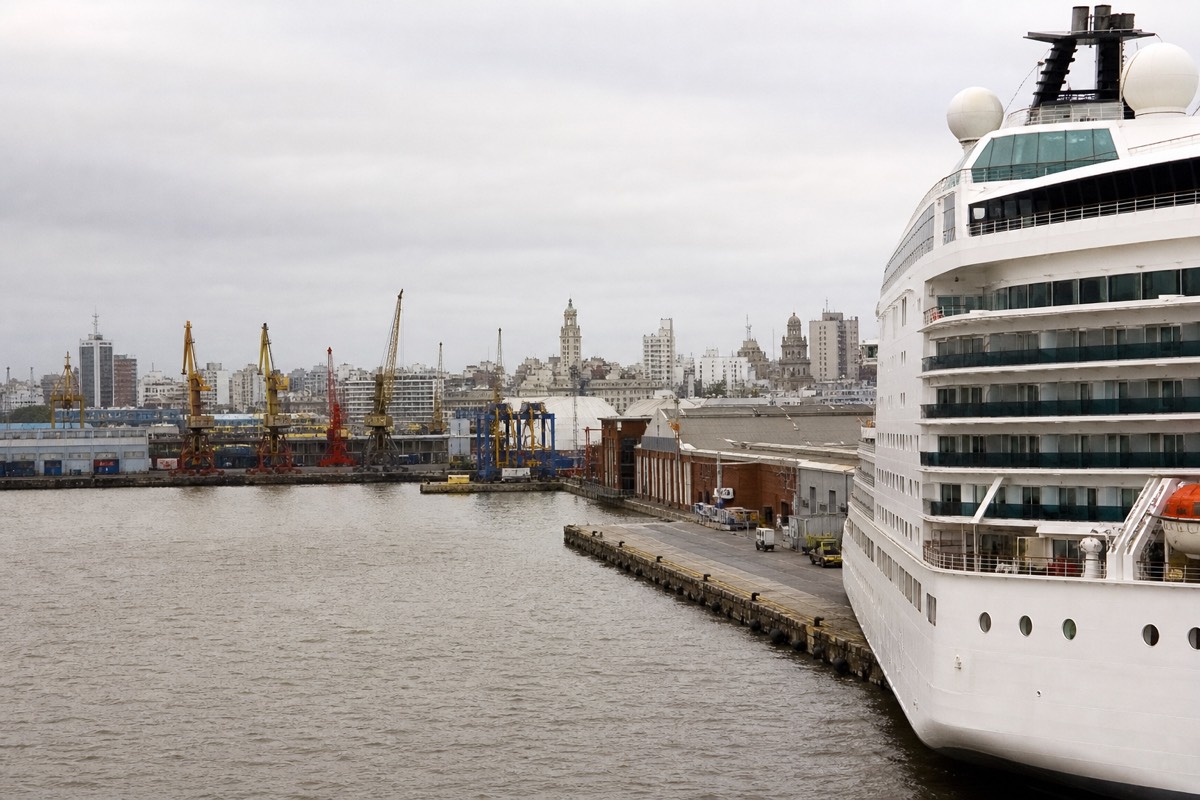
Ships tie up at Puerto de Montevideo, on the northern edge of the peninsula the Spanish fortified in the 1720s. That proximity is the reason this port call works so well, and also the reason passengers overestimate what a single day ashore can hold.
Where Does Your Ship Dock In Montevideo?
Cruise ships berth at Puerto de Montevideo, the working port on the sheltered northern side of the Ciudad Vieja peninsula. The terminal sits directly against the historic centre, which puts Plaza Independencia, Mercado del Puerto and the old town within a short distance of the gangway rather than a long transfer.
A cruise call has a fixed return deadline. Start with the walkable core or choose a port-start loop, then leave a conservative margin for the ship.
Booking Shortlist: Cruise Passenger Highlights Tour. Meet at the port exit and connect the Agricultural Market, stadium exterior and Pocitos sign without arranging each ride.
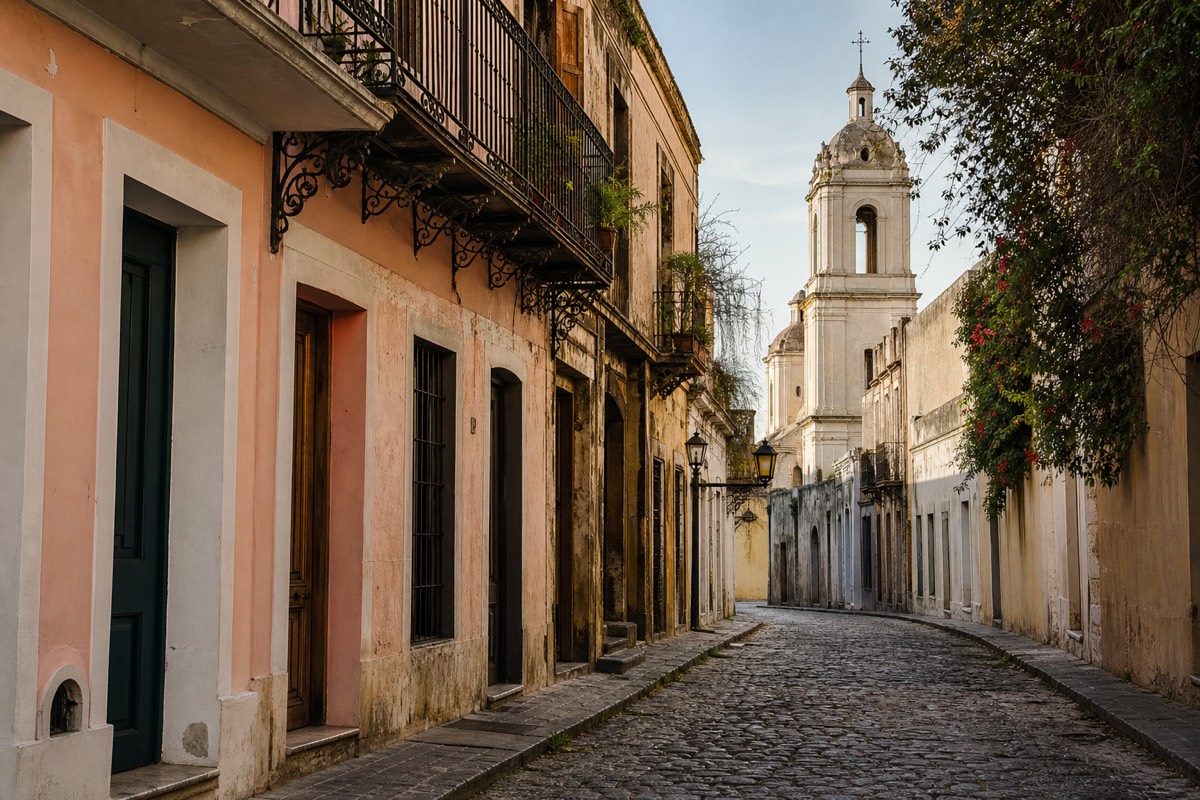
This is one of the more convenient port calls on a South American itinerary. Many capitals put their cruise berths well outside the city, so the first hour of the day disappears into a shuttle. Montevideo does not. The old town starts more or less where the port fence ends, which is why so many passengers step off intending to walk.
The important qualifier is that this is a commercial port first and a cruise terminal second. Container operations, freight roads, gates and fencing all take precedence over pedestrian routes, and the area immediately outside the terminal is functional rather than scenic. That shapes the walking question, which we take on directly in the next section.
The landmark to know is the Ministry of Tourism building at the port exit. It is the standard meeting point for independent tour operators in Montevideo, it is easy to find, and if you have booked anything privately, it is very likely where you will be told to stand. The shared city tour built for cruise guests meets there at 9.30am and sends detailed port navigation instructions in advance.
Cruise season here runs through the southern summer, roughly November to March, when itineraries link Buenos Aires, Montevideo and the Brazilian coast. On busy days more than one ship can be alongside, which changes how crowded Mercado del Puerto feels at lunchtime and how long the taxi queue at the gate runs.
Can You Walk From The Cruise Terminal Into The City?
Many passengers do walk into Ciudad Vieja, and in daylight with other passengers on the same route it is a common choice. UK government advice specifically warns against walking downtown or in the port area alone, particularly at night and at weekends. Alone, early, late or after dark, a taxi or a booked tour is the better call.
The contradiction you will find online is real but explainable. A ship in port at 9am puts hundreds of people onto one short stretch of pavement at once, and moving with that flow is a very different proposition from one person leaving the terminal at dusk with a camera visible. Both situations are covered by the same advisory sentence, which is why forum answers disagree so violently.
Consider the practical texture as well as the safety framing. The immediate approach is port infrastructure: fencing, freight traffic, gates and truck routes rather than a waterfront promenade. There is no shade to speak of, and on a hot January morning that matters for anyone with mobility limits. Once you are past it and into the old grid, everything improves immediately.
Our honest recommendation is to treat the walk as viable in daylight with company, and to take transport in every other case. If your ship arrives early, if you are travelling alone, if you are carrying anything you would hate to lose, or if you are returning after the light has gone, spend the small amount a taxi costs. Uber operates legally in Montevideo 24 hours a day and is the simplest option for the return leg.
We go into the walk in more detail in is Montevideo walkable from the cruise port, and the wider picture on street crime and neighbourhoods sits in the Montevideo safety guide.
How Much Time Do You Actually Have, And What Fits?
Most Montevideo calls give passengers eight to ten hours alongside, which translates to six to eight usable hours ashore after boarding procedures and the all-aboard cut-off. That is enough for the old town plus one more thing, and not enough for a full-day excursion to Colonia del Sacramento.
The arithmetic that trips people up is the difference between the ship's stated hours and your actual freedom. Take the departure time, subtract the all-aboard, which is typically 30 to 60 minutes earlier, then subtract disembarkation queues at the start and the walk back at the end. A ten-hour call can leave you with seven and a half hours of real time.
| Usable time ashore | What genuinely fits | What to skip |
|---|---|---|
| 3 to 4 hours | Ciudad Vieja on foot: Plaza Independencia, Sarandi, Plaza Matriz, Mercado del Puerto for a quick lunch | Anything requiring a vehicle across town |
| 4 to 5 hours | A guided city loop covering the old town, Palacio Legislativo, Estadio Centenario and the Pocitos Rambla | Museums with fixed entry times |
| 6 to 7 hours | The guided loop plus a proper parrilla lunch at the market, or a half-day winery visit in Canelones | Colonia del Sacramento |
| 8 hours or more | City tour, lunch and an unhurried afternoon on the Rambla or in a museum | Still Colonia, unless your ship is overnighting |
The clear message in that table is the one people resist. Colonia is roughly two hours away by road each way, and the standard tour runs about nine hours door to door. Attempting it on a normal port call means arriving back with no margin for a traffic problem, which is a bad way to spend a day worrying.
What does fit beautifully is the city itself. Montevideo is compact, the highlights cluster along one axis from the port to Parque Batlle to the Pocitos waterfront, and a well-run three to four hour tour for cruise guests covers all of them with time left for lunch.
Should You Book The Ship's Excursion Or An Independent Tour?
Ship-operated excursions usually include assistance when their organized tour is delayed; check your cruise line’s terms. Independent tours need a return margin you are comfortable with. Compare the actual itinerary, party price, pickup and return arrangements rather than assuming every independent tour is smaller or cheaper.
| Ship excursion | Independent tour | |
|---|---|---|
| Cost | Generally higher | Often significantly lower for a comparable itinerary |
| Group size | Large coaches are common | Small groups or private; the cruise-guest shared tour uses a van |
| Late return | The ship waits | Your responsibility, though operators build in margin |
| Flexibility | Fixed itinerary and timings | Private options can be reshaped on the day |
| Pickup | From the gangway or terminal | Usually a designated port-exit meeting point |
| Best for | Nervous timekeepers, mobility needs, tight schedules | Value, smaller groups, a more personal day |
The way to reduce the independent-tour risk is procedural rather than a matter of luck. Book something that finishes at least 90 minutes before all-aboard. Tell the operator your ship name and departure time when you book. Confirm the meeting point the day before. Save the operator's phone number and a taxi app on your phone. Carry your ship card and a copy of your passport.
Distance is your friend here in a way it is not in every port. Because Montevideo's sights sit within a few kilometres of the berth, a delay costs you minutes rather than hours. A tour that overruns in a city 90 minutes from the ship is a crisis; one that overruns here means arriving back at 3.15pm instead of 3pm.
A shared city tour designed for cruise passengers is another format to consider. It starts at the port and is planned around cruise calls, but you must still confirm the return deadline and leave a margin.
What Does The Cruise-guest City Tour Cover?
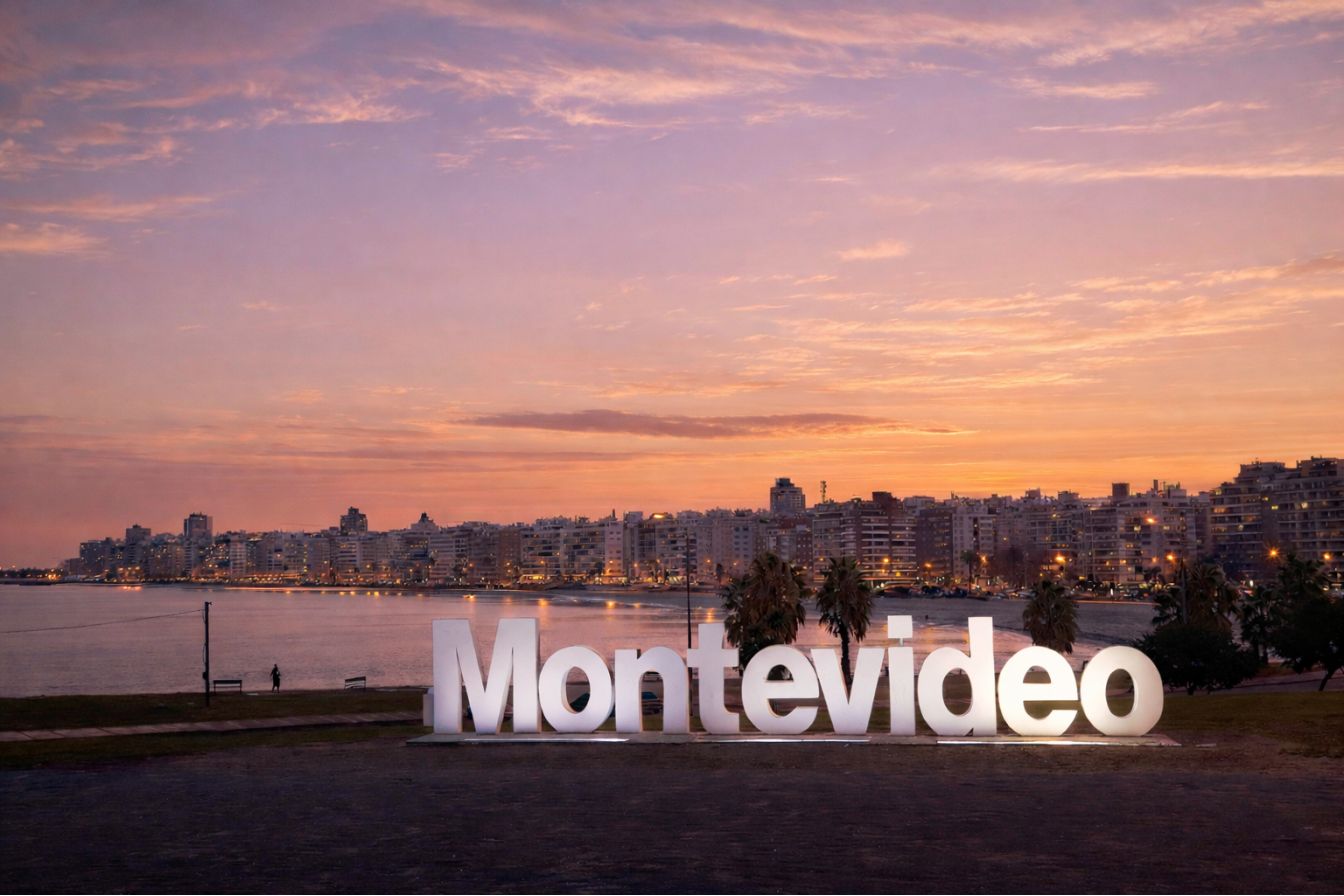
The shared city tour for cruise guests runs three to four hours from a 9.30am start at the Ministry of Tourism at the port exit, priced around $59. It covers Ciudad Vieja, Plaza Independencia, the Palacio Legislativo, a 45-minute stop at the Mercado Agricola, Parque Batlle and Estadio Centenario, then the Pocitos Rambla and the Montevideo sign before returning to the port.
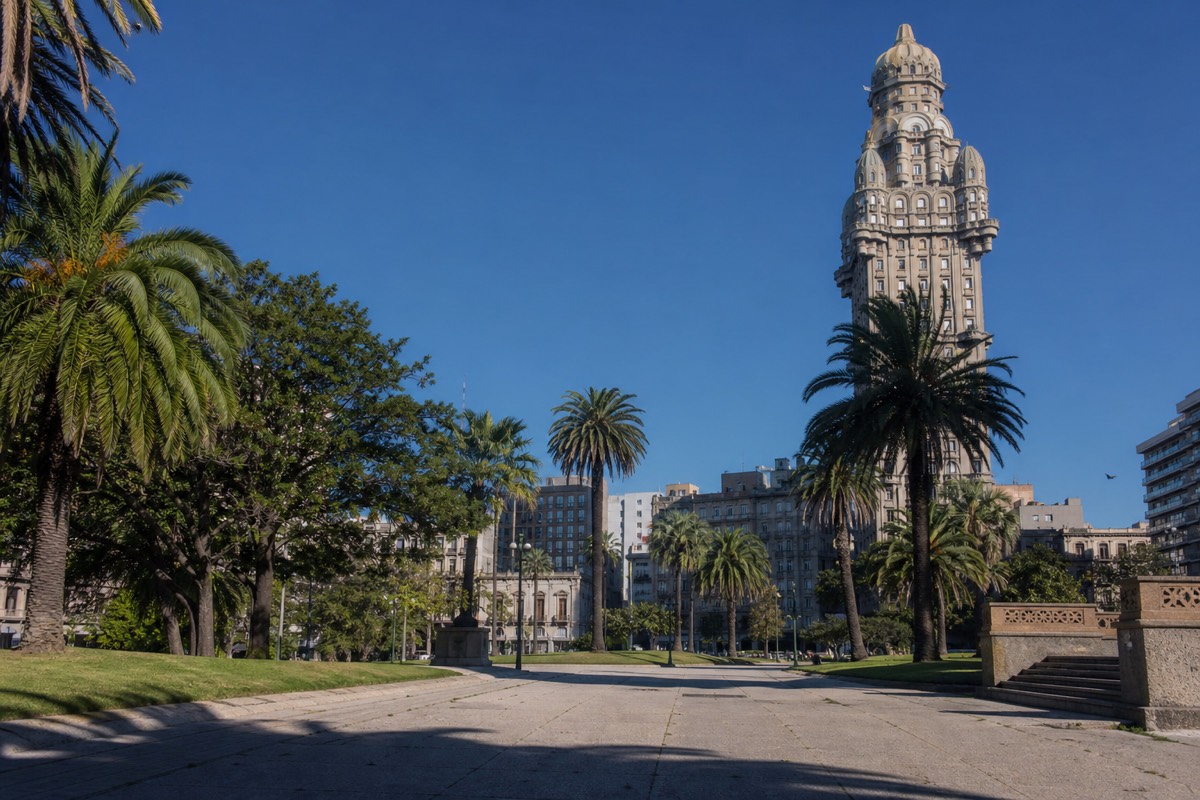
The route is well judged for a port day because it front-loads the walkable history and then uses the vehicle for everything that is too far to reach on foot. You start in the old town with the cathedral and Plaza Constitucion, move to Plaza Independencia for the contrast between the colonial Gate of the Citadel and the 1928 Palacio Salvo, and only then get into a van for the parts of the city a walker could never reach in a morning.
The Mercado Agricola stop is more interesting than the name suggests. It is a restored nineteenth-century market hall now full of produce stalls, food counters, craft beer and artisan shops, and 45 minutes there gives you a real slice of daily Montevideo rather than a souvenir aisle. Estadio Centenario, where the first FIFA World Cup final was played in 1930, is a photo stop from outside rather than an interior visit.
Practical details worth knowing: English, Spanish and Portuguese are listed, air-conditioned transport and bottled water are included, and the operator provides port meeting directions. Mobility aids and child seats require 48 hours notice. Confirm any requested market drop-off and your final return to the ship.
For groups who want the same coverage without sharing, a private discovery tour run by a small family company handles pickup from the port, the ferry terminal or the airport, includes private air-conditioned transport, and can be shortened or lengthened around your ship's schedule. It runs four to five hours in its standard form.
What Is The Best Half-day Plan If You Go On Your Own?
Off the ship by 9am, walk or ride into Plaza Independencia, go down into the Artigas mausoleum, then follow Sarandi west to Plaza Matriz, reaching Mercado del Puerto by noon for lunch before the crowd. That leaves the afternoon for a taxi to the Pocitos Rambla and a slow return.
Here is why the order matters. Plaza Independencia is best in morning light, when the sun hits the east face of Palacio Salvo. Sarandi is at its liveliest mid-morning, with the cafes open and the bookstalls out. And Mercado del Puerto is a fundamentally different experience at noon than at 1.30pm, particularly on a day when two ships are in.
Allow 30 minutes at Plaza Independencia including the mausoleum, which is free, takes ten minutes and is guarded by soldiers in nineteenth-century Blandengues uniform. Allow 45 minutes to browse down Sarandi with a stop at Plaza Matriz for the cathedral and the old Cabildo. Then 90 minutes at the market for asado and a glass of medio y medio, the local blend of still and sparkling white.
The afternoon depends on your all-aboard. If you have three hours left, take a taxi or Uber to the Pocitos stretch of the Rambla, walk the crescent of beach, photograph the Montevideo letters and ride back. If you have less, stay in the old town and use the time on the Museo Torres Garcia on Sarandi or the Museo Andes 1972, both of which take under an hour.
Keep a hard turnaround time and honour it. Set an alarm for one hour before all-aboard regardless of where you are. The single most common way this day goes wrong is a lunch that runs long. Our Ciudad Vieja guide maps the walking route block by block if you want to plan it more precisely.
Can You Visit Colonia Or A Winery From The Ship?
A Canelones winery is realistic on a long call: the bodegas sit 30 to 45 minutes from the city and visits run two and a half to four hours including transport. Colonia del Sacramento is not, on a normal port day. It is around two hours away by road each way and the standard tour runs about nine hours.
The winery option is genuinely appealing for passengers who have already done a South American city tour or two and want something different. Uruguay's wine country is small, family-run and close, Tannat is a grape most visitors have never tasted properly, and a two and a half hour visit with tastings and lunch fits inside a seven-hour window with margin either side.
Options range from a private visit at a family estate founded in 1898, with the largest active underground cellar in Uruguay, seven tastings and a three-course lunch below ground, to a boutique winery with a classic car collection in its tasting garage, or a 1933 estate serving four wines with a countryside platter. Prices sit roughly between $70 and $99 for the shorter formats. Check the Viña Varela Zarranz tasting or the Bodega Moizo visit for current pricing.
The one condition is transport. Confirm with the operator that the visit includes or can arrange a return transfer to the port, and that the timing fits your all-aboard with an hour to spare. Some winery experiences quote transfer as an extra cost rather than an inclusion, and sorting that on the day is not what you want to be doing.
As for Colonia: if your itinerary happens to include an overnight in Montevideo, then the full-day trip becomes possible and is well worth it. On a standard call it is not. Booking it anyway is the most reliable way to spend a beautiful day watching the clock.
No Colonia outing in this shortlist fits a short cruise morning. The winery trips need individually confirmed pickup and return timing; do not treat hotel-tour durations as ship guarantees.
Do You Need Pesos In Port, Or Will Cards And Dollars Work?
Uruguay uses the Uruguayan peso, roughly 40 to the US dollar in August 2026, though rates move and you should check the current one. Cards are widely accepted in Ciudad Vieja restaurants and shops. Carry some pesos for taxis, market stalls, small cafes and buses. US dollars are sometimes accepted but at poor rates.
For a single day ashore, most passengers need less cash than they expect. A card covers lunch at Mercado del Puerto, museum entries and shopping. Where cash helps is the small stuff: a coffee, a craft stall, a tip, a short taxi ride if you are not using an app.
Withdraw at an ATM inside a bank branch or a shopping centre rather than a street-facing machine. This is not paranoia, it is the specific local pattern: thefts by pairs on motorcycles who target people standing at cash machines, at traffic lights and at car park entrances. Take out what you need for the day, put it away before you turn around, and keep the rest of your money on the ship.
Tipping is around 10% in restaurants and is customary rather than obligatory. Guides and drivers are not tipped automatically either, and on most tour listings gratuities are explicitly excluded, so if the day was good, something in cash at the end is appreciated.
Watch the exchange desks at the port and in the tourist streets, where rates are usually worse than a bank ATM withdrawal. If you already carry a card with low foreign transaction fees, using it directly is almost always the better arithmetic.
Is The Port Area Safe For Cruise Passengers?
The tourist core is patrolled, including by a dedicated tourist police unit covering Ciudad Vieja, Centro, Pocitos and Punta Carretas. The port area itself is named in UK government advice as somewhere not to walk alone, particularly at night and at weekends. Daytime, in company, on the direct route, is the version of this that most passengers do without incident.
The realistic risk profile for a day ashore is petty theft, not violence. Pickpocketing and bag snatching are the recurring problems, along with the motorcycle thefts described above. Cruise passengers are visible targets by definition: unfamiliar clothes, cameras, ship lanyards, a map open on a phone. Removing those markers removes most of the exposure.
A short list of habits that cover it. Leave your passport in the safe and carry your ship card and a photocopy. Keep your phone in a pocket rather than your hand while walking. Carry a bag on the inside shoulder, and never hang it on the back of a restaurant chair on a pavement terrace. Do not wander the side streets toward the port edge alone. Take a taxi or Uber back if you are returning late.
The broader context is reassuring. Uruguay ranks as the most peaceful country in South America and 43rd globally on the 2026 Global Peace Index, and the vast majority of passengers spend a day here without any problem at all. The US State Department advisory nonetheless recommends exercising increased caution due to crime, and the UK foreign travel advice for Uruguay gives the most specific guidance about the port and downtown.
Emergency services across Uruguay are on 911. If something is taken, report it, get a reference for your insurer, and tell the ship's guest services desk. Our full Montevideo safety guide covers the neighbourhoods, the advisories and what to do afterwards in detail.
A port pickup is a transport arrangement, not a guarantee against street crime. Keep the belongings and walking precautions above.
What Is The Weather Like In Cruise Season, And What Should You Wear?
The cruise season runs through the southern summer, roughly November to March, when Montevideo is warm and humid with long daylight hours. The constant is wind off the Rio de la Plata, which can turn a still morning into a blustery afternoon. Comfortable walking shoes and a light windproof layer cover almost every day ashore.
Summer here is a proper summer, with beach weather and locals in the water at Pocitos and Malvin, and it comes with strong sun. Sunscreen and a hat matter more than most passengers expect, particularly if your day involves standing around Plaza Independencia and Parque Batlle in the middle of the day with no shade.
Rain is possible in any month and tends to arrive as a short heavy burst rather than a grey drizzle, so a packable layer beats an umbrella that will fight the wind. Ciudad Vieja has enough cafes and covered market space that a shower is an excuse for a coffee rather than a lost hour.
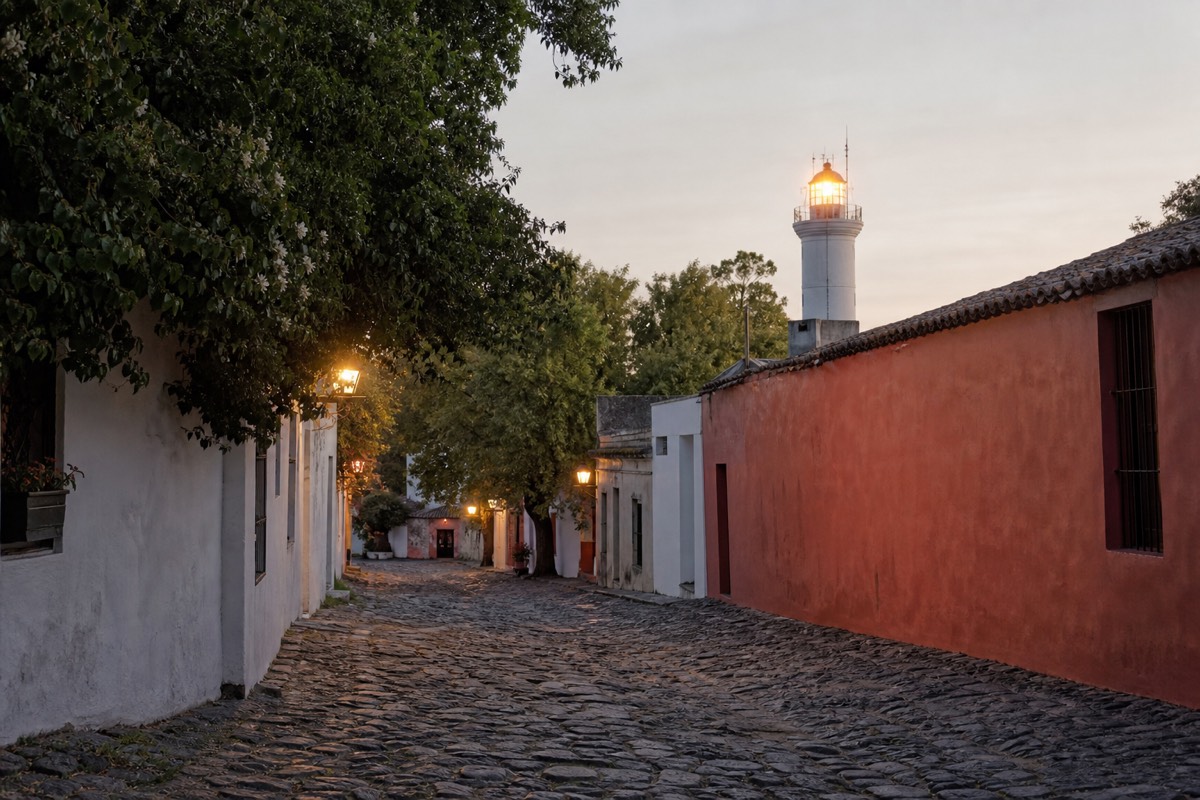
Footwear is the practical detail. The old town is cobbled in places and pavements are uneven, and a city tour that includes a market stop and a stadium photo stop involves more standing and walking than the itinerary implies. Leave the smart shoes on the ship.
Shoulder-season calls in November or March can be noticeably cooler and windier, especially first thing in the morning when you are stepping off onto an exposed quayside. A layer you can take off and stuff in a bag is the right answer. The best time to visit guide has the month-by-month picture if you are still choosing an itinerary.
What Mistakes Do Cruise Passengers Make In Montevideo?
The four big ones are booking Colonia on a standard port day, walking out of the terminal alone at the wrong hour, arriving at Mercado del Puerto at peak lunch when several ships are in, and treating the whole call as a single walk when the best sights sit several kilometres apart.
The Colonia mistake is the most expensive in time and stress. It looks reasonable on a map and it is not: two hours each way plus a guided visit is a nine-hour commitment, and no reputable operator will promise you back at the ship comfortably on a standard call. Save it for a land stay.
The second error is geographic. Passengers see how close the old town is, conclude that Montevideo is a walking port, and then spend six hours in a ten-block grid without ever seeing the Rambla, Parque Batlle, the Legislative Palace or the Pocitos coast. Those are what give you the city rather than just its oldest corner, and they need wheels. A three to four hour guided loop, or a 24-hour hop-on hop-off ticket at around $35, solves it.
The third is timing lunch badly. Mercado del Puerto opens around 10 or 11am and is at its most crowded from about 1pm, especially in high season with multiple ships alongside. Eat at noon and you get the same grills with half the queue.
The fourth is leaving no margin. Build a return buffer of at least an hour before all-aboard, keep the operator's number saved, and know that a taxi from anywhere in central Montevideo back to the port is a short and inexpensive ride. Compare the formats available on our Montevideo tours and pick one that finishes well before your ship needs you, rather than one that finishes exactly when it does.