Uruguayan Mate: What It Is And How To Drink It
Uruguay drinks more yerba mate per person than any country on earth, with estimates running around 8.5 to 10 kilograms of yerba per capita each year. Walk any street in Montevideo and you will see it: someone carrying a thermos under one arm and a gourd in the same hand, sipping through a metal straw while waiting for a bus. Mate is not a niche health drink here, it is infrastructure for daily life.
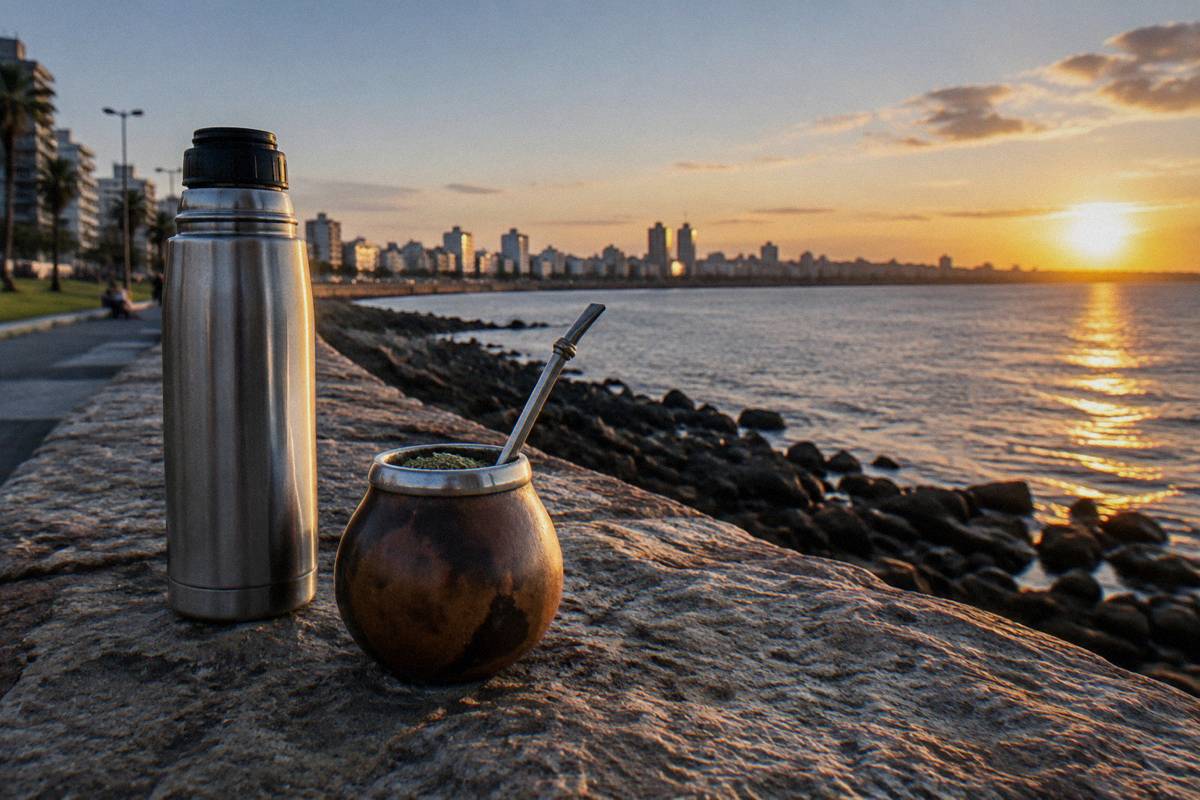
Mate sits next to asado at the center of Uruguayan food culture, and neither one is a performance for tourists. People drink mate at work, on the Rambla, at the beach, in the car, and at family gatherings that stretch across whole afternoons. This guide explains what yerba mate actually is, how the gourd and straw work, what the social rules are when someone hands you one, and where to try it for yourself in Montevideo.
What Exactly Is Yerba Mate?
Yerba mate is an infusion made from the dried, ground leaves of Ilex paraguariensis, a plant in the holly family native to South America, brewed hot and drunk through a metal straw called a bombilla. It is not a tea plant and not an herbal blend: it is a specific species whose leaves are harvested, dried, sometimes aged, and milled into a mix of leaf, stem, and powder poured straight into the gourd. A typical serving is refilled many times over, so one small gourd can carry a person through hours of drinking.
The word yerba comes from the Spanish for herb, and mate itself comes from the Quechua word for the gourd the drink is served in. That double meaning confuses newcomers constantly: the drink is mate, the cup is mate, and the plant is yerba. Uruguayans rarely say yerba mate out loud. They say mate for the whole setup, drink and cup together, and yerba for the bag of leaves.
Where The Plant Grows
Ilex paraguariensis grows in the subtropical north: Argentina's Misiones province, southern Brazil, and Paraguay produce most of the world's yerba. Uruguay grows almost none of its own, which makes the country's position at the top of global per capita consumption, around 8.5 to 10 kilograms per person per year in recent estimates, even more striking. Nearly every gram is imported, milled, and blended by Uruguayan brands, then consumed at home. The market is large enough that Forbes Uruguay has reported on new yerba brands and varieties entering a market that moves well over a hundred million dollars a year.
How Yerba Is Prepared And Sold
After harvest, the leaves are flash dried, often over wood or with hot air, and then aged in warehouses, sometimes for a year or more, to mellow the flavor. The final blend matters enormously to drinkers. Some yerbas are heavy on powder, which makes a strong, bitter first pour. Others are stem-heavy and milder. Uruguayan taste runs toward strong, bitter, traditional blends, and most supermarkets here devote an entire aisle shelf to dozens of brands.
A few practical points for a first-time buyer:
- Look for con palo if you want a softer, rounder brew; the stems temper the bitterness.
- Sin palo blends are leaf and powder only, stronger and more intense.
- Flavored yerbas, with orange, lemon, or mint, exist and are popular with younger drinkers, but purists in Uruguay generally stick to plain.
- Check the grind. Very powdery blends can clog a bombilla if you pour water carelessly.
The flavor itself is often described as grassy, smoky, and vegetal, closer to strong green tea than to coffee, with a bitterness that most people either come to love or quietly drown in sugar. Asking for sugar is not offensive, but traditional drinkers in Uruguay take it plain.
What Is A Mate Gourd Used For?
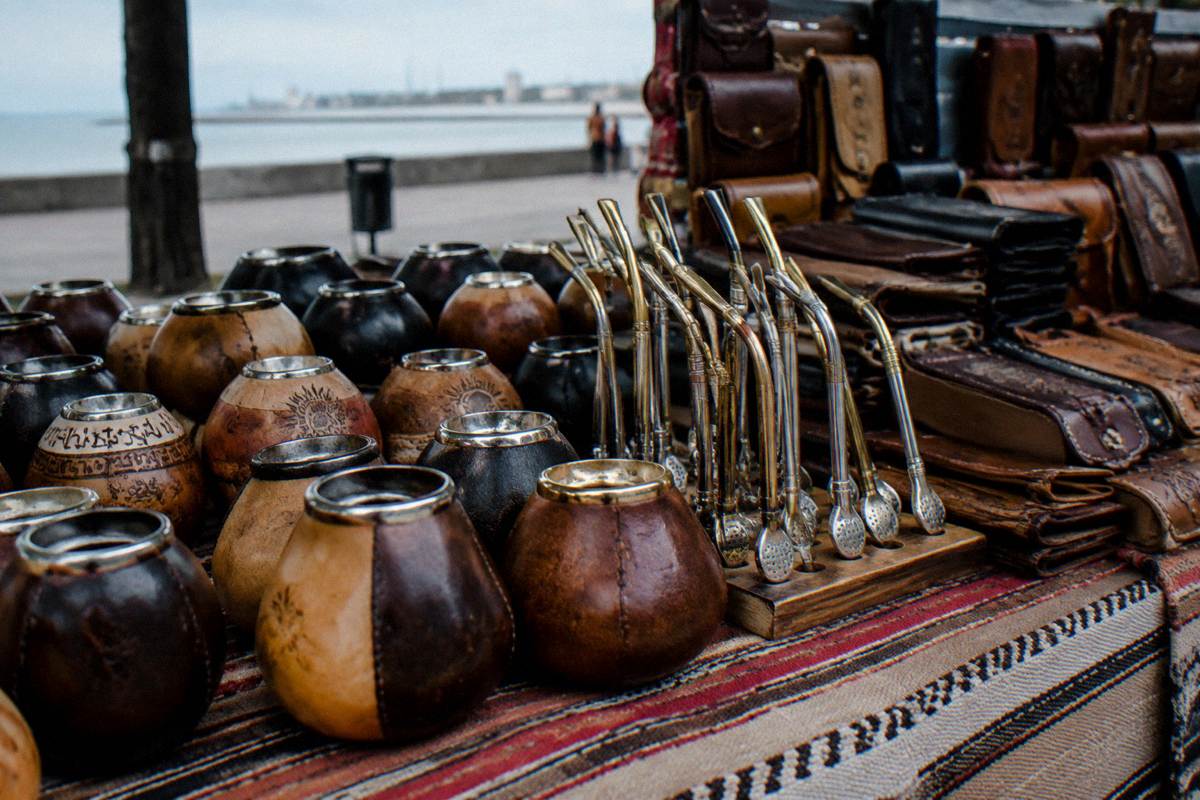
The mate gourd is the cup itself: a hollowed, dried fruit vessel that holds the yerba, receives the hot water, and shapes the whole ritual. Two traditional forms exist in Uruguay, the calabaza, made from a squash-type gourd, and the porongo, made from the tree gourd Lagenaria, which has a narrower neck and a rounder body. A metal straw called the bombilla, with a filtered tip that keeps the leaves out of your mouth, completes the setup.

Gourds are used because they work. The dried wall of the fruit insulates the water, keeps the brew at drinking temperature longer than glass or metal, and over time seasons itself with the yerba, adding a faint depth that devotees insist no ceramic cup can match. A well-used gourd is a bit like a cast iron pan: it is not meant to be scrubbed with soap, and its owner treats it with care.
Curing A New Gourd
If you buy a natural calabaza gourd, it needs curing before regular use. The traditional method is simple: fill it with wet yerba, top it with warm water, and let it sit for a day or two so the interior absorbs the flavor and any loose plant fibers soften. Then scrape out the soft debris, rinse with water only, and start drinking. Some people skip this and simply use the gourd daily until it settles, but curing reduces the first pours tasting like dry vegetable.
Practical care rules that Uruguayan households follow:
- Rinse with water after use, never detergent, which soaks into the wall and ruins the flavor.
- Let the gourd dry fully, open side up, between sessions.
- Never leave standing water in it overnight, which molds the interior.
- If mold appears, scrub it out with hot water and dry thoroughly; if it keeps returning, retire the gourd.
Modern Alternatives
Glass, ceramic, silicone, and stainless gourds are all sold in Montevideo, and they remove the curing and mold problem entirely. Leather-wrapped gourds with metal interiors are common gifts. But the traditional calabaza remains the default, and if you buy one at a market stall you will usually be offered a bombilla in the same purchase, often in a set with a small brush for cleaning the straw's filter.
How Uruguayans Drink It
Uruguayans drink mate all day, socially and solo, following a consistent ritual: one person, the cebador, fills the gourd with yerba, arranges a cleared channel for the straw, pours hot but not boiling water, and then refills and passes the same gourd around the circle, one full pour per person, in a fixed order. Saying gracias means you are finished, and returning the gourd before drinking it all breaks the rhythm. A thermos, the termo, travels everywhere so the cebador can keep refilling on the spot.

The thermos is the detail that sets Uruguay apart even from Argentina. In Buenos Aires you see mate in parks and homes. In Montevideo you see people walking down the sidewalk with a thermos tucked under an arm, pouring for themselves mid-stride, riding buses with the gourd balanced on a knee. It is the country's default street beverage, carried the way North Americans carry a coffee cup, and nobody looks twice.
The Circle And The Cebador
In a group, one person acts as cebador, the server. The word comes from cebar, to pour or prime. The cebador drinks first or hands the first pour to an honored guest, then refills the gourd each time it comes back empty, passing it to the next person in order. The order is usually clockwise or simply the seating order, and it stays fixed for the session. The gourd goes around and around, refilled from the thermos, until the yerba is lavada, washed out, and the cebador declares the round finished or reloads fresh yerba.
The etiquette is strict and mostly unspoken:
- Drink the whole pour. A gourd refill is a few sips, not a leisurely cup. Take your turn, drain it, hand it back.
- Never say gracias mid-round. Gracias means you are done entirely. Say it only when you truly want to stop receiving the gourd.
- Do not move the bombilla. Stirring or repositioning the straw marks you as a foreigner instantly, and it can clog the channel the cebador built.
- Do not comment on bitterness in a circle of strangers. It is like sending back the wine.
- Compliment the yerba. Asking which brand it is, or saying rico when you return the gourd, is the polite move.
Water Temperature And The Bitter First Pour
Water for mate is hot but never boiling, roughly around 70 to 80 degrees Celsius by common practice. Boiling water scalds the yerba and makes the brew acrid. The first pour of a fresh gourd is the most bitter and strongest, which is why the cebador often drinks it first, then later pours are progressively milder until the yerba is spent. Uruguayans debate endlessly whether the second or third pour is the best; nobody claims the first.
Sweet Versus Bitter
In Uruguay, mate is overwhelmingly drunk bitter, amargo. Sweetened mate, mate dulce, is more associated with children or with certain regional traditions, and ordering it in a group of adults would raise an eyebrow, though nobody would say anything. If you need sugar, add it to your own pour when you are the cebador.
What Does Mate Do For You?
Mate delivers moderate caffeine, generally compared to tea per cup and less than coffee, along with a stimulant character that drinkers describe as steadier and less jittery than coffee. Beyond the chemistry, what mate does for Uruguayans is mostly social: it structures conversations, marks hospitality, and gives the day a slow, repeated rhythm of refills. It is a beverage of companionship more than of productivity, though plenty of students and shift workers rely on it for focus.

General sources typically compare mate's caffeine with coffee and tea, placing it in the middle: stronger than a typical cup of tea, weaker than a cup of coffee, and dependent on how much yerba you use and how many times you refill. A gourd session of ten or twelve pours across an afternoon adds up, though, and people who drink mate all day are consuming meaningful total caffeine. If you are caffeine sensitive, take your first mate early in the day.
The Social Function
It is hard to overstate this part. Mate is a reason to sit down. In a country famous for long meals and unhurried evenings, the mate circle is the smaller, daily version of the Sunday asado. Sharing a gourd is a small act of trust, since everyone drinks from the same straw, and refusing an offered gourd in a social setting can land oddly. Accept it, drink your pour, hand it back, and you have participated correctly regardless of anything else.
It is also a portable social anchor. Two people on a bench by the Rambla with one gourd and one thermos will stay there talking far longer than they planned, because the gourd keeps coming back around. For travelers, understanding this explains a lot about the pace of Uruguayan life that otherwise looks like simple slowness.
A Few Honest Cautions
We keep health claims out of this guide deliberately, because the verified official sources for specific medical benefits are contested and vary. What can be said plainly: mate contains caffeine, it is hot, and it is traditionally drunk through a shared straw. If you have a caffeine limit, respect it. If you are offered a gourd and are uncomfortable sharing the bombilla, a polite no, gracias at the start is accepted without offense. And very hot beverages should always be handled with care.
Trying Mate In Montevideo
The easiest way to try mate in Montevideo is to buy a gourd, bombilla, and a small bag of yerba at a market stall or specialty shop and ask the vendor to show you the basics, or to join a guided food walk where a local explains the ritual while you taste it. Mercado del Puerto and the artisan shops of Ciudad Vieja and Pocitos are the classic places to buy a kit, and vendors are generally happy to demonstrate how to fill and pour one before you buy.

For many visitors, the guided route is genuinely the better first experience. The Discover Montevideo Street Food Tour with a Real Local Guide includes traditional mate tea alongside empanadas and other street foods, and the guides are used to explaining the etiquette of the drink to newcomers, which matters, because the etiquette is the part you cannot guess. If you would rather pair mate with a broader orientation to the city first, the Best Half-Day Montevideo City Sightseeing Tour covers the neighborhoods where you will later wander with your own gourd, and guides there answer cultural questions readily.
Buying Your Own Kit
A basic kit is a gourd, a bombilla, and a half-kilo bag of yerba, and market stalls in Montevideo sell all three together. Prices vary by quality of the straw and decoration on the gourd, so check the current price at the stall rather than trusting a number you read online. Things worth checking before you pay:
- Gourd type: calabaza or porongo, and whether it is cured or raw inside.
- Bombilla filter: look at the tip, a fine spring or slit filter holds back powder better than a coarse one.
- Yerba brand: ask the vendor for a traditional, medium-strong blend for a first purchase.
- A cleaning brush for the straw, usually sold alongside.
Our guide to Montevideo markets and shopping covers where to browse beyond Mercado del Puerto, including the Tristán Narvaja Sunday market, where mate kits and antiques sit side by side. For the surrounding context of the neighborhood you will shop in, our Ciudad Vieja guide is the practical companion.
Mate Alongside Food
Mate pairs naturally with the rest of Uruguayan food culture, and it is worth planning your tasting around it. The drink follows the Uruguayan asado the way coffee follows dessert elsewhere: the grill cools, the gourd comes out, the afternoon continues. If you want to cook some of that food yourself, the Private Uruguayan Cooking Class lets you prepare dishes like chivito with a local chef and then eat what you made, a three-hour private session in English or Spanish where you can also ask about mate customs over the meal.
To understand the scale of the food culture mate belongs to, consider the numbers: Uruguay's per capita beef consumption was about 50.2 kilograms in 2025 according to INAC, with total meat consumption around 101.5 kilograms, and the national cattle herd of roughly 11.6 million animals outnumbers the 3.4 million people by more than three to one. Mate is the quieter half of that same picture, a country that produces almost no yerba yet drinks more of it per person than anyone else.
A Simple First Session, Step By Step
When you get your kit back to your hotel or an apartment, try this sequence:
- Fill the gourd about two-thirds full with yerba.
- Tilt the gourd sideways so the yerba slopes along one wall, leaving a lower channel.
- Insert the bombilla into the channel, against the lower wall, and hold it in place.
- Pour warm, not boiling, water into the channel, just enough to wet the yerba. Let it sit a moment.
- Pour again to fill, drink your pour through the straw fully, and refill for the next person or for yourself.
- When the yerba tastes flat, empty the gourd, rinse it with water only, and let it dry open side up.
Your first brew will probably be too bitter or too weak, and that is fine. Every Uruguayan has an opinion on how to pour, and if you ask, you will get a demonstration. That conversation, more than the caffeine, is what mate is actually for.
If you are planning the rest of your days around all of this, our Montevideo itinerary for one, two and three days and our guide to the best time to visit Montevideo will help you sequence the markets, the meals, and the strolls along the Rambla, where you will see the thermos-and-gourd routine in full swing every afternoon. And if you want the deeper picture of what the city is known for, start with what Montevideo is known for and our Montevideo travel guide.
Comparing The Ways To Try Mate
| Option | What You Get | Best For | Notes |
|---|---|---|---|
| Buy a kit at a market stall | Gourd, bombilla, yerba, vendor demonstration | Travelers who want to practice the ritual themselves | Mercado del Puerto, Ciudad Vieja and Pocitos artisan shops; prices vary by stall |
| Street food tour with a local guide | Mate tasting plus empanadas and other foods, with etiquette explained | First-time visitors who want context | From around 66 USD; check the live price on the operator's listing |
| Half-day city sightseeing tour | Orientation to neighborhoods where mate culture lives | Cruise passengers and short stays | From around 35 USD; small group, max 16 people |
| Accept a gourd from locals | The authentic circle experience | Anyone invited into a mate round | Drink the full pour, never say gracias until finished |
Yerba Blends At A Glance
| Blend | Character | Who It Suits |
|---|---|---|
| Con palo (with stems) | Milder, rounder, harder to clog | First-time drinkers |
| Sin palo (leaf and powder) | Stronger, more bitter first pour | Traditionalists and daily drinkers |
| Flavored (orange, mint, etc.) | Softer, aromatic | Curious palates, younger drinkers |
| Aged blends | Mellowed, smoother smoke | Anyone willing to pay a bit more |
The Essential Vocabulary
| Term | Meaning |
|---|---|
| Mate | The drink and the gourd cup |
| Yerba | The dried, milled leaves of Ilex paraguariensis |
| Bombilla | Metal straw with a filter at the tip |
| Termo | Thermos of hot water carried everywhere |
| Cebador | The person who pours and serves the round |
| Amargo / Dulce | Bitter (plain) / sweet (with sugar) |
| Yerba lavada | Washed-out yerba, the end of the round |
| Calabaza / Porongo | Gourd cup from squash / from the Lagenaria tree gourd |
For the record on the numbers behind Uruguay's food culture, INAC's consumption data and the national cattle stock figures are published by the Instituto Nacional de Carnes (INAC consumption report, INAC stock data), and the yerba market scale has been reported by Forbes Uruguay. Consumption estimates vary somewhat by source and year, so treat ranges as approximate and enjoy the drink itself, which is exactly what Uruguayans do.