Montevideo Itinerary: 1, 2 And 3 Days
Montevideo's highlights are not stacked in one walkable old town. They are spread across four distinct districts, from the colonial grid of Ciudad Vieja to a stadium in a park to a beach neighbourhood five kilometres east, and the difference between a good day here and a wasted one is almost entirely about the order you take them in.
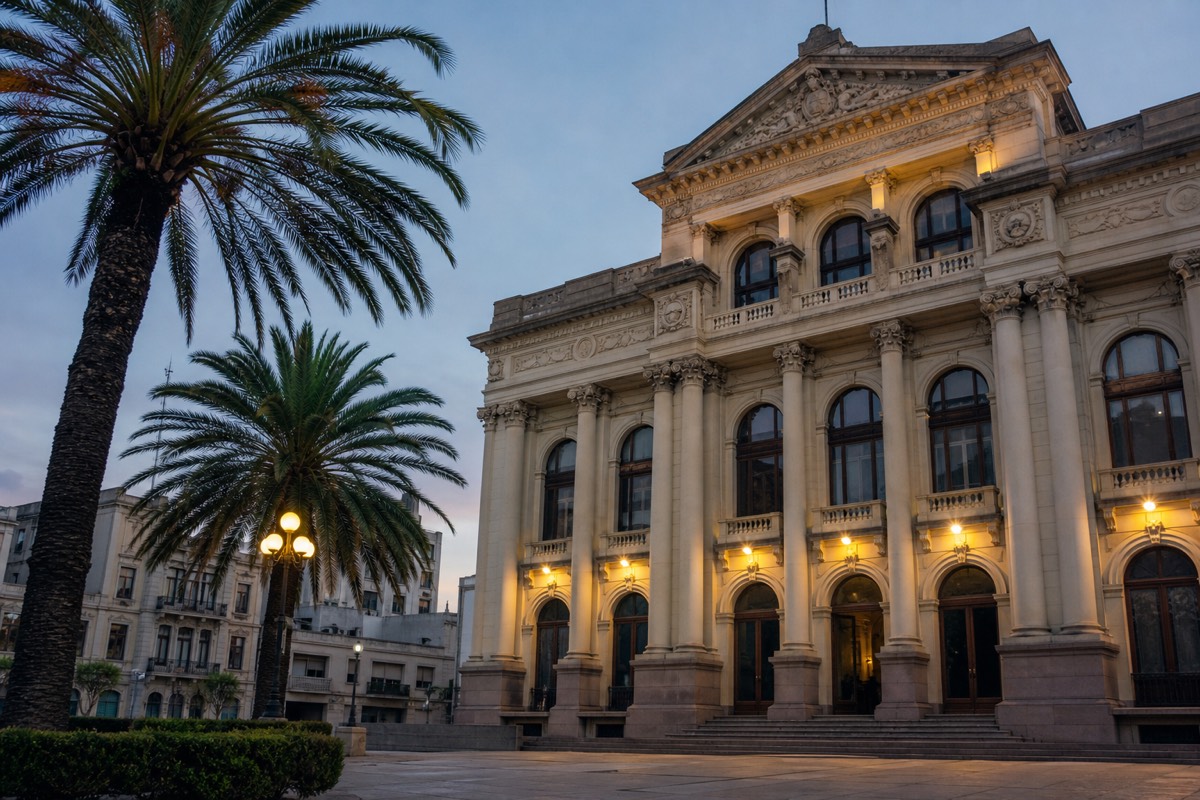
How Many Days Do You Actually Need In Montevideo?
Two full days covers the city properly. One day gets the essentials if you plan the route tightly. Three days lets you add a day trip, a winery or a beach afternoon without cutting anything. Beyond three days, Montevideo becomes a base for Uruguay rather than a destination in itself.
Use the day count to choose one main outing and leave the rest flexible. Cruise timing and departure city take priority over a longer wish list.
Booking Shortlist: Half-Day Montevideo City Tour. Link the old town, Agricultural Market and Pocitos waterfront in one guided loop.
That answer annoys people who have read that Montevideo is a one-day city, so here is the reasoning. The capital is not dense in the way Buenos Aires or Lisbon are dense. Its landmarks sit in four separate zones: Ciudad Vieja on the western peninsula, the Centro and Plaza Independencia axis, the parks and stadium district inland, and the coastal neighbourhoods of Punta Carretas and Pocitos to the east. Each zone is walkable inside itself. Between them you want wheels.
One day, well organised, gets you Ciudad Vieja, Plaza Independencia, the Mercado del Puerto and a stretch of the Rambla. It will not get you the Estadio Centenario, the parks, a proper long lunch and a tango bar as well. Two days lets everything breathe and adds the neighbourhoods where Montevideans actually live, which is where the city becomes likeable rather than merely interesting.
Three days is the usual recommendation for anyone who has come to Uruguay rather than merely stopped in it, with the extra day typically used for a guided Colonia trip or a bodega visit. The third day is where you take a full-day trip to Colonia del Sacramento, or spend a morning on a Canelones winery visit, or simply spend an afternoon on Pocitos beach doing nothing, which is arguably the most Uruguayan activity available. If you are still weighing this up, our companion piece on how many days to spend in Montevideo takes the same question from a different angle.
What Does The 1, 2 And 3 Day Split Look Like At A Glance?
Day one is the historic core and the waterfront. Day two is the parks, the stadium, the markets and the coastal neighbourhoods, finishing with tango or a parrilla dinner. Day three goes out of the city, most often west to Colonia or into the vineyards just north of town.
| Day | Morning | Afternoon | Evening | Guided option that fits |
|---|---|---|---|---|
| Day 1 | Ciudad Vieja walk, Plaza Matriz, Teatro Solís, Plaza Independencia | Mercado del Puerto lunch, then the Rambla east | Dinner in Centro or Ciudad Vieja | Half-day city sightseeing tour |
| Day 2 | Mercado Agrícola, Palacio Legislativo, Parque Batlle | Estadio Centenario, then Pocitos beach and the Montevideo sign | Tango at a historic bar, or an asado | E-bike tour or a private day tour |
| Day 3 | Full-day trip to Colonia del Sacramento, or a half-day winery visit in Canelones | Late return, easy dinner | Colonia full-day tour, or a bodega tour | |
| Cruise stop | Ciudad Vieja and Plaza Independencia on foot from the port, or a shared cruise city tour | Back aboard | None | Shared city tour with port pickup |
The table is deliberately conservative. Uruguayans eat late and start slowly, and a plan that assumes a 9am museum opening and an 8pm dinner will run into a city that is not working to that clock. Lunch at 1.30pm or 2pm is normal. Dinner at 9pm or 10pm is normal. Build the day around that rather than fighting it.
One structural note. If your trip includes a Sunday, protect it, because Sunday in Montevideo is genuinely different: the Tristán Narvaja street market runs in Cordón, families take over the Rambla, and drum groups practise in the southern neighbourhoods in the afternoon. Slotting your day trip on a Sunday means missing the one day the city shows its own face.
What Should You Do With One Day In Montevideo?
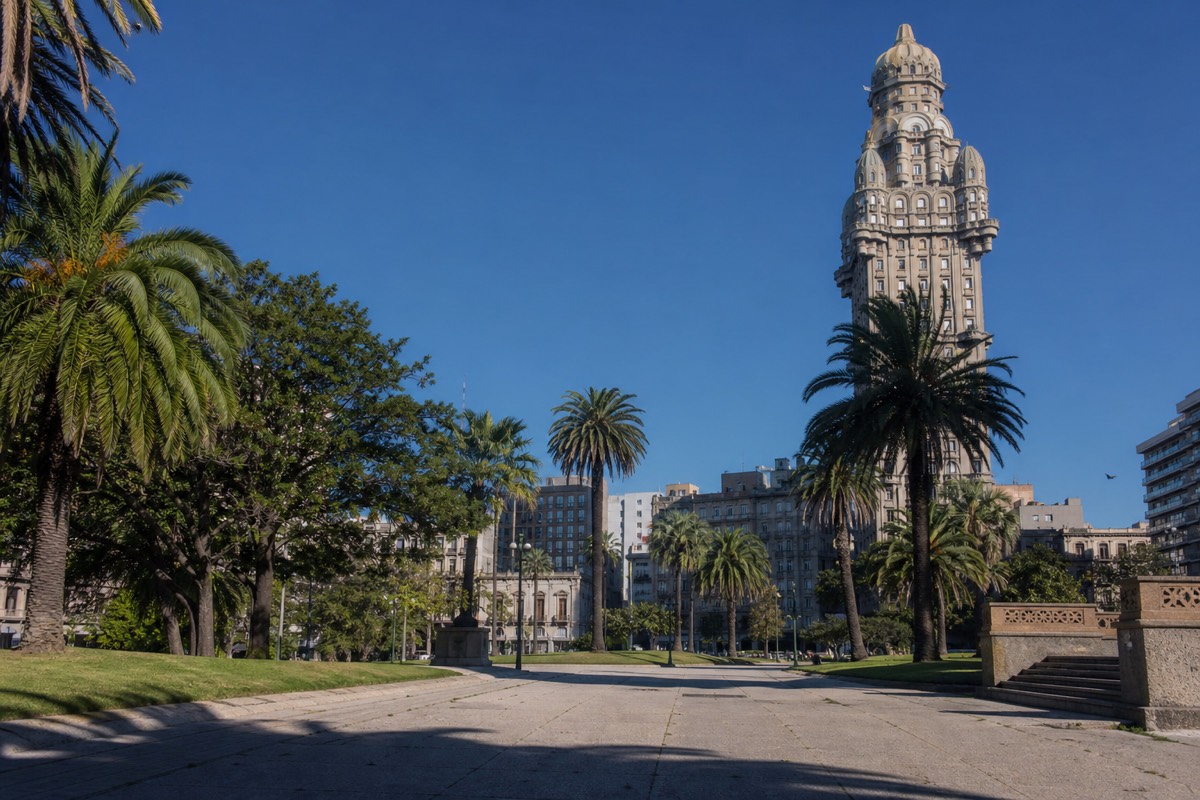
Start in Ciudad Vieja at the port end, walk east along Sarandí through Plaza Matriz to Plaza Independencia, break for lunch at Mercado del Puerto, then take the Rambla east to Pocitos in the late afternoon. That single line strings together most of what a first-time visitor comes for.
| Time | Where | What you get |
|---|---|---|
| 9.30am | Plaza Independencia | Artigas mausoleum, Palacio Salvo, the old Ciudadela gate. The hinge between old city and new. |
| 10.15am | Teatro Solís | Uruguay's grand nineteenth-century theatre. Guided visits run on a schedule, so check times. |
| 11am | Sarandí pedestrian street | The spine of Ciudad Vieja. Bookshops, cafés, street musicians, colonial façades. |
| 11.30am | Plaza Matriz and the Cathedral | The city's original square, with the Metropolitan Cathedral on one side. |
| 12.15pm | Museo Torres García or Museo Andes 1972 | Two very different small museums, both in Ciudad Vieja, both under an hour. |
| 1.30pm | Mercado del Puerto | Lunch off the wood-fired grills. This is the classic Montevideo meal. |
| 3.30pm | The Rambla | Walk, cycle or drive the waterfront east. Sea air, fishermen, thermos flasks of mate. |
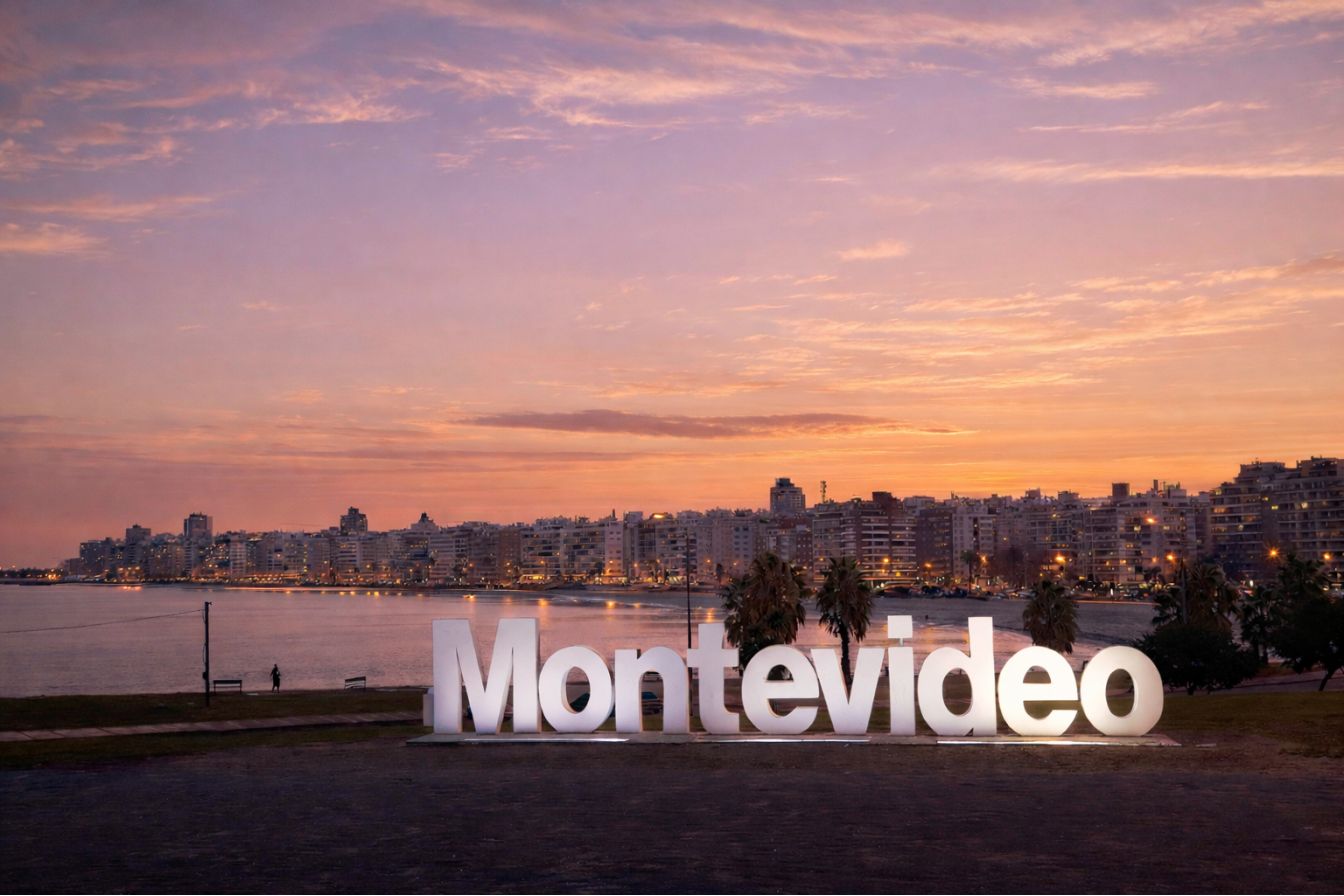
| 5pm | Pocitos | City beach, the Montevideo letters sign, and a completely different side of the capital. |
| 9pm | Dinner | Chivito, parrilla or Italian-influenced Uruguayan cooking. Late is normal. |
The weak point in that plan is the middle stretch, because the gap between Ciudad Vieja and Pocitos is around five to six kilometres and walking it eats an afternoon. A taxi solves it in fifteen minutes. So does a bike. Our guided e-bike tour is built around exactly this problem, running Pocitos to Parque Batlle to Centro to Ciudad Vieja and back along the Rambla, with the electric assist doing the work on the hills.
If you would rather not think about logistics at all on a single day, the compressed alternative is a guided circuit in the morning and free time in the afternoon. The half-day city sightseeing tour covers eleven stops including Plaza Independencia, the Legislative Palace, Parque Batlle, Estadio Centenario, the Mercado Agrícola and the Pocitos waterfront in a small group with hotel pickup, at around $35 at the time of writing. Check the live listing for current pricing. That leaves your afternoon free for Ciudad Vieja on foot.
What Does A Second Day Add To The Itinerary?
Day two takes you inland and east, to the parts of Montevideo that are not on a postcard: the Mercado Agrícola, the marble Palacio Legislativo, Parque Batlle and the Estadio Centenario, then the coastal neighbourhoods. It is the day the city stops being a set of monuments and starts being a place people live.
Start at the Mercado Agrícola, the restored covered market north of Centro. It functions as a working produce market and a food hall at once, and it is the easiest place in the city to buy dulce de leche, alfajores and local cheese that are not aimed at tourists. Give it forty minutes.
From there the Palacio Legislativo is a short hop. Uruguay's parliament building is faced in domestic marble and it is genuinely one of the grander parliamentary buildings in South America, which is a slightly startling thing to find in a country this size. Guided interior visits are available on a schedule, so check ahead if you want to go inside rather than photograph the exterior.
The afternoon belongs to Parque Batlle and the Estadio Centenario. The stadium hosted the first World Cup final in 1930 and it is still in use, with a football museum inside. Even for people who do not care about football, standing in it explains something about Uruguay that no museum caption manages: a country of a few million people that won the first tournament and has never stopped defining itself partly by that. Nearby sits the bronze La Carreta monument, a heavy 1934 sculpture of an ox-drawn wagon.
Finish on the coast. Pocitos in the late afternoon has swimmers, volleyball, dog walkers and the Montevideo letters sign that everyone photographs. Then dinner, and if you want one distinctly Montevidean night out, tango. Our tango session at Baar Fun Fun takes place in a bar that has been going since 1895, which is a much older and stranger institution than most visitors expect to find here.
What Should A Third Day In Montevideo Cover?
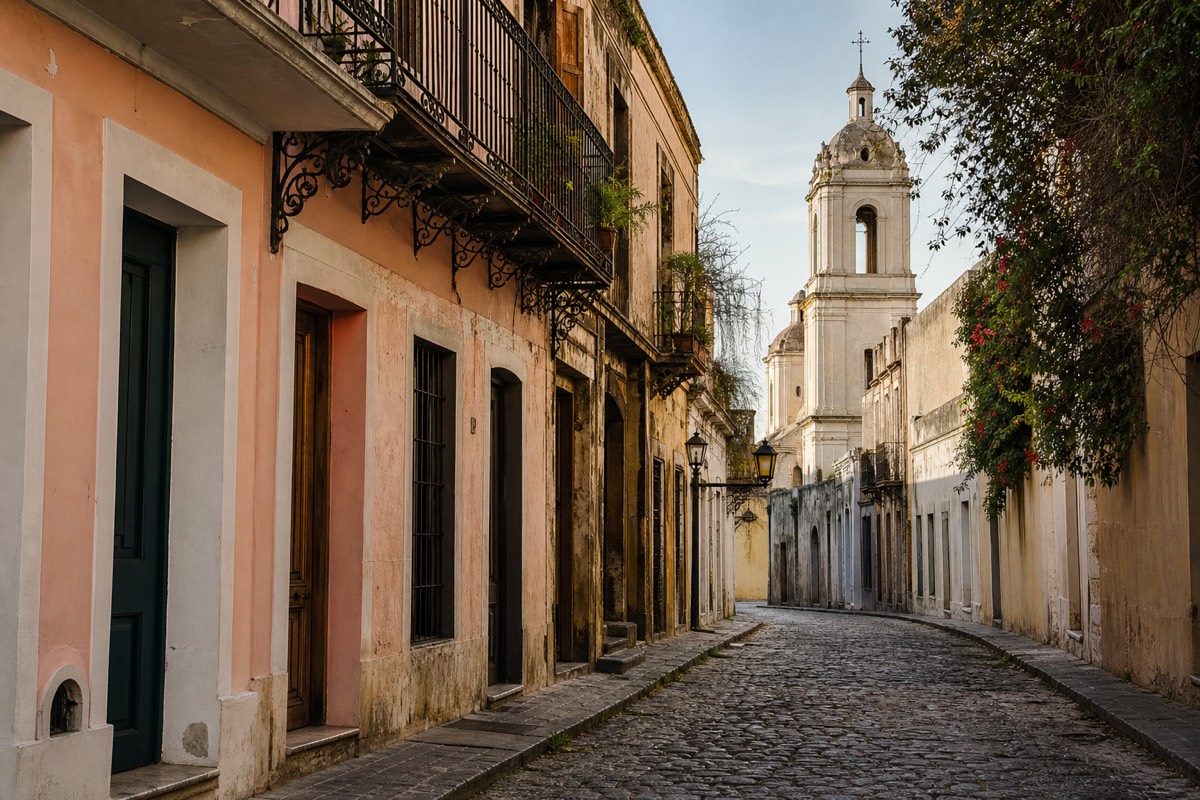
Leave the city. The strongest third day is a full-day trip west to Colonia del Sacramento, whose UNESCO-listed Historic Quarter dates to a Portuguese founding in 1680. The strongest half-day alternative is a winery in Canelones, twenty to forty minutes north, where Uruguay's Tannat is made.
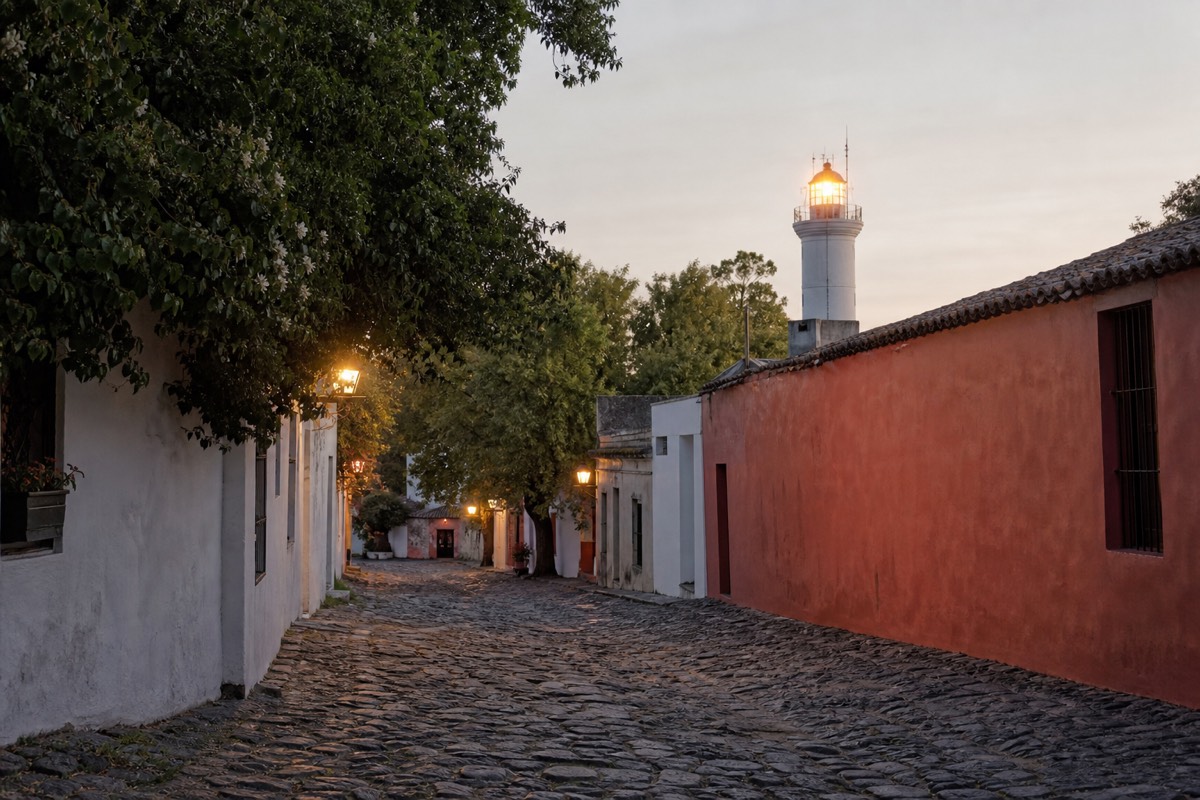
Colonia is roughly 179 to 181 kilometres away, about 2h10m to 2h33m of driving, which makes it a genuine full day rather than an excursion. The payoff is a walled colonial quarter of cobbled lanes, a lighthouse built over convent ruins, and a river sunset that people plan whole trips around. The Portuguese founded it in 1680, and its Historic Quarter has been on the UNESCO World Heritage list since 1995. Our shared full-day Colonia tour with a local guide handles the transport and the history and leaves free time for lunch in the old town, at around $60 at the time of writing.
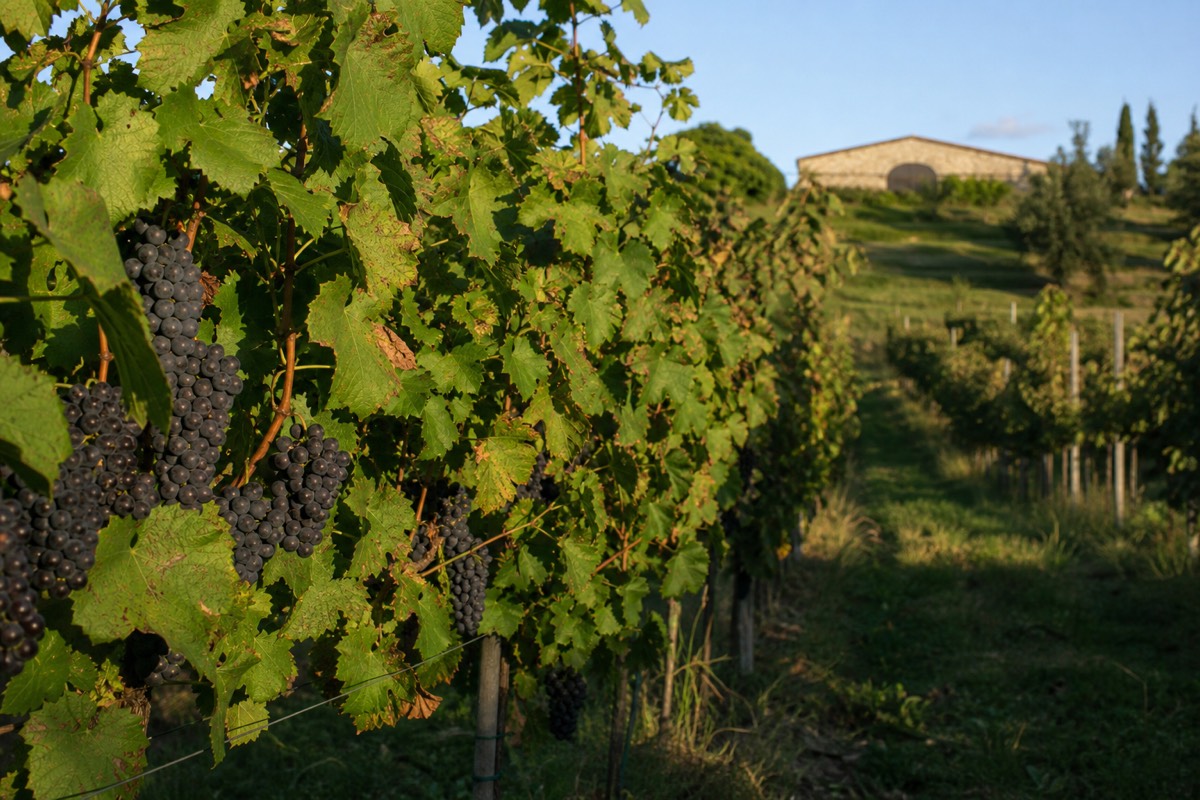
Wine is the other strong option, and it is much closer than most visitors realise. The vineyards sit in Canelones, effectively on Montevideo's northern doorstep, which means a bodega visit is a half day rather than a full one. Tannat is the grape Uruguay has made its own, dense and tannic, originally from southwest France. Several of the estates run tastings with lunch, and a few have cellars worth seeing in their own right.
The third possibility is coastal. Piriápolis is about 1h33m to 1h45m east, Punta del Este about 1h45m to 2h06m, and in the December-to-March season either makes a reasonable beach day. Outside that window they largely shut. Our Atlantic coast guide lays out the drive times and the seasonal reality, and is honest about the fact that we do not sell tours to those particular towns.
What If You Only Have A Cruise-ship Morning?
You are in luck geographically: Montevideo's cruise terminal sits at the edge of Ciudad Vieja, so the historic centre begins a short walk from the port gate. Four to five hours ashore is enough for Ciudad Vieja, Plaza Independencia and the Mercado del Puerto on foot, or a guided city circuit that adds the stadium and the beach.
The walking version: exit the port, head into Ciudad Vieja, work east along Sarandí to Plaza Matriz and then Plaza Independencia, turn around, and lunch at the Mercado del Puerto on the way back. That loop is maybe two and a half kilometres of actual walking and it hits the highest concentration of sights in the country.
The guided version buys you the parts of the city you cannot reach on foot. A shared city tour with port pickup adds Parque Batlle, the Estadio Centenario and the Pocitos waterfront to that core, and drops you back with time to spare, at around $59 at the time of writing.
Two practical cautions for cruise passengers. First, confirm your all-aboard time and work back from it with a real margin, because Montevideo traffic in the middle of the day is not trivial. Second, the meeting point most guided operators use is the Ministry of Tourism building at the port exit, which is easy to find but worth locating before you need it. Our cruise port guide covers the terminal, the walk and the timings in detail.
How Do You Actually Get Around Between These Stops?
Taxis and ride apps are cheap by North American or European standards and are the default for crossing between districts. City buses are extensive and used by everyone. Ciudad Vieja, Centro and Pocitos are each pleasantly walkable inside themselves, but the gaps between them are five to six kilometres.
The single most useful thing to understand is the shape of the city. Montevideo occupies a bay and a peninsula, with Ciudad Vieja at the western tip and the built-up coast running east. The Rambla follows that whole coast, which means almost any journey between the old town and the beach neighbourhoods can be done along the waterfront. That is why cycling works so well here: the route is flat, continuous and scenic, and there is a bike path along much of it.
Buses cover the city thoroughly and cost very little, though route knowledge takes a day or two to acquire and most drivers do not speak English. Ride-hailing apps operate and are usually the least friction for a visitor. Cash in Uruguayan pesos is worth carrying for markets and small cafés, and the exchange rate sits at roughly 40 pesos to the US dollar as of August 2026, though you should check the current rate before you travel.
Driving inside Montevideo is possible but not enjoyable, and parking near Ciudad Vieja is a chore. Rent a car for the day you leave the city, not for the days you are in it. That single rule saves most visitors a lot of irritation.
What Should You Book Ahead, And What Can Wait?
Book day trips, private guides, winery visits with lunch and anything during carnival season well in advance. Museums, markets, the Rambla and most restaurants outside peak season can be handled on the day. Uruguay's summer, December to March, tightens availability across the board.
Day trips to Colonia are the clearest case for booking ahead, because they run on fixed departures with hotel pickup and the popular ones fill. The same applies to private tours, since there is only one vehicle and one guide. Winery visits that include a meal almost always need a reservation, because they are cooking for a known number.
Carnival deserves its own line. Montevideo's carnival runs roughly forty days from mid or late January into late February or early March, which is the longest carnival season in the world, and the Desfile de Llamadas parade nights are the single busiest cultural event in the calendar. Accommodation tightens and popular tours book out. If your trip lands in that window, lock in early and read our candombe and carnival guide first so you know which nights matter.
What does not need booking: the Rambla, Plaza Independencia, Ciudad Vieja's streets, the Mercado del Puerto for a walk-in lunch on a weekday, and Pocitos beach. Montevideo is not a city that punishes spontaneity. It is simply a city where the good organised experiences are finite in number.
How Should The Itinerary Change By Season?
December to March gives you beach afternoons, carnival, long evenings and the fullest version of the city. April, May, September and October give you comfortable walking weather and thinner crowds. June to August is cold and windy on the coast, so the winter itinerary shifts indoors: museums, markets, theatres, tango bars and long lunches.
In summer, push the outdoor parts of the itinerary to the ends of the day. Middle-of-the-day sun on the Rambla is harsh with almost no shade. Walk Ciudad Vieja in the morning, eat, retreat indoors, and return to the coast after five. Summer is also when the city partially empties, because Montevideans go to the beach towns, so some restaurants close for their own holidays in January.
Autumn, meaning March through May, is quietly the best time to walk this city. The parks turn, the light gets long and golden, and the crowds have gone home. Our best time to visit guide breaks the year down month by month.
Winter changes the shape of the day rather than ruining it. Teatro Solís has a season. The museums are all open and empty. Mercado del Puerto is arguably better in cold weather, because the grills are the point and the room is warm. Tango bars fill. What you lose is the beach and the outdoor evening, which for many visitors is a fair trade for having Ciudad Vieja essentially to yourself.
What Are The Most Common Montevideo Itinerary Mistakes?
Four recur: treating the city as a single walkable core, scheduling around northern-hemisphere meal times, giving it only a cruise morning and concluding there is nothing here, and spending the whole visit in Ciudad Vieja without ever reaching the neighbourhoods where the city actually lives.
The walkability error costs the most time. Visitors look at a map, see that Pocitos and Ciudad Vieja are on the same coastline, and set off on foot. It is a long, exposed walk with limited shade, and it turns a pleasant afternoon into an endurance exercise. Take a taxi or a bike for the transfer and walk within each district.
The mealtime error costs the most enjoyment. Arriving at a parrilla at 7pm gets you an empty room and a kitchen that is barely awake. The same room at 10pm is full and loud. Adjust.
The third error is a judgement error. Montevideo does not perform for visitors in the way that Buenos Aires or Rio do, and four hours off a ship will not reveal much beyond some handsome squares. That is a sampling problem, not a city problem. Our comparison of Montevideo versus Buenos Aires works through what each city is genuinely better at.
The fourth is staying inside the tourist perimeter. Ciudad Vieja is the historic showpiece and it deserves your time, but Pocitos, Punta Carretas, Cordón and the Rambla are where you understand why people like living here. Fold at least one half-day of ordinary neighbourhood time into any stay of two days or more. If you want a wider list of candidates, our things to do in Montevideo guide runs well past the obvious.
How Would You Extend This For Four Days Or More?
With four or five days, the extra time goes to Uruguay rather than to Montevideo: a second day trip, a night on the Atlantic coast in summer, an estancia stay inland, or simply a slower version of the same three days with proper long lunches built in.
The most common four-day shape is the three-day plan plus a countryside day of tastings and lunch, which is easy because the vineyards sit so close. Two contrasting bodegas in a day, with a long lunch between them, is a genuinely good use of a Uruguayan day and requires almost no driving.
A second option is rural. Uruguay has a real working-ranch tradition, and several estancias near Montevideo take visitors, including Estancia Los Plátanos, Estancia El Ceibo and Finca Piedra. We do not sell those experiences, so arrange them directly, but they answer the question of what Uruguay is like away from the coast, which is a question the coast cannot answer.
The third option, in season, is a coastal night. Punta del Este with an overnight is a much more relaxed proposition than Punta del Este as a day trip, and it opens José Ignacio as a lunch run. Outside December to March, skip it and stay in the city.
Whatever shape you choose, the constant is that Montevideo repays a slow visitor more than a fast one. This is not a city of headline sights, and a visitor sprinting through a checklist tends to leave unimpressed. Sit on the Rambla with a coffee for an hour and it starts to make sense. When you are ready to put the days together, our Montevideo tour listings cover the guided pieces of the itinerary, and the practical travel guide handles money, transport and arrival logistics.