Montevideo Travel Guide
Half of Uruguay's population lives in the Montevideo metropolitan area, and the city still fits along one 22 kilometre waterfront promenade. That combination, a real capital that behaves like a coastal town, is the thing visitors either love immediately or take two days to notice.
What Should You Know Before Visiting Montevideo?
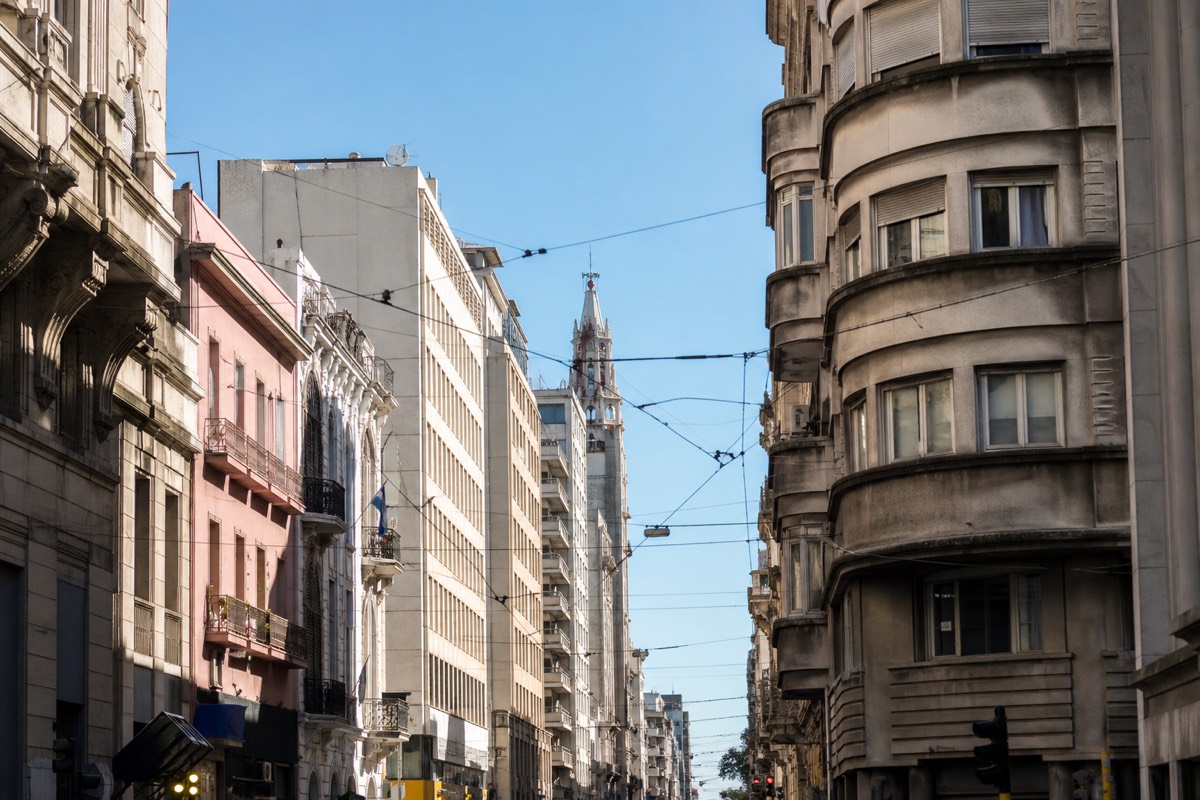
Montevideo is the capital of Uruguay, on the north bank of the Rio de la Plata, home to roughly half the country's population. Spanish is the language, the currency is the Uruguayan peso, the city is compact and low-rise, and the two things that shape every itinerary are the old town of Ciudad Vieja and the Rambla waterfront.
Give the historic center and waterfront two unhurried days, then choose an extra experience around your interests.
Booking Shortlist: Half-Day Montevideo City Tour. Link the old town, Agricultural Market and Pocitos waterfront in one guided loop.
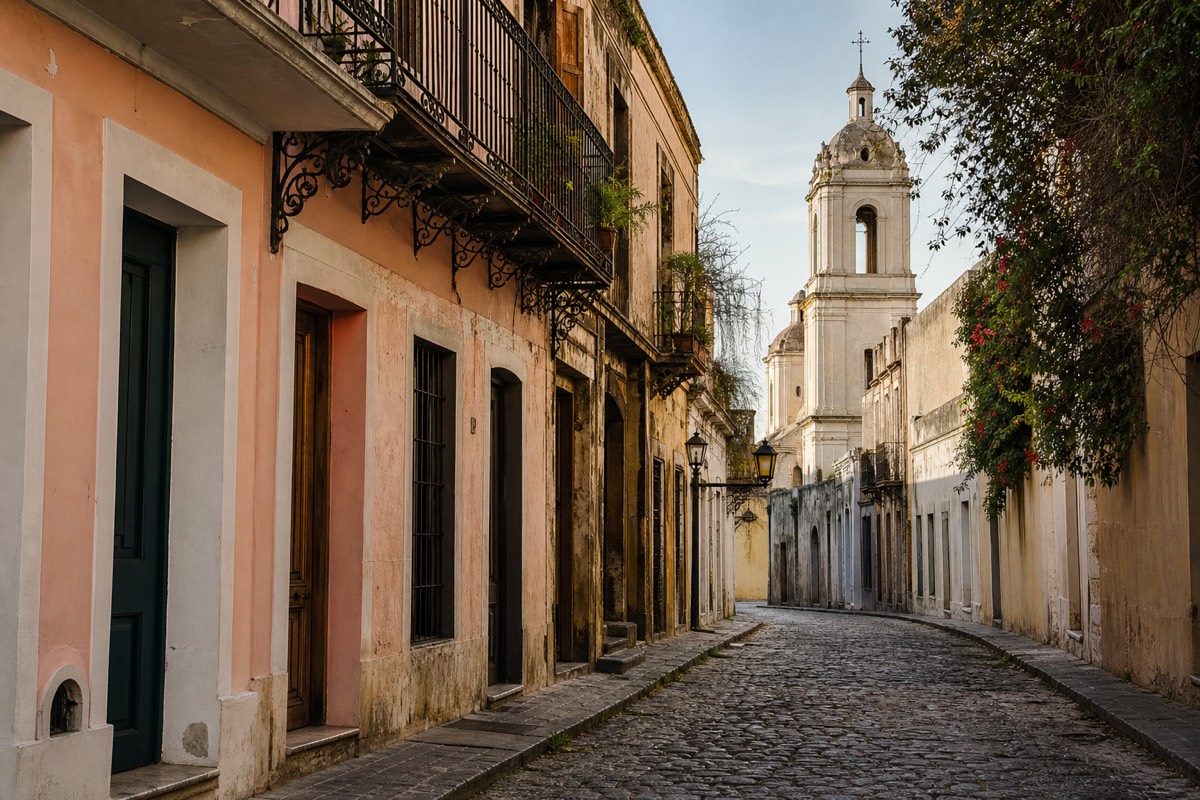
Set expectations correctly and this city delivers. Montevideo is not a spectacle capital. There is no single monument that fills a camera frame the way Christ the Redeemer or the Obelisco does, and travellers who arrive hunting for one leave disappointed. What is here instead is texture: a colonial peninsula, a working port, a food culture built on wood fire and beef, a wine region within 45 minutes, and a drumming tradition that spills into residential streets on Sunday afternoons.
It is also unusually easy to be a visitor in. Distances are short, the grid is legible, rideshare works, crime is mostly opportunistic rather than violent, and Uruguay's political stability and social liberalism make it one of the least stressful countries in the region to move around. That reputation is deserved. It does not mean the capital has no street crime, which we come to further down.
| Fast fact | Detail |
|---|---|
| Country | Uruguay, on the Atlantic coast of South America between Argentina and Brazil |
| Language | Spanish; English is common in tourism, less so elsewhere |
| Currency | Uruguayan peso (UYU), approximately 40 to 1 US dollar in August 2026; check the current rate |
| Airport | Carrasco International (MVD), about 20km from the centre |
| Emergency number | 911 for police, ambulance and fire |
| Tipping | Around 10% is customary in restaurants, not mandatory |
| Seasons | Southern hemisphere: summer December to March, winter June to August |
| Signature sights | Ciudad Vieja, the Rambla, Mercado del Puerto, Estadio Centenario |
This guide is the overview. Where a subject deserves its own treatment, we link out to a dedicated page rather than compressing it into a paragraph.
How Do You Get To Montevideo?
Most visitors arrive one of three ways: by air into Carrasco International Airport about 20 kilometres from the centre, by ferry across the Rio de la Plata from Buenos Aires, or by cruise ship into Puerto de Montevideo on the edge of the old town. From the airport, a taxi, Uber or private transfer takes 25 to 40 minutes; a bus takes 45 to 60.
Carrasco is small, modern and pleasant, with a single sweeping terminal that consistently ranks among the better airports in South America for the passenger experience. Connections come mainly through Sao Paulo, Buenos Aires, Panama City, Santiago and Madrid, so most long-haul travellers arrive on a second flight rather than a direct one. Immigration is normally quick.
The transfer into town is straightforward. Uber operates legally in Montevideo 24 hours a day and works from the airport, official taxis queue outside arrivals, and pre-booked private transfers are available. The bus is cheapest and slowest. If you are arriving late, tired, or with a family and luggage, the extra cost of a car is money well spent. A private tour with a local guide can even collect you from Carrasco or the ferry terminal and turn the transfer into the first half of your sightseeing.
The ferry from Buenos Aires is the classic approach and a genuinely enjoyable one, whether you take a direct crossing or the shorter hop to Colonia del Sacramento with a bus connection onward. It is popular enough in summer that booking ahead matters. Our Buenos Aires to Montevideo ferry guide covers the routes, the timings and which option suits which kind of trip.
Cruise ships dock at Puerto de Montevideo, right against Ciudad Vieja, mostly during the southern summer when South American itineraries run between Buenos Aires, Montevideo and the Brazilian coast. Time ashore is usually eight to ten hours, which is enough for a very good day and not enough for an ambitious one. The cruise port guide sets out what actually fits.
How Many Days Do You Need In Montevideo?
Two full days covers the city properly. Three lets you add either a half-day in the Canelones wine country or a full day at Colonia del Sacramento. One day is a cruise call or a ferry day trip: Ciudad Vieja, a market lunch and a stretch of the Rambla, which is a fine introduction and not the whole story.
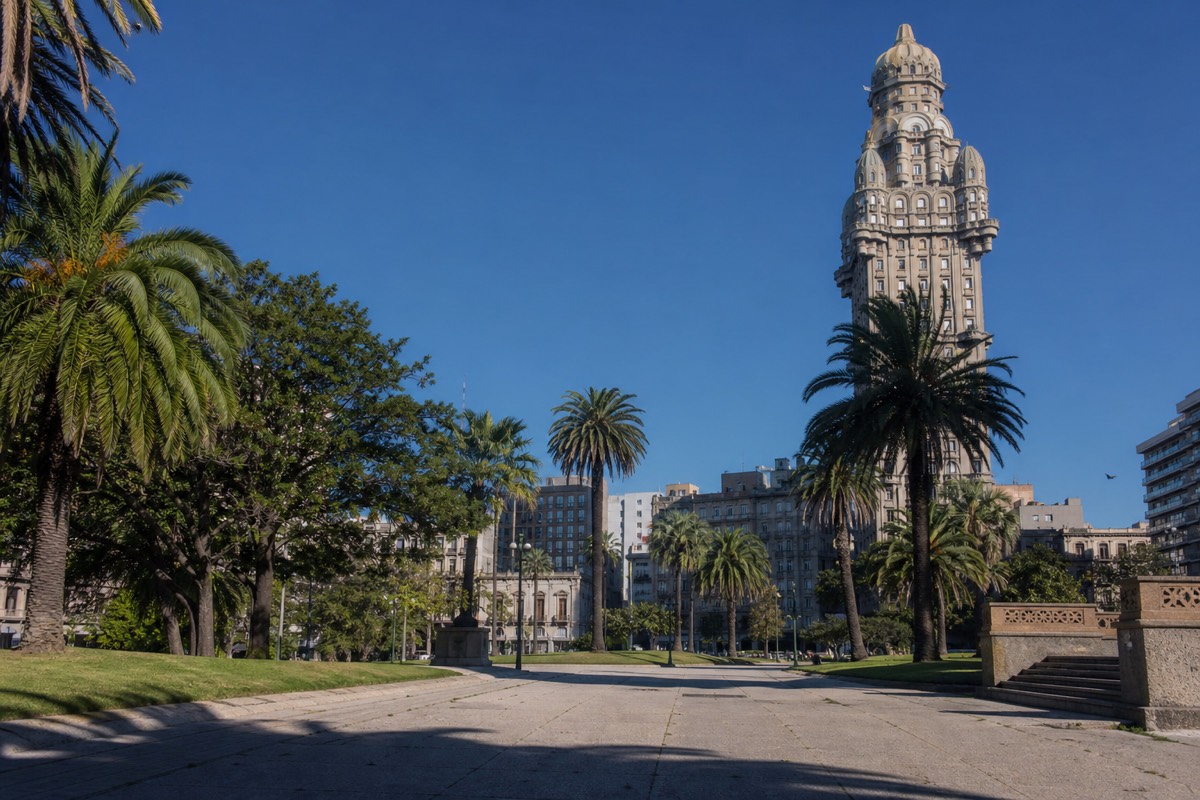
Day one belongs to Ciudad Vieja. Start at Plaza Independencia, go down into the Artigas mausoleum, look up at Palacio Salvo, pass under the Puerta de la Ciudadela and walk the pedestrian stretch of Sarandi to Plaza Matriz, then arrive at Mercado del Puerto around noon before the lunch crowd. Spend the late afternoon on the Rambla and watch the sun set into the river at Pocitos.
Day two goes inland and eastward. Parque Batlle, the La Carreta monument, Estadio Centenario where the first World Cup was decided in 1930, the marble interior of the Palacio Legislativo, and the restored Mercado Agricola with its food stalls and craft beer. Finish with a long parrilla dinner, which in Uruguay means sitting down closer to 9pm than 7pm, or with a tango lesson at Baar Fun Fun, a bar open since 1895.
Day three is a choice rather than a list. Wine country if you want a slow afternoon and a good lunch within an hour of the city. Colonia if you want a UNESCO-listed colonial town and do not mind a nine-hour round trip. The Atlantic beaches if it is January and the weather is holding.
Whether Montevideo justifies more than a stopover is a fair question, and one people ask constantly when planning a Buenos Aires trip. We answer it directly in how many days in Montevideo and lay out an hour-by-hour plan in the Montevideo itinerary guide.
Where Should You Stay In Montevideo?
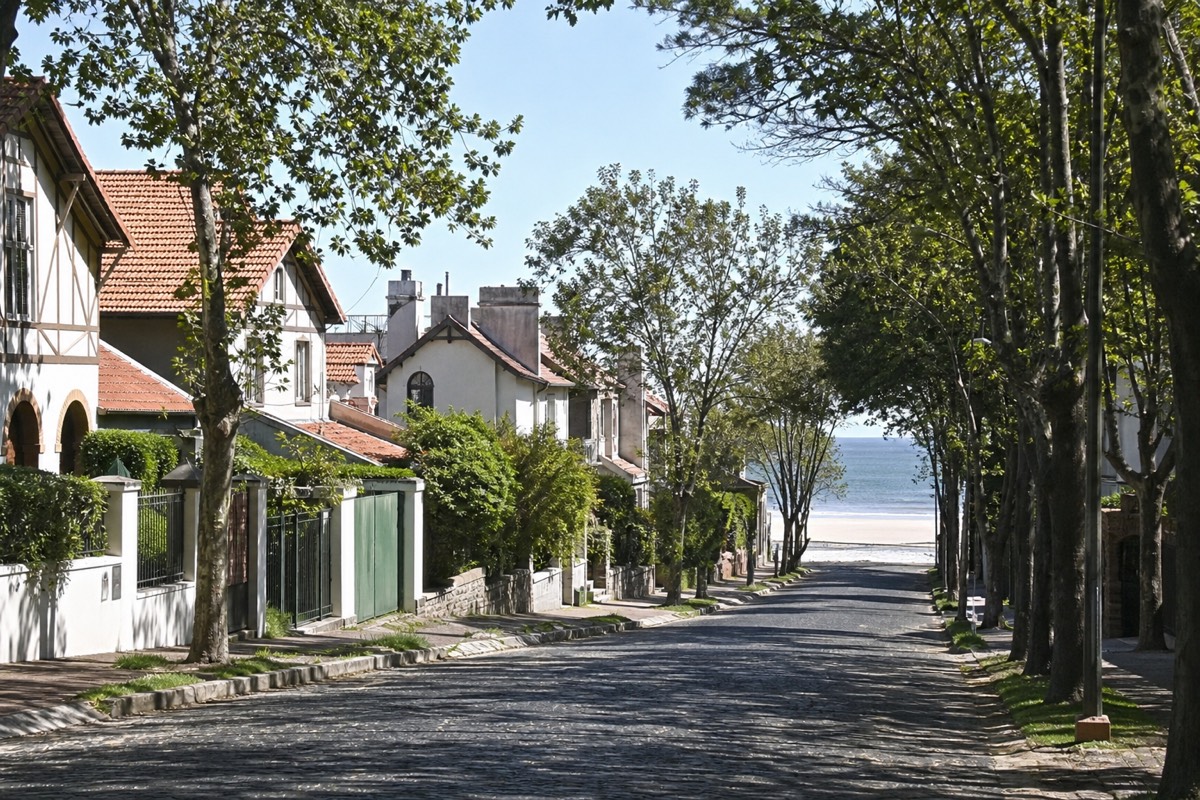
Most visitors base themselves in Ciudad Vieja for history and walkability, Centro for price and transport links, Pocitos for the beach and neighbourhood life, or Punta Carretas for comfort and an easy evening. Carrasco suits travellers who want quiet and proximity to the airport rather than proximity to the sights.
| Neighbourhood | Character | Best for | Trade-off |
|---|---|---|---|
| Ciudad Vieja | Colonial grid, museums, the port | History, walking, cruise and ferry arrivals | Empties out after office hours; caution advised at night |
| Centro | Commercial spine along 18 de Julio | Value, bus links, central position | Busy and functional rather than charming |
| Pocitos | City beach, apartment towers, cafes | First-timers, longer stays, evening strolls | A ride from Ciudad Vieja rather than a walk |
| Punta Carretas | Upmarket, lighthouse, shopping centre | Comfort, safety, easy nights out | Higher prices, less local grit |
| Parque Rodo | Student energy, park, beach | Nightlife, budget travellers | Noisier in summer |
| Carrasco | Leafy, residential, near the airport | Quiet stays, early flights | Far from everything else; you will need transport |
The Ciudad Vieja versus Pocitos decision is the one most people agonise over. Ciudad Vieja puts you inside the history and within walking distance of the old town and the port, and it is quiet and a little bleak on a Sunday evening. Pocitos gives you a genuine neighbourhood with cafes, a beach and life on the street after dark, at the cost of a ten to fifteen minute ride each time you want the old town.
For a two-night trip, Ciudad Vieja or Centro keeps your walking short. For four nights or more, Pocitos usually wins on quality of life. Whatever you choose, rides across the city are inexpensive, so the decision is about atmosphere more than logistics.
How Do You Get Around Montevideo?
Walking covers Ciudad Vieja and each individual neighbourhood. Between neighbourhoods, Uber operates legally 24 hours a day, licensed taxis are metered, and the STM bus network reaches everywhere cheaply. A rechargeable STM card bought at Abitab or Redpagos costs less than paying cash, roughly 46 pesos against 56 on a common fare in August 2026.
| Option | Roughly | Good for | Watch out for |
|---|---|---|---|
| Walking | Free | Ciudad Vieja, the Rambla, within a neighbourhood | Distances between districts are longer than the map suggests |
| Uber | Cheap by North American or European standards | Everything, especially after dark | Wait indoors rather than on the kerb with your phone out |
| Licensed taxi | Metered | Ranks, hotel calls, airport runs | Take one from a rank or a booking, not an unmarked car |
| STM bus | Around 46 pesos with a card, 56 in cash | Budget travel, longer stays, 18 de Julio corridor | Buy the card at Abitab or Redpagos; watch pockets in crowds |
| Hop-on hop-off bus | Around $35 for 24 hours | Short stays, cruise calls, first orientation | Fixed routes; check the last departure time |
| Bicycle or e-bike | Tour from around $69 | The Rambla, park circuits | Traffic away from the bike paths |
| Rental car | Varies | Trips into the interior | Parking is hard; traffic lights and car parks are where phone thefts happen |
For a first morning, the 24-hour hop-on hop-off ticket is a reasonable orientation tool, covering two routes from the Port Market out past Parque Batlle and along the Rambla to Malvin, with multilingual audio and a printed map. For a nicer version of the same coastline, the guided e-bike tour links Pocitos, Parque Batlle, 18 de Julio, Plaza Independencia and the Rambla in about three and a half hours with a group capped at ten.
Renting a car for the city itself is the one option we would talk most visitors out of. Central parking is difficult, and stopped vehicles at lights and car park entrances are precisely where the local motorcycle snatch thefts happen. For day trips, tours with transport included are simpler and let everyone drink the wine.
When Is The Best Time To Visit Montevideo?
December to March is the southern summer: warm, busy, beach weather, carnival in February, and the peak of the cruise season. April and May bring golden light and comfortable walking temperatures with far fewer visitors. June to August is cool, damp and windy off the river. September to November warms up again and is quietly one of the best windows.
| Season | Months | What it is like | Trade-off |
|---|---|---|---|
| Peak summer | December to February | Warm and humid, beaches in use, carnival in February, longest days | Highest prices, busiest tours, book winery and Colonia trips well ahead |
| Late summer | March | Still warm, grape harvest in the wineries, crowds thinning | Weather starts to turn late in the month |
| Autumn | April to May | Golden parks, good light, comfortable walking, quiet | Cooler evenings, beach season over |
| Winter | June to August | Cool, grey and windy off the water; the city belongs to residents | Short days, some coastal businesses closed |
| Spring | September to November | Warming up, gardens in flower, low crowds, good value | Changeable weather, wind |
The practical read: if the beach and carnival matter, come in January or February and book everything early. If the city itself is the point, come in April, May, October or November, when you get the same museums, the same food and the same Rambla with none of the queues.
Wind is the underrated factor year round. Montevideo sits on an open estuary with nothing between it and the water, and a still summer day can turn into a blustery evening in an hour. Bring a layer even in January. Our best time to visit guide works through this month by month.
What Does A Trip To Montevideo Cost?
Uruguay is one of the more expensive countries in South America, with prices closer to southern Europe than to neighbouring Argentina. City tours generally start around $35, wine experiences run from roughly $70 to $220, and a full-day trip to Colonia starts near $60 shared or several hundred dollars privately. Always check the live listing, since operator pricing moves.
This surprises people arriving from Buenos Aires, where the same dinner can cost noticeably less. The reasons are structural: a small domestic market, high import costs, a strong welfare state and comparatively high wages. The upside is that what you buy tends to be reliable, and Uruguay does not run the two-tier tourist pricing found in some neighbouring economies.
For a rough sense of the tour market on this site: a half-day small-group city tour sits around $35, a 24-hour hop-on hop-off ticket around $35, a shared cruise-passenger city tour around $59, a shared full-day Colonia trip around $60, a street food walk around $66, an e-bike tour around $69, winery visits from about $70 to $99, a tango evening around $120, and private full-day options running from roughly $160 into the hundreds. Treat every one of those as an indication and confirm on the live listing before booking.
Everyday costs sit alongside that. A city bus fare is around 46 pesos with an STM card. Tipping is customary at about 10% in restaurants, not obligatory. Cards are widely accepted in the tourist neighbourhoods, though small cafes, market stalls and buses prefer cash, so carry some pesos. The peso traded at roughly 40 to the US dollar in August 2026, but exchange rates move and you should check the current one.
Where to save: eat your main meal at lunch, use buses on the 18 de Julio corridor, walk the Rambla instead of paying for a view, and pick shared rather than private tours where the itinerary is fixed anyway. Where to spend: a private guide on your first day, and transport included on any trip that involves wine. Full money and connectivity detail lives in our practical travel guide.
Is Montevideo Safe For Visitors?
Broadly yes, with normal city precautions. Uruguay ranks as the most peaceful country in South America and 43rd globally on the 2026 Global Peace Index. The US State Department nonetheless advises exercising increased caution due to crime, and the realistic risk to visitors is opportunistic theft rather than violence.
The pattern to know is petty and property crime: pickpocketing, bag snatching, and thefts by pairs on motorcycles who target people stopped at traffic lights, standing at ATMs, or arriving at car parks and hotels. UK advice warns about bag snatching, pickpocketing, mugging and robbery in Montevideo, and recommends avoiding isolated or poorly lit areas at night as well as walking downtown or in the port area alone at night and at weekends.
Geographically, the tourist core of Ciudad Vieja, Centro, Pocitos, Punta Carretas and Carrasco is where you will spend your time and where a dedicated tourist police unit patrols. Government sources flag a set of outer neighbourhoods as higher risk, among them Casavalle, Marconi, Barrio Borro, Casabo, La Teja, Villa del Cerro, Malvin Norte, Bella Italia, Tres Ombues, Villa Espanola, Hipodromo and 40 Semanas. None of them hold anything a visitor is looking for.
Simple habits cover nearly all of it. Phone in a pocket rather than a hand. Bag on the inside shoulder. ATMs inside banks or shopping centres rather than on the street. Uber after dark rather than a long walk through empty blocks. Emergency services are on 911 across the country. If you are robbed, hand it over; the item is replaceable and resistance is what turns a theft into an injury.
Read the current official text before you fly, starting with the US State Department advisory, and see our full Montevideo safety guide for the neighbourhood-by-neighbourhood detail.
What Should You Eat And Drink In Montevideo?
Beef cooked over wood is the centre of Uruguayan food: asado from a parrilla, cuts like asado de tira and entrana, plus morcilla and grilled provoleta. The national sandwich is the chivito. Mate is the national drink, Tannat the national grape, and medio y medio the traditional pairing with a market lunch.
Asado is a method and a social event rather than a dish. Wood, not gas, burns down to coals, meat cooks slowly over them, and the meal takes as long as it takes. The clearest demonstration for a visitor is the row of grills under the iron roof of Mercado del Puerto, inaugurated in 1868 and now given over almost entirely to parrillas. Go at lunch, go early, and expect noise.
The chivito is the thing to order once you have done asado. A steak sandwich loaded with ham, cheese, bacon, egg, lettuce, tomato and olives, served with chips, it is enormous and completely unserious and every Uruguayan has an opinion about where the best one is. Empanadas fill the gaps between meals. Dulce de leche appears in and on almost every dessert.
Mate is not a drink you order. It is a shared gourd of yerba mate passed around a group, refilled from a thermos carried under the arm, and you will see it on every bench along the Rambla. If someone hands it to you, drink it all and pass it back. Do not stir the straw. It is a small ritual and getting it right is appreciated.
For wine, Tannat is the grape Uruguay made its own, brought from southwest France by Basque immigrants and now the country's calling card, along with unexpectedly good Albarino and traditional-method sparkling. A private street food walk covers empanadas, chivito and mate through Ciudad Vieja, and our restaurant guide covers where to eat once you are past the market.
What Are The Best Things To Do In Montevideo?
Walk Ciudad Vieja, follow the Rambla, eat at Mercado del Puerto, visit Estadio Centenario where the first World Cup was decided in 1930, hear candombe drumming on a Sunday in Barrio Sur or Palermo, and taste Tannat at a family bodega in Canelones. Those six cover the city's essential character.
Candombe deserves a sentence of its own here. UNESCO inscribed it on the Representative List of the Intangible Cultural Heritage of Humanity in 2009, and it is traditionally performed on Sundays and holidays in Barrio Sur, Palermo and Cordon. It is not a ticketed show. Drummers tune skins over a street fire, then walk the neighbourhood playing, and people fall in behind. Being there for it is one of the few genuinely unrepeatable things this city offers.
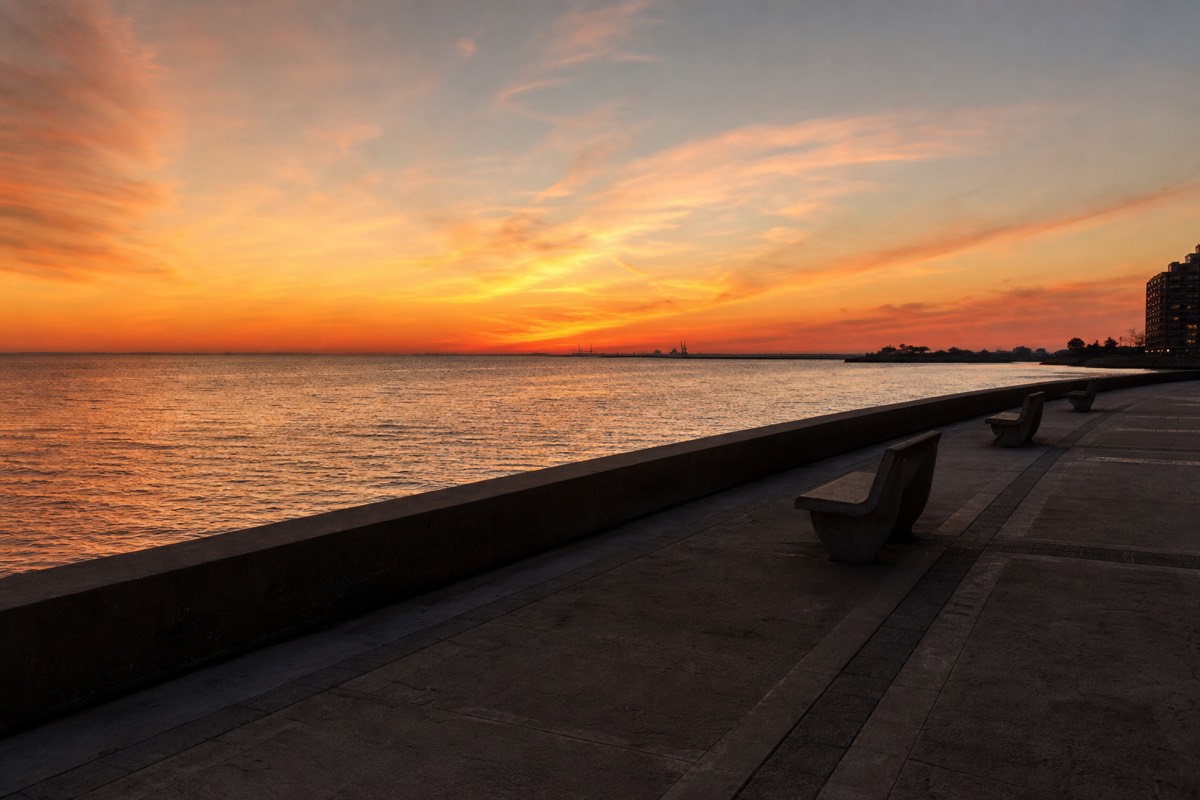
The Rambla is the other. More than 22 kilometres of continuous waterfront, one of the longest such promenades in the world, running from the port around the southern edge of the city past Parque Rodo, Punta Carretas, Pocitos, Buceo, Malvin and out to Carrasco. Pick a stretch, walk at sunset, and you have understood how the city relaxes. The Rambla and beaches guide covers which stretch suits which afternoon.
Add the cultural interiors as your time allows: Teatro Solis, opened in 1856 and the oldest working theatre in South America; the Museo Torres Garcia on Sarandi; the Museo Andes 1972, which tells a story that belongs to this city; and the marble halls of the Palacio Legislativo.
For a single efficient introduction, the half-day small-group city tour stops at eleven major sites with door-to-door pickup, a multilingual guide and a group capped at 16, and can finish at Mercado del Puerto if you want lunch. Our full best things to do in Montevideo list goes deeper into each.
Which Day Trips From Montevideo Are Worth Taking?
Colonia del Sacramento is the standout, a UNESCO-listed colonial quarter about two hours west, usually a nine-hour round trip. The Canelones wine country needs only half a day and starts 30 to 45 minutes out. The Atlantic beach towns east toward Punta del Este are a summer proposition rather than a year-round one.
Colonia is the one to prioritise if you have a spare day. The historic quarter is a compact grid of cobbled lanes and low colonial houses on a promontory in the river, holding the Porton de Campo gate, the Calle de los Suspiros with its wedge-set drainage cobbles, an 1857 lighthouse built over convent ruins and the Basilica del Santisimo Sacramento. A few kilometres north stands the Real de San Carlos bullring, a Mudejar-style arena inaugurated in 1910 and used only briefly before bullfighting was banned.
The shared full-day coach trip runs around nine hours from about $60 with pickup from a long list of central hotels, seat-integrated audio for the multilingual commentary, and a tasting stop at Granja Arenas. The private version costs considerably more and sets its own pace, which suits families and anyone who dislikes group timetables.
Wine country is the easier win. Canelones begins on the city's edge, and the bodegas are family estates where the winemaker often shows you around personally. Options range from a two and a half hour private visit with seven tastings and an underground lunch to a small-group day with a three-course paired meal. Everything worth doing includes or offers transport, which is the point.
East along the coast, the calculation changes with the calendar. Punta del Este and the quieter beach towns beyond it are roughly two hours away and glorious in January, sleepy and shuttered in July. Our Atlantic coast day trips guide is honest about the months that justify the drive.
What Should You Know About Local Customs And Etiquette?
Uruguayans are informal, direct and quietly proud of their country's stability and social record. Greetings involve a single cheek kiss between friends. Meals run late by northern standards. Tipping is around 10% and not obligatory. Mate is shared, not ordered, and there is an etiquette to it worth learning.
The pace is the first adjustment. Dinner at 7pm marks you as a foreigner; restaurants fill from 9pm. Shops and some museums close for a midday break, and Sunday is genuinely quiet in most neighbourhoods. Trying to run a northern European schedule here produces a frustrating trip; adjusting to the local clock produces a good one.
Football is a serious subject rather than small talk. Uruguay won the first World Cup in 1930 at home and won again in 1950 in Brazil, and for a country of around 3.4 million people that history sits close to the surface. Penarol and Nacional divide the city. Asking someone which one they support is a real question with a real answer.
On language, Spanish here has its own accent and vocabulary, closer to Buenos Aires than to Madrid, with the sh sound for ll and y and the use of vos rather than tu. English is common among younger people and in tourism, less so elsewhere. Learning ten words of Spanish will do more for your trip than any amount of pointing.
Uruguay is also socially liberal in ways that surprise visitors expecting regional conservatism, with an early record on same-sex marriage, cannabis regulation and separation of church and state. Locals will tell you about it if you ask. They are usually glad to be asked. If you would like a whole day of that kind of conversation, a private day tour shaped around a day in the life of a Uruguayan is built for exactly that, and you can browse all the Montevideo tours we work with to compare formats.
What Do Visitors Get Wrong About Montevideo?
The four recurring errors are treating the city as a four-hour stopover from Buenos Aires, expecting beach-holiday water from a brown estuary, planning museums on a Monday when many are shut, and swinging between complacency and fear on safety instead of taking simple precautions.
The stopover problem is the biggest. A short visit gives you Ciudad Vieja and a market lunch, which is genuinely worthwhile, but the city's real appeal is its rhythm rather than its landmarks, and rhythm takes more than an afternoon to feel. If you can convert a day trip into an overnight, do it. If you are comparing the two capitals rather than combining them, our Montevideo versus Buenos Aires comparison takes the question seriously.
The river catches people out too. The Rio de la Plata is the widest river estuary in the world and it carries a continent's worth of silt, which makes it brown. It is not polluted in the way visitors assume, it is simply full of sediment, and Montevideo's beaches are used constantly by residents through the summer. Adjust the expectation rather than skipping the coast.
Opening hours are the quiet trip-wrecker. Many museums close Mondays, Mercado del Puerto is a daytime business, and Sundays are slow. Put your indoor sightseeing between Tuesday and Friday, keep Saturday for the Sarandi flea market and Sunday for the drums in Barrio Sur, and the week arranges itself.
Last, do not over-plan. Montevideo rewards an afternoon with nothing scheduled: a bench on the Rambla, a thermos, and the slow understanding that the city you are looking at is not performing for anyone. Book one good guided day to get your bearings, then leave room to do nothing in particular.